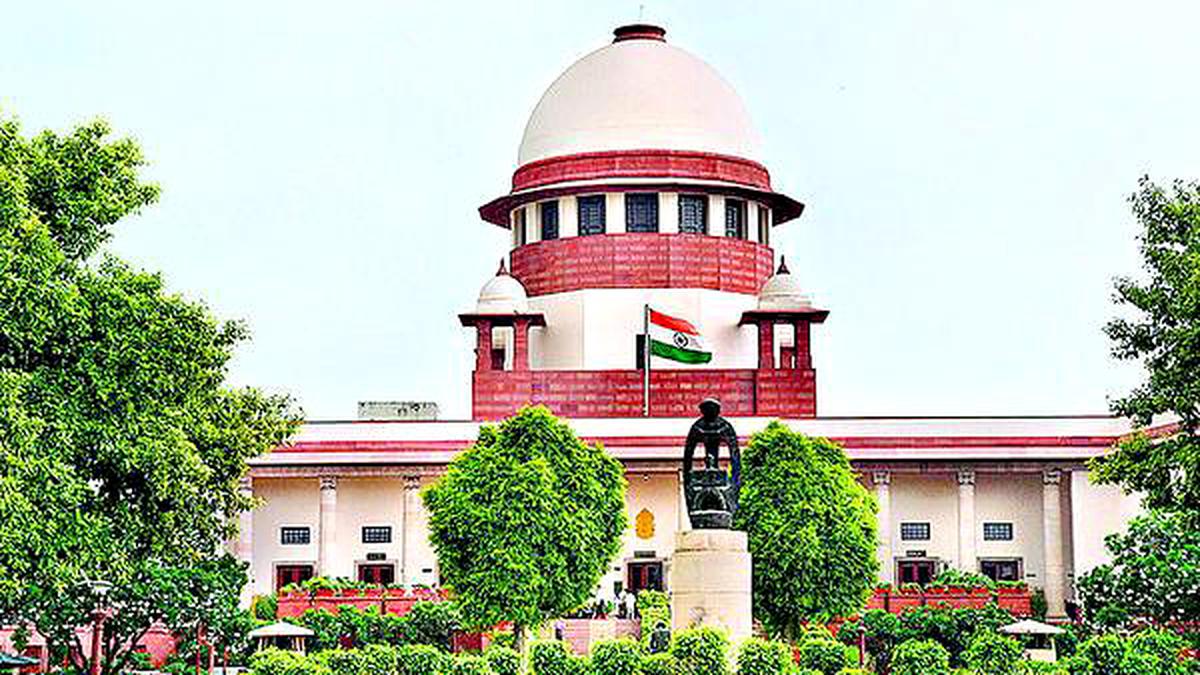
Supreme Court Declines Intervention in TMC Bank Account Dispute
The Supreme Court has refused to intervene in the factional dispute concerning Trinamool Congress (TMC) bank accounts. The court deferred objections to the Calcutta High Court, which is hearing the matter.
Key takeaways
- The Supreme Court has refused to interfere in the Trinamool Congress's factional dispute over party bank accounts.
- Objections and the overall dispute will now be heard by the Calcutta High Court.
- The Calcutta High Court had previously allowed limited access to party accounts for daily expenses under court supervision.
- The Enforcement Directorate is investigating the party for money laundering, leading to frozen accounts.

The Supreme Court on Tuesday declined to intervene in a dispute between factions of the Trinamool Congress (TMC) regarding the operation of party bank accounts. The court directed that objections be raised before the Calcutta High Court, which is currently handling the case.
What Happened
The All India Trinamool Congress (AITC) had approached the top court seeking permission to operate its bank accounts. These accounts were frozen by the Enforcement Directorate (ED) as part of a money laundering investigation against the party. The Supreme Court dismissed the AITC's plea, upholding a July 9 order from the Calcutta High Court. This high court order permits the party to use three of its bank accounts for daily expenses under the supervision of a court-appointed special officer.
Justices MM Sundresh and PB Varale stated that the high court's order was balanced and protected the interests of both sides. The court also considered an appeal from rebel AITC legislator Biswanath Das, who had petitioned the high court alleging a ₹350 crore transfer to a single bank account shortly after election results were declared on May 5.
The Supreme Court bench commented that it was not concerned with the factions but with providing an interim arrangement, noting the ED's submission that sufficient funds are available for daily expenses. The court allowed Das to present his objections before the Calcutta High Court.
Key Facts
- The Supreme Court refused to intervene in the TMC factional dispute over bank accounts.
- The Calcutta High Court previously ordered that three party accounts could be used for daily expenses under court supervision.
- A rebel legislator, Biswanath Das, alleged a ₹350 crore transfer to a single account post-election results.
- The AITC claims its five bank accounts hold over ₹400 crore, while the ED estimates proceeds of crime at ₹160 crore.
- The Bidhannagar cybercrime police reportedly issued a debit freeze on accounts not encumbered by the ED.
Background
The Enforcement Directorate (ED) had frozen the party's bank accounts as part of a money laundering probe. The AITC stated that it requires access to funds for employee salaries, estimated at ₹51 lakh, as well as election-related bills and other associated expenses. The party also noted an ED order freezing accounts was issued on July 7, after the Calcutta High Court indicated on July 2 its inclination to issue an interim order.
Senior advocates Kapil Sibal, Abhishek Manu Singhvi, and Menaka Guruswamy appeared for the AITC, while senior advocate K Parameshwar represented Biswanath Das. The ED was represented by additional solicitor general SV Raju.
Das's side argued that the funds in the bank accounts also belong to them as they claim to be the "real" party, though this issue is pending before the Election Commission. They objected to the Calcutta High Court's order allowing only one faction to operate the accounts.
Sources reviewed
Project Chintan independently synthesized and analyzed information cross-checked across the sources listed above.
Related stories

Supreme Court seeks responses on plea alleging exploitation of courtroom remarks
Supreme Court Defers Cauvery Water Dispute Hearing Due to Judge's Illness
Supreme Court Overturns Arrest Protection for Future Group Director in GST Case