
Supreme Court Overturns Arrest Protection for Future Group Director in GST Case
The Supreme Court has invalidated a Bombay High Court order that provided Sunil Biyani, a Future Group director, with one week of protection from arrest in a GST investigation. This decision came after the high court had previously deemed Biyani's anticipatory bail plea premature.
Key takeaways
- The Supreme Court has canceled a Bombay High Court order that gave Future Group director Sunil Biyani a week of protection from arrest in a GST investigation.
- The Supreme Court ruled that the Bombay High Court could not grant such protection after deeming Biyani's anticipatory bail plea premature.
- GST authorities are required to inform individuals of the recorded reasons for arrest under Section 69 of the CGST Act, including via email.
- The apex court clarified that communicating arrest reasons is distinct from granting premature interim protection.
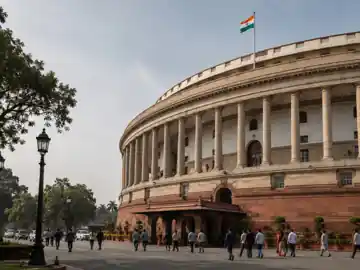
The Supreme Court has revoked a Bombay High Court order that granted Sunil Biyani, a non-executive director of Future Group, a week's reprieve from arrest concerning a Goods and Services Tax (GST) investigation. The apex court found that the high court's action was inappropriate, particularly after its own determination that Biyani's plea for anticipatory bail was premature.
What Happened
The Supreme Court's ruling addressed an appeal filed by the Union government against a February order from the Bombay High Court. The High Court had concluded that Sunil Biyani's anticipatory bail plea was filed too early, as no official authorization for his arrest under Section 69 of the Central Goods and Services Tax (CGST) Act had been issued. Despite this, the High Court had directed that Biyani would receive one week's protection from arrest from the date such an authorization was communicated to him.
A bench comprising justices Dipankar Datta and Sheel Nagu found this approach by the High Court to be impermissible. During hearings, the Supreme Court bench had questioned the legal justification for the High Court granting protection when it had already established that there was no immediate threat of arrest, rendering the anticipatory bail plea itself not maintainable.
Key Facts
- The Supreme Court set aside a Bombay High Court order granting Future Group director Sunil Biyani one week's protection from arrest in a GST investigation.
- The Bombay High Court had previously ruled Biyani's anticipatory bail plea premature as no arrest order under Section 69 of the CGST Act had been issued.
- The Supreme Court stated that GST authorities must inform an individual of the reasons for arrest as recorded under Section 69 of the CGST Act.
- Such communication of arrest reasons can be made via email.
- Sunil Biyani had approached the Bombay High Court in February after being summoned by GST authorities under Section 70 of the CGST Act.
- Section 69 of the CGST Act empowers the Commissioner to authorize an arrest for specific GST law offenses, including tax evasion.
- Section 70 of the CGST Act allows GST officers to summon individuals to provide evidence or documents during investigations.
- The Union government appealed the Bombay High Court's decision to grant protection from arrest.
Why It Matters
While rejecting the High Court's grant of advance protection, the Supreme Court emphasized the obligation of GST authorities to communicate the grounds for arrest to an individual. This clarification distinguishes the requirement to inform an individual about an arrest authorization from granting interim protection in anticipatory bail proceedings found to be premature. The ruling affirms that the process of communicating the arrest authorization and its supporting rationale is separate from providing advance shielding from arrest when such proceedings are deemed not yet viable.
Sources reviewed
Project Chintan independently synthesized and analyzed information cross-checked across the sources listed above.
Related stories
Punjab Nears Settlement on BBMB Dues to Himachal, Centre Tells SC

Cauvery Water Dispute Hearing Delayed as Judge Falls Ill
Tiffany Haddish Pleads Guilty to DUI, Avoids Further Jail Time