
Yorkshire Faces Near-Total Darkness in Region’s Deepest Eclipse Since 1999
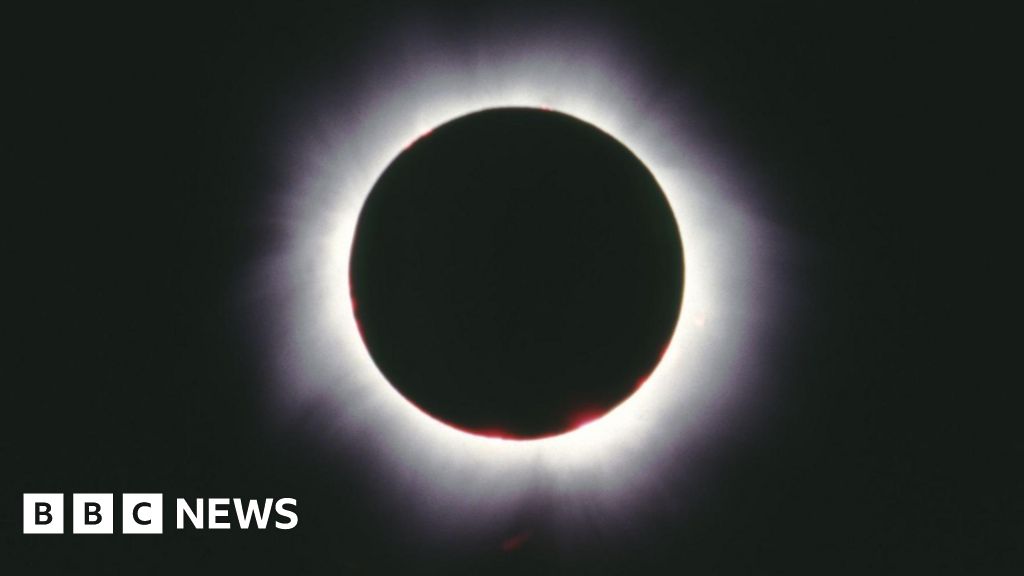
On August 12, the moon will obscure up to 92% of the sun across Yorkshire and the North-East, marking the most significant solar event in nearly three decades. Between 18:00 and 20:15 BST, residents can observe the mechanics of the solar system as the sun dips toward the western horizon.
Key takeaways
- The eclipse occurs on August 12 between 18:00 and 20:15 BST, with peak coverage reaching 92% in Yorkshire.
- Viewers must use ISO 12312-2 certified glasses; standard sunglasses are insufficient to block harmful solar rays.
- A clear western horizon is required for viewing because the sun will be positioned very low before sunset.
- Community events with solar telescopes are scheduled at Oliver's Mount, Brough Observatory, and the University of York.
Why It Matters
While solar events occur annually, the scale of this occurrence is exceptional for the United Kingdom. Not since the total eclipse of 1999 has the region experienced this degree of solar coverage. For observers in Yorkshire, the moon will block approximately 92% of the solar disk, providing a rare opportunity to witness celestial mechanics in real time. Unlike the total eclipses visible in Spain and Portugal this year, the UK will experience a deep partial eclipse, with the next total version not forecasted for Britain until September 23, 2090.
Key Facts
- Timing: The event begins between 18:12 and 18:19 BST, peaking roughly one hour later, and concluding just after 20:00 BST.
- Magnitude: Observers in Yorkshire and the North-East will see roughly nine-tenths of the sun obscured by the moon.
- Safety Standards: Protective eyewear must feature the official ISO 12312-2 or ISO 12312-2:2015 certification to prevent permanent eye damage.
- Viewing Strategy: Because the sun will be positioned low in the western sky, a high vantage point with an unobstructed western horizon is essential.
Background
Astronomers emphasize that this event allows the public to view the moon's orbital motion around Earth. Neil Sanders, co-founder of UK Eclipse, notes that while these events are not strictly rare, the specific degree of coverage makes this Wednesday's alignment an unmissable spectacle. Chris Higgins of the Lime Tree Observatory suggests that even though the UK sits outside the path of totality, the nearly 92% obscuration remains a significant natural phenomenon that has fascinated humanity throughout history.
What Happens Next
Multiple astronomical societies across Yorkshire have organized public viewing stations to facilitate safe observation. Locations including Scarborough's Oliver’s Mount and the Brough Observatory will provide solar telescopes, while the Rosse Observatory in Pontefract plans to broadcast a live stream if cloud cover interferes with direct visibility. For those observing from home, experts recommend using indirect methods like pinhole projectors made from household items such as colanders, or viewing the Royal Observatory Greenwich's digital broadcast. Following this event, smaller partial eclipses are expected in coming years, including one next August, though none will match this scale for decades.
Source: BBC
Related stories
Celestial Alignment Meets Seasonal Storms: The 2026 Solar Eclipse Forecast
UK Prepares for Rare 96% Solar Eclipse: Best Vantage Points and Safety Protocols

Errant SpaceX Falcon 9 Upper Stage Impact Forecasted for Lunar North Pole
