WWII Soldier Remains and Motorcycle Unearthed by Low Danube Water Levels
Record-low water levels in the Danube River in Budapest have exposed the remains of two World War II German soldiers, their identification tags, and a well-preserved motorcycle. The German War Graves Commission is working to identify the soldiers, potentially offering closure to families who never r
Key takeaways
- Low Danube water levels in Budapest revealed the remains of two WWII German soldiers and a well-preserved motorcycle.
- The finds include identification tags, a wedding ring, and a Kuban shield, potentially allowing for soldier identification.
- The German War Graves Commission is investigating to identify the soldiers and notify their families.
- The discovery also involved the recovery of anti-tank mines, prompting temporary riverbank closure.
What Happened
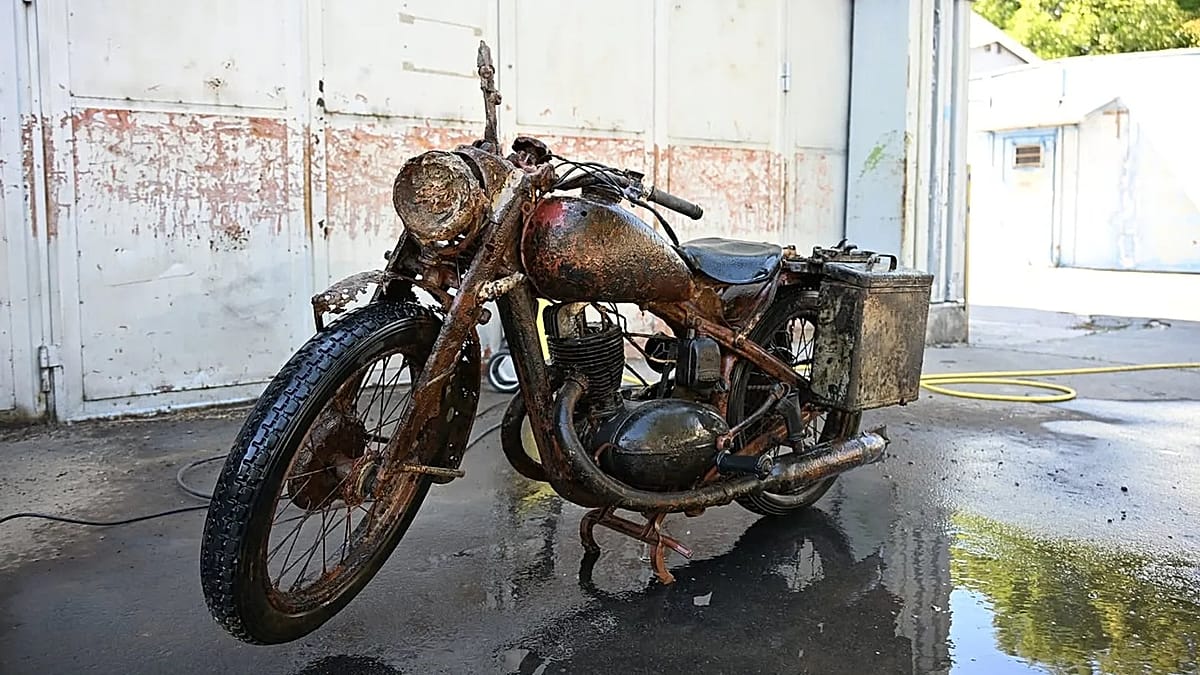
Low water levels in the Danube River in Budapest, attributed to an intense drought, have led to the discovery of significant World War II artifacts. These include the remains of two German soldiers, their identification tags, and a largely intact DKW NZ 350-1 motorcycle.
The finds were made on August 2, with a passerby reporting part of the motorcycle emerging from rocks on the riverbank. Anti-tank mines were also found, prompting the temporary closure of the riverbank for a bomb disposal unit to address the hazard.
Why It Matters
The discovery offers a potential path for families to finally learn the fates of their ancestors, who died more than 80 years ago. The German War Graves Commission is undertaking an investigation to identify the soldiers, a process that involves piecing together various clues. The condition of the recovered items, including identification tags and the motorcycle, is remarkably good due to the riverbed's sludge and oil mixture.
Key Facts
- Two World War II German soldiers' remains were found in the Danube River in Budapest.
- Record-low water levels, caused by drought, led to the discoveries.
- Alongside the remains were identification tags, a wedding ring, a Kuban shield, and a DKW NZ 350-1 motorcycle.
- The German War Graves Commission is investigating to identify the soldiers.
- Anti-tank mines were also recovered, necessitating a bomb disposal unit deployment.
- The motorcycle is a DKW NZ 350-1 model, produced for wartime use from 1944.
Background
The DKW NZ 350-1 motorcycle was specifically developed for wartime use and produced between 1944 and 1945. German soldiers' identification tags were designed to be split, with one half kept with the deceased and the other sent to authorities for notification purposes, a process that apparently failed for these two individuals.
Sources reviewed
Project Chintan independently synthesized and analyzed information cross-checked across the sources listed above.
Related stories
UK Government Convenes Cobra Meeting Amidst Record Heatwave

Germany braces for another heatwave with temperatures potentially reaching 40°C
Ancient Egyptian Necropolis Reveals 6,000 Years of Life and Death