Friesland farmers flood fields to combat mice and drought
Friesland farmers are flooding their lands to combat a severe mouse infestation and drought. This method, while helping control mice, also attracts large numbers of storks and other birds.
Key takeaways
- Friesland farmers are flooding their lands to combat a significant mouse infestation and drought.
- This agricultural practice creates a food source for a large population of storks and other birds.
- The mouse problem is impacting crop yields, and farmers are also dealing with drought and goose damage.
- Climate conditions are believed to be contributing to the increased frequency of mouse infestations.
What Happened
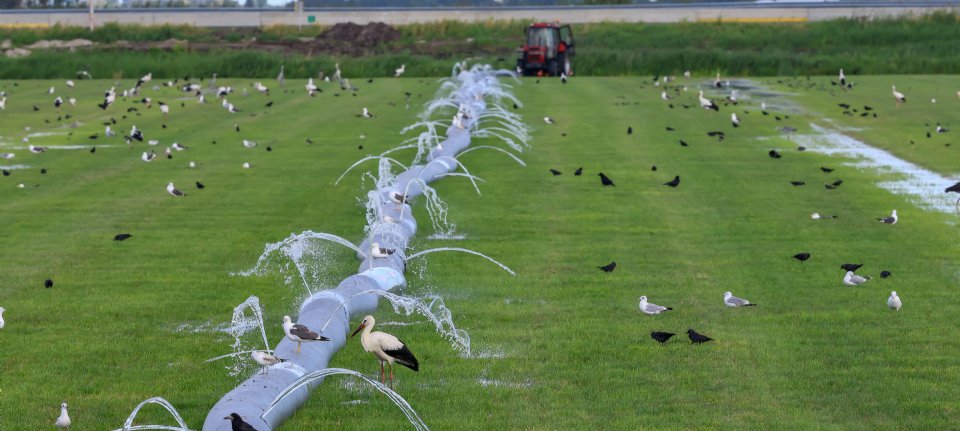
Farmers in Friesland are submerging their land with water as a method to combat a significant mouse problem and drought conditions. This practice involves using irrigation hoses to flood grassland, a technique previously employed by farmers in the province.
The flooding brings mice and other small creatures to the surface, creating a feeding ground for birds, including storks. One observation near Lemmer showed approximately ninety storks and other birds feasting on a flooded field adjacent to the A6 highway.
Why It Matters
The mouse infestation is causing considerable damage to farmland. Farmers are battling damage from mice, drought, and geese, impacting their ability to harvest sufficient forage. This year, one farmer reported obtaining only four hay cuttings, with the final one being of low quality, necessitating reliance on last year's stored feed.
While flooding fields to control mice is a farmer's strategy, it coincides with an unusually large population of storks this year. This phenomenon highlights the ecological impact of agricultural challenges and environmental conditions, where a high mouse population, the primary food source for many predators, supports a larger population of birds of prey and consequently, meadow birds.
Background
The cycle of mouse infestations appears to be shortening, with farmers experiencing problems every three to four years instead of the previous four to five years. Climate conditions are considered a significant factor, as prolonged dry periods create an attractive habitat for mice, which do not thrive in wet conditions.
Water authorities note an increase in water demand. To ensure water availability in the polders, farmers intending to irrigate or flood their land must notify local water board managers in advance. Sufficient water reserves are currently available in the IJsselmeer to supply the Friesland Boezem and surrounding polders.
Key Facts
- Friesland farmers are flooding their land to combat mouse infestations and drought.
- This practice attracts large numbers of storks and other birds to the flooded fields.
- Farmers are experiencing damage from mice, drought, and geese, affecting forage yields.
- The cycle of mouse infestations is reportedly shortening.
- Farmers must notify water authorities before flooding their land.
- Water reserves are currently sufficient to supply the polders.
Sources reviewed
Project Chintan independently synthesized and analyzed information cross-checked across the sources listed above.
Related stories

Japan Halts Indian Mango Imports Over Sterilization Concerns

India's Ponds: Diverse Ecosystems Teeming With Life

Reit-WM in Aachen: Controversy Over Water Usage Amidst Drought