
UCI's 'Green' Race Claims Questioned Amid Oil Sponsorship and Emissions
The UCI has promoted the Arctic Race of Norway's environmental credentials, citing its electric vehicle fleet. However, the race's reliance on diesel vehicles, flights, and speedboat trips, coupled with its oil company sponsor, raises questions about its actual climate impact.
Key takeaways
- The UCI has highlighted the Arctic Race of Norway's electric vehicle fleet as a significant environmental achievement.
- Despite electric vehicles, the race still relies on diesel vehicles, numerous flights, and speedboat trips.
- The race's sponsorship by oil and gas giant Equinor draws criticism for promoting environmentalism while linked to fossil fuel exports.
- Recent years have seen record high temperatures in Arctic Norway, with broader climate impacts affecting the region.
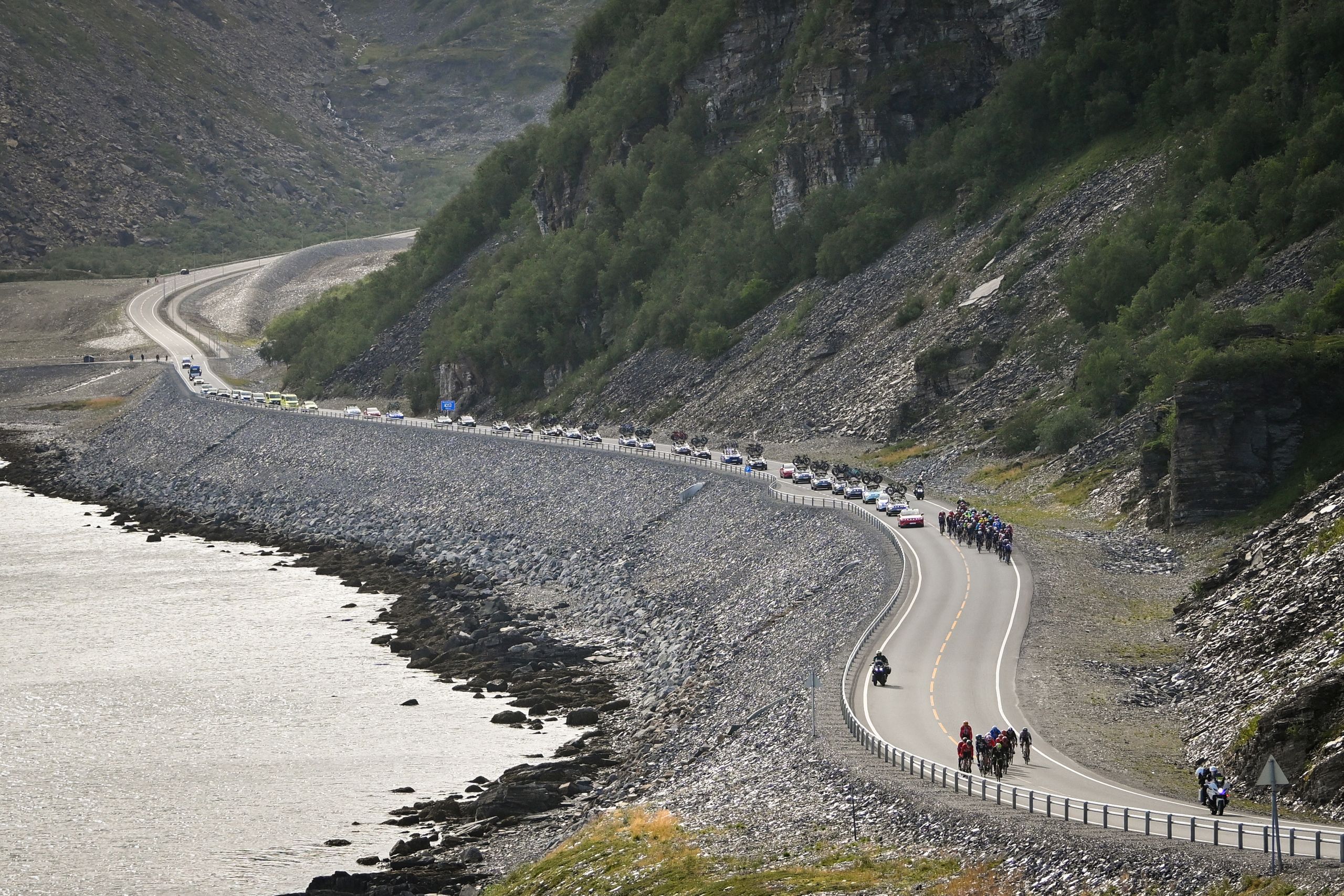
The Union Cycliste Internationale (UCI) is highlighting the environmental initiatives of the Arctic Race of Norway (ARN). The UCI's website report, "The Green Breakaway: Arctic Race of Norway, electrifying the far north," specifically notes the ARN's transition to a fully electric vehicle fleet in 2023. This initiative is presented as groundbreaking within the cycling world.
Despite the focus on electric vehicles, the ARN's environmental audit reveals a continued reliance on fossil fuel-powered transport. The 2025 edition utilized 92 diesel vans and heavy vehicles, alongside 690 national and international flights and 18 speedboat trips. These figures contrast with the UCI's 2030 goal for teams to achieve carbon neutrality.
Further scrutiny of the race's environmental claims comes from its sponsorship. Equinor, a Norwegian state-owned oil and gas company, has sponsored the ARN since its inception. Critics point out that while the race's electric cars may offset a small amount of emissions, the sponsor, Equinor, is a major exporter of oil and gas, contributing significantly to global greenhouse gas emissions.
The ARN's environmental efforts are supported by Norway's high rate of electric vehicle adoption, a trend fostered by government incentives since the 1990s. By the end of 2025, nearly all new cars sold in Norway are projected to be electric. However, the race's sponsor, Hyundai, exclusively sells electric cars in the Norwegian market, influencing the fleet composition.
Key Facts
- The Arctic Race of Norway (ARN) has been promoted by the UCI for its transition to a fully electric vehicle fleet in 2023.
- The ARN organizers achieved certification from Norway's Eco-Lighthouse organization and are founding signatories of the UCI Climate Action Charter.
- In 2025, the ARN utilized 130 electric vehicles, 92 diesel vans and heavy vehicles, 690 flights, and 18 speedboat trips.
- Equinor, a Norwegian state-owned oil and gas company, has sponsored the ARN since its inception and is its current transport sponsor.
- Norway has a high rate of electric vehicle adoption, with over 96% of new car purchases expected to be electric by the end of 2025.
- The UCI aims for all teams to become carbon neutral by 2030.
- Temperatures in Arctic Norway have been record-breaking, with the 2024 race averaging 25°C.
- A fire in Drammen, Norway, destroyed a hundred homes in July, following a severe heatwave.
- The Svalbard archipelago is heating faster than anywhere else on Earth.
Background
The Arctic Race of Norway, which takes place from August 13 to 16, has been noted for its environmental initiatives. These include achieving certification from Norway's Eco-Lighthouse organization and becoming a signatory to the UCI Climate Action Charter. The race's organizers have emphasized their transition to an all-electric fleet for race transport.
However, the context of these initiatives includes rising temperatures in Arctic Norway, with record heat recorded in recent years. The 2024 race was the hottest on record, averaging 25°C. Norway's northernmost territory, Svalbard, is experiencing rapid warming, and significant heatwaves have impacted the country, leading to events like a fire that destroyed 100 homes in Drammen.
Sources reviewed
Project Chintan independently synthesized and analyzed information cross-checked across the sources listed above.
Related stories

Environmentalist Restores 18 Lakes and Plants 1.5 Lakh Trees in Karnataka

Andhra Authorities Tackle Declining Tank Storage Capacity

Portugal's Minister Urges Balance in Energy Projects and Agriculture
