
Portugal's Minister Urges Balance in Energy Projects and Agriculture
Portugal's Minister of Agriculture is calling for a balance between renewable energy projects and agricultural production. He emphasized the need to select non-agricultural land for solar and wind farms to ensure food security.
Key takeaways
- Portugal's Minister of Agriculture stressed the need to balance renewable energy projects with agricultural production.
- The minister suggested utilizing non-agricultural land for solar and wind farms to protect food security.
- Environmental impact assessments for new energy projects are open for public consultation.
- Local officials and civic platforms are seeking more information and clarity on the benefits of these projects.
- A platform warned that large-scale renewable energy projects threaten food sovereignty in specific regions of Portugal.
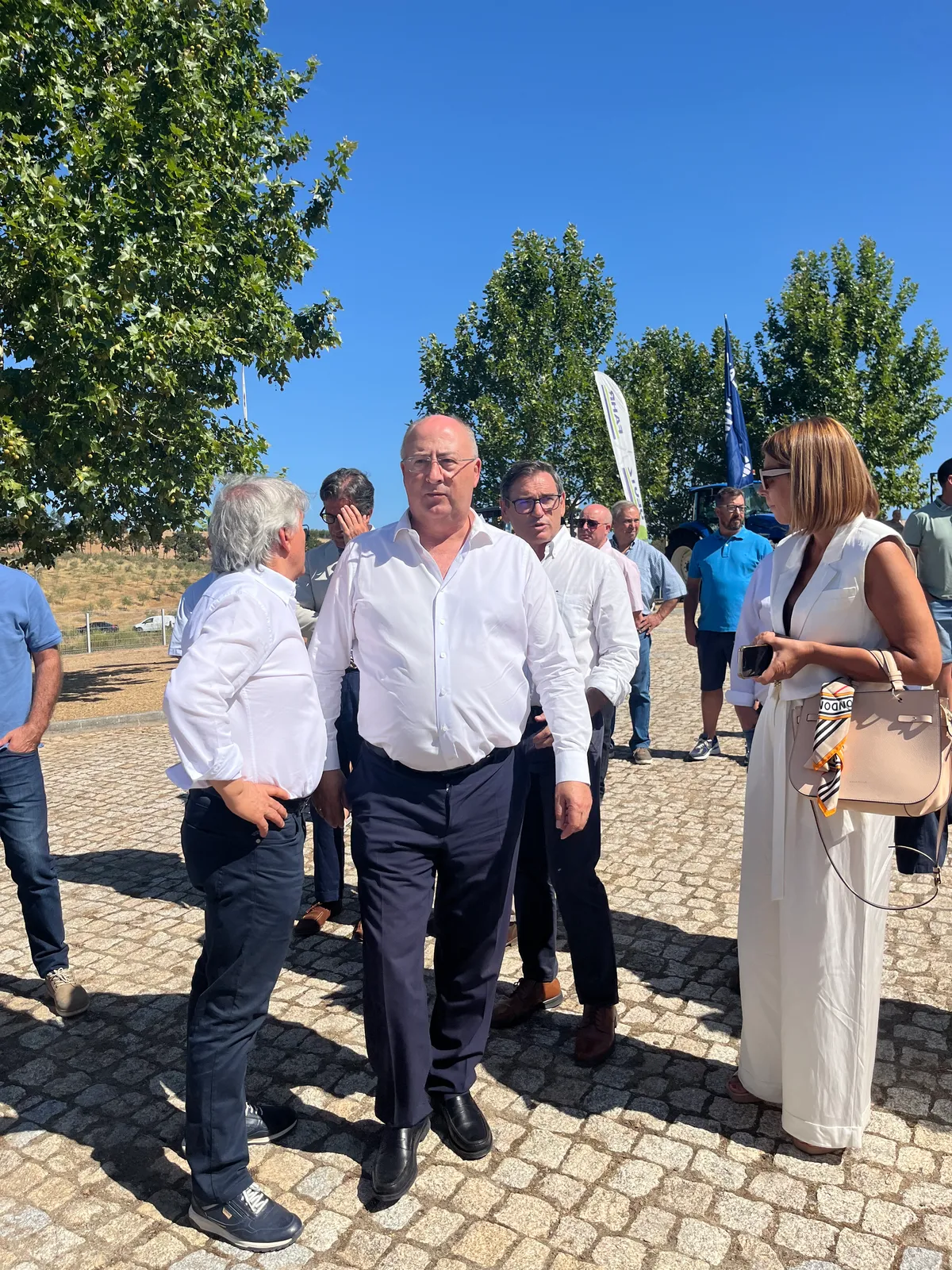
Portugal's Minister of Agriculture, José Manuel Fernandes, has called for a balanced approach to the installation of wind and solar energy farms, emphasizing that these projects should not negatively impact agricultural production. The minister stated that the goal is to reconcile the need for increased energy production with the essential requirement of ensuring food availability.
Fernandes suggested that suitable locations for photovoltaic panels would be on lands not designated for agriculture. He also noted that installations could be elevated above the ground to coexist with farming activities. The minister highlighted that the government aims for this reconciliation of interests, although the licensing authority lies elsewhere.
The minister pointed out that the environmental impact assessment proposals for the Avelanoso wind farm and solar parks in the Mirandês plateau are currently open for public consultation. He urged various entities, civic platforms, and associations to participate in this process to safeguard the public interest, which he defined as encompassing food security, energy security, interest conciliation, and common sense. Fernandes added that environmental considerations should not hinder competitiveness or territorial cohesion.
He also stressed that these energy projects must provide tangible benefits to the local territories, such as generating revenue. The mayor of Vimioso, António Santos, plans to discuss the issue with the Municipal Assembly in September to seek further clarification from project developers. Santos acknowledged a lack of clear information regarding the projects' benefits and drawbacks, leading to cautious stances from local representatives.
The Platform Nordeste Vivo (PNV) previously warned the government on July 23 about the extensive and unorganized spread of large-scale solar and wind projects in the Mirandês plateau and Douro Superior, deeming them a threat to food sovereignty. The PNV requested the Minister of Agriculture to actively intervene with the Ministry of Environment and Energy to temporarily halt approvals and construction of new projects until further evaluation.
Sources reviewed
Project Chintan independently synthesized and analyzed information cross-checked across the sources listed above.
Related stories

Cuddalore Collector Launches Biodiversity and Climate Change Tour for Students
Telangana Launches New Ration Cards with Advanced Security Features

Floodwaters Revive Water Lily Bloom in Malarikkal
