
Mecca Joint Defence Pact Unites Saudi Arabia, Turkey, and Pakistan in Mutual Protection
Riyadh, Ankara, and Islamabad have ratified a collective security agreement stipulating that an offensive against one signatory constitutes an attack on all three. This strategic realignment follows escalating regional hostilities involving Iran, Israel, and the United States.
Key takeaways
- A new defense treaty treats an attack on Saudi Arabia, Turkey, or Pakistan as an attack on all three members.
- The agreement follows major regional escalations involving Iran, the United States, Israel, and Houthi rebels.
- The pact focuses on collective deterrence and enhancing military-industrial cooperation among the three nations.
- Iran has officially criticized the move, claiming external security papers cannot protect the Saudi state.
Why It Matters
This tripartite alliance represents a fundamental shift in the Middle Eastern security framework. By formalizing a mutual defense obligation, Saudi Arabia, Turkey, and Pakistan are attempting to establish a credible deterrent against regional adversaries. The agreement signals a departure from historical reliance on Western security guarantees, particularly for Riyadh, following recent direct strikes on Gulf energy infrastructure and shipping lanes.
Background
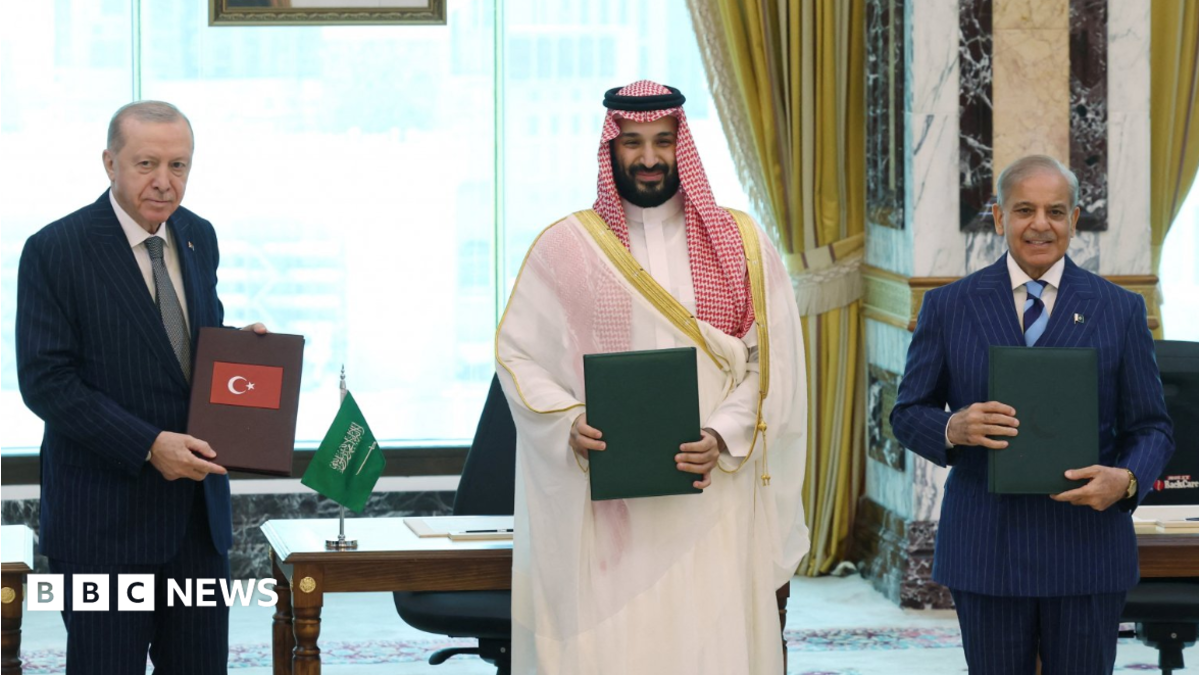
The geopolitical climate darkened on February 28 after joint U.S. and Israeli operations against Iran triggered a wave of retaliatory strikes. Tehran and its regional proxies responded by targeting Saudi facilities and obstructing the Strait of Hormuz and the Red Sea. Concurrently, Yemen's Houthi rebels initiated a maritime embargo against the Kingdom, striking airports and tankers. These vulnerabilities, combined with Pakistan's 2025 border skirmishes with India and Turkey's desire to expand its military-industrial footprint, served as the catalyst for the summit in Mecca involving Crown Prince Mohammed bin Salman, President Recep Tayyip Erdogan, and Prime Minister Shehbaz Sharif.
Key Facts
- The Mecca Joint Defence Agreement mandates collective deterrence, treating an armed assault on one member as an assault on all.
- Signatories pledge to enhance all facets of defense cooperation, including technology partnerships and military interoperability.
- Ebrahim Rezaei of Iran's National Security commission dismissed the pact, arguing that external agreements fail to provide genuine security for the Saudis.
- The alliance leverages Saudi Arabia's financial resources, Turkey's advanced defense industry, and Pakistan's growing role as a diplomatic mediator.
- Strategic analysts note that while the pact increases the cost of aggression, specific triggers for military intervention remain undefined.
What Happens Next
The practical application of the treaty remains the primary point of uncertainty. Diplomatic observers are questioning whether Turkey would be compelled to intervene in a renewed Saudi-Houthi conflict, or if Riyadh would face a declaration of war against India should tensions with Pakistan escalate. For the moment, the signatories are prioritizing the deterrent value of the alliance, aiming to stabilize energy corridors and protect sovereign territory through combined military and economic pressure.
Source: BBC — World
Related stories

Crude Prices Rebound as Markets Await Resolution on Strait of Hormuz Access
Riyadh-Ankara-Islamabad Accord: A New Operational Challenge for Indian Defense

Trump Forecasts Imminent Resolution to Middle East Conflict Amid Hormuz Negotiations
