
Riyadh-Ankara-Islamabad Accord: A New Operational Challenge for Indian Defense
The Mecca Agreement between Saudi Arabia, Turkey, and Pakistan shifts the South Asian military balance by merging financial depth with advanced defense technology. This alliance restricts India’s tactical timeline while providing Pakistan with a robust secondary channel for wartime resupply.
Key takeaways
- The Mecca Agreement transforms Saudi Arabia from a neutral mediator into a formal treaty partner with Pakistan’s military.
- Turkey and China together provide a persistent ISR architecture that makes Indian military mobilization more visible.
- Saudi financial backing creates a rapid acquisition channel for Turkish and Chinese weapons systems.
- A shortened political timeline for conflict limits India's ability to achieve sequenced military objectives before a ceasefire.
- Wartime resupply of consumables and munitions can now reach Pakistan through both Chinese and NATO-aligned Turkish channels.
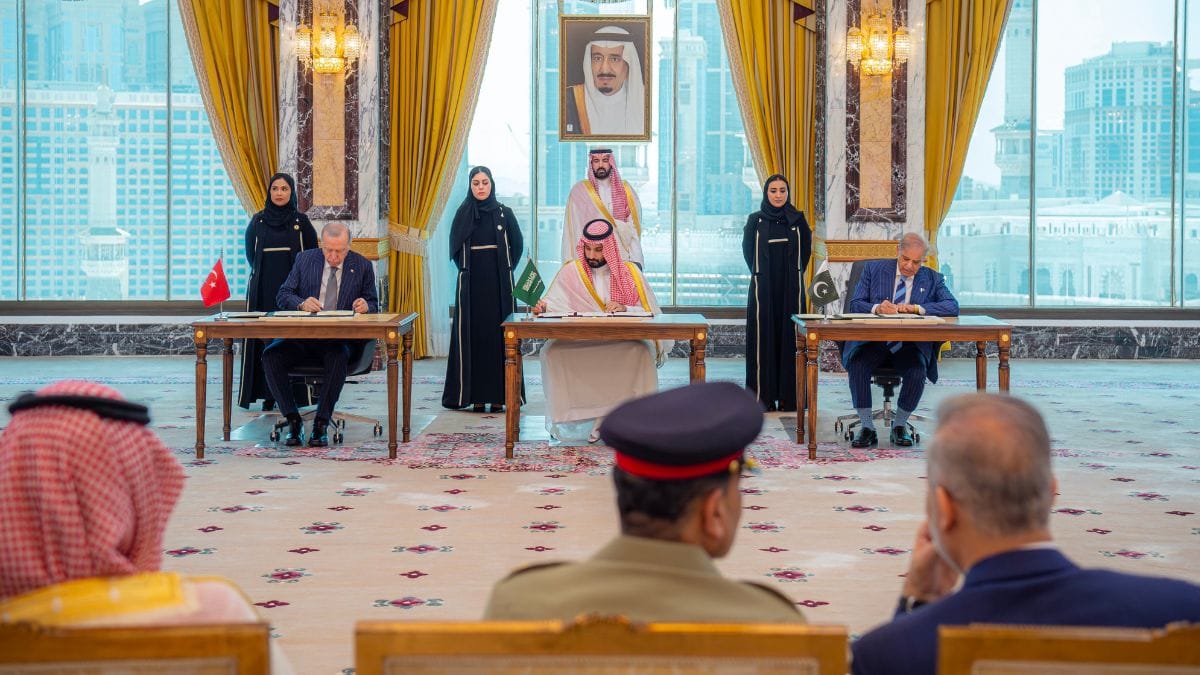
The emergence of the Mecca Agreement involving Pakistan, Turkey, and Saudi Arabia demands a shift in focus from diplomatic speculation to military reality. While New Delhi has largely analyzed this grouping through the lens of Middle Eastern geopolitics, the trilateral pact carries direct consequences for the Indian military's operational planning.
The Compressed Conflict Timeline
Modern India-Pakistan hostilities, as evidenced by Operation Sindoor, suggest that future wars will be brief, high-intensity campaigns rather than extended battles of attrition. Indian strategy relies on a sequence of actions: degrading enemy forces, exploiting gaps, and consolidating gains to force a change in Islamabad's behavior. This process requires time. Conversely, Pakistan’s objective is to absorb pressure until international intervention mandates a ceasefire.
The new grouping accelerates this diplomatic pressure. Saudi Arabia, previously a neutral mediator with significant investments in India, now functions as a treaty partner to Pakistan. This status provides Riyadh with institutional access to Pakistan’s command structure and a formal right to be consulted. Consequently, the window for India to convert tactical wins into strategic results is narrowing as Saudi Arabia’s motivation to end hostilities quickly gains new formal authority.
Building a Triple-Threat Ecosystem
The pact does not replace China’s role as Pakistan’s primary military benefactor; instead, it augments it. China continues to provide the strategic backbone through long-range air defenses, naval platforms, and satellite navigation. Turkey introduces a specialized layer of capability, including electronic warfare systems, loitering munitions, and battlefield communications produced by firms like Baykar and Aselsan. Saudi Arabia completes the triangle by providing the financial liquidity necessary to transform Pakistani requirements into immediate orders.
Key Facts
- The Mecca Agreement establishes a formal defense partnership between Pakistan, Turkey, and Saudi Arabia.
- China remains the primary supplier of Pakistan's strategic assets, including fighter aircraft and missile technology.
- Turkish defense firms such as Roketsan and Havelsan provide specialized electronic warfare and precision weapons.
- Saudi Arabia offers a second wartime resupply channel through a NATO-linked partner, bypassing potential single-source bottlenecks.
- The alliance improves Pakistan's ISR (Intelligence, Surveillance, and Reconnaissance) capabilities, making Indian troop movements harder to hide.
Why It Matters
For Indian planners, the primary concern is the integration of these diverse architectures. While merging Chinese data links with Turkish battlefield management systems presents technical friction that may take years to resolve, the immediate threat lies in logistics. Modern short-duration wars are won through sustainment. This grouping ensures that Pakistan has access to a steady flow of munitions, spares, and consumables that can be delivered in weeks rather than years.
What Happens Next
The Indian military must prepare for a battlefield that is increasingly transparent. The combination of Chinese satellite surveillance and Turkish drone ISR creates a persistent monitoring web over the subcontinent. As Pakistan gains the ability to sustain its forces through a well-funded, dual-source supply chain, India may need to recalibrate its doctrine to achieve decisive results even faster than current models anticipate.
Source: ThePrint
Related stories

Crude Prices Rebound as Markets Await Resolution on Strait of Hormuz Access

Trump Forecasts Imminent Resolution to Middle East Conflict Amid Hormuz Negotiations
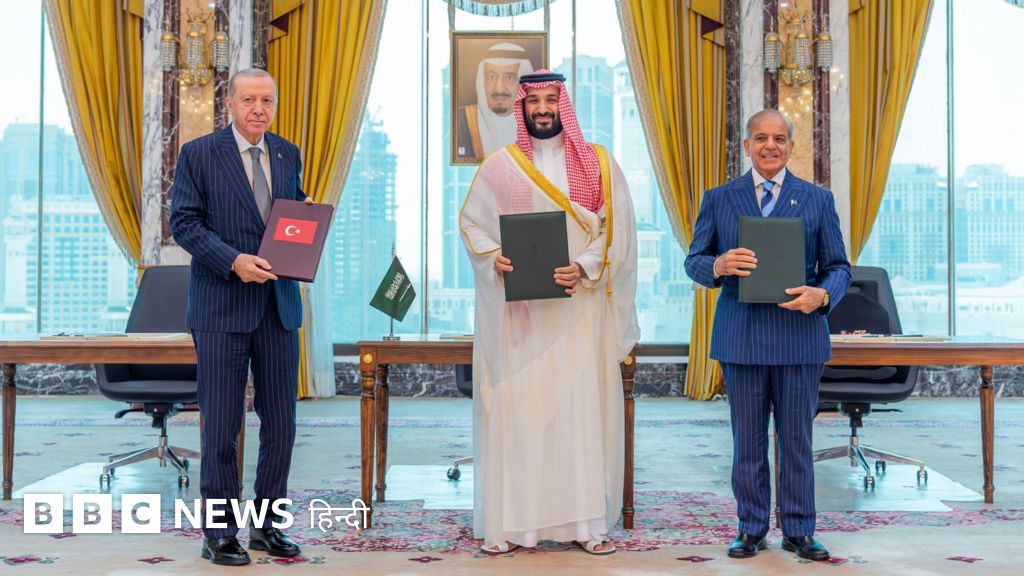
Trilateral Defense Pact: Evaluating Riyadh and Ankara's Stance in Indo-Pak Conflicts
