
Revolt Against the Pajero Culture: The High Cost of Pakistan's Elite Control in PoK
Recent fatal clashes in Pakistan-occupied Kashmir have exposed a deep-seated rift between grassroots activists and the Islamabad-backed elite. Protesters are demanding an end to systemic corruption and a dismantling of the constitutional mechanisms used to maintain central control.
Roots of Unrest: Economic Disparities and Elite Privilege
For decades, the political landscape of Pakistan-occupied Kashmir (PoK) has been defined by what local observers call "Pajero culture." This term refers to the stark contrast between the region's struggling populace and a political elite that displays its power through fleets of luxury SUVs. While Islamabad promotes the territory internationally as an independent entity with its own constitution, president, and prime minister, the local reality is one of chronic economic misgovernance and a lack of transparency.
The Jammu Kashmir Joint Awami Action Committee (JKJAAC) stands at the forefront of the current uprising. Formed in September 2023, this coalition brings together students, traders, lawyers, and transporters. Their platform targets the removal of special allowances for government officials and the implementation of subsidies for electricity and wheat to match rates available in other Pakistani provinces. Beyond sheer survival, the JKJAAC demands universal access to healthcare and education, as well as the construction of essential infrastructure, such as an airport.
The Deadlock Over Political Representation
Central to the current stalemate is a dispute over the legitimacy of "refugee seats" within the PoK Legislative Assembly. Currently, 12 of the 45 general seats are reserved for individuals who migrated from the Indian side of Jammu and Kashmir in 1947. Prime Minister Chaudhry Anwar ul Haq has stated that the deadlock over these seats remains unresolved due to their symbolic link to the broader Kashmir movement.
However, critics view these seats as a mechanism for Islamabad to exert direct influence over local governance. Key findings regarding these constituencies include:
- Nine of the 12 reserved seats are located outside PoK, primarily in Punjab.
- Voters in these districts are often Pakistani citizens with no daily ties to the region’s local administrative challenges.
- The JKJAAC argues these seats dilute the voices of residents and act as a tool for federal interference.
Escalation and State Response
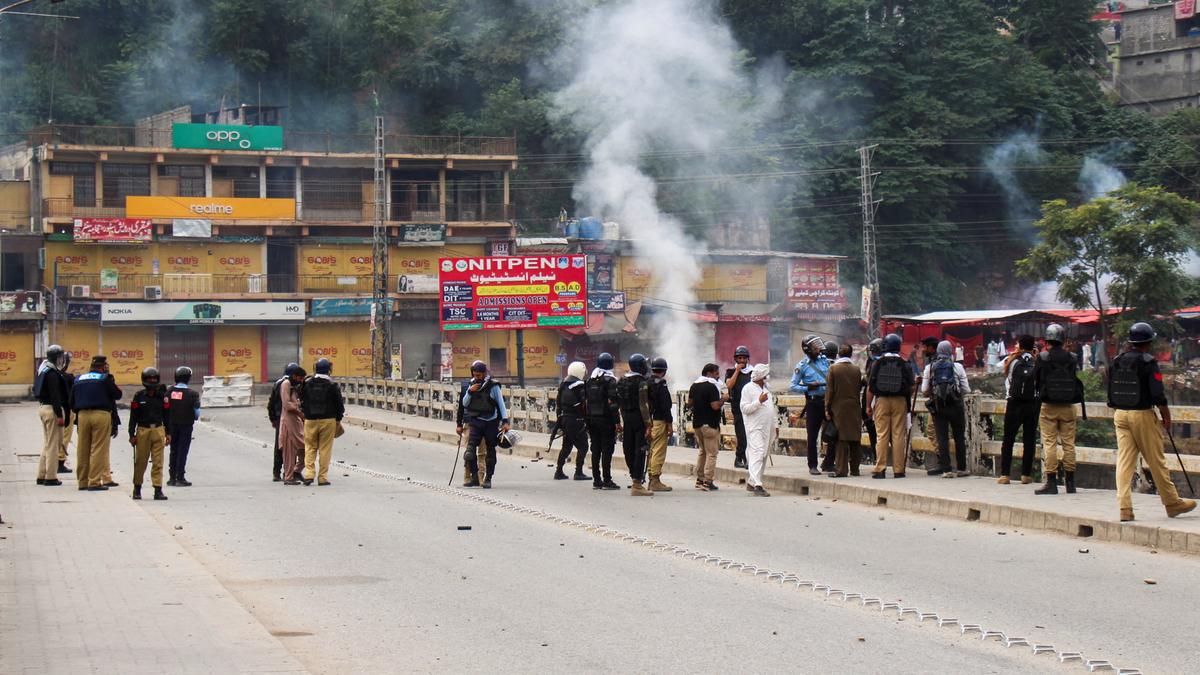
The movement has faced a violent crackdown as it moved from civil disobedience to open street protests. Independent reports indicate at least 11 protesters and three police officers have lost their lives in recent clashes. While the JKJAAC alleges that over 200 civilians have suffered gunshot wounds, official government narratives dispute these figures. Authorities claim to have accepted approximately 90% of the protesters' demands, including electricity reforms and the dismissal of legal cases against activists.
JKJAAC leader Syed Hafeez Hamdani has rejected these government assertions, maintaining that significant promises remain unfulfilled. Under a cloud of communication blackouts, the region remains tense. Local grievances now challenge the historical binary that अक्सर dismisses domestic criticism as external interference, revealing a profound struggle for genuine accountability within the territory.
Source: The Hindu — Home

