
Notre Dame’s Resurgence: A Centuries-Old Icon Reclaims Its Place in the Heart of Paris
Following years of restricted access after the 2019 blaze, the cathedral emerges from a complex restoration that blends medieval history with modern technology. Local worshippers and tourists converge on Île de la Cité as the monument begins its phased reopening.
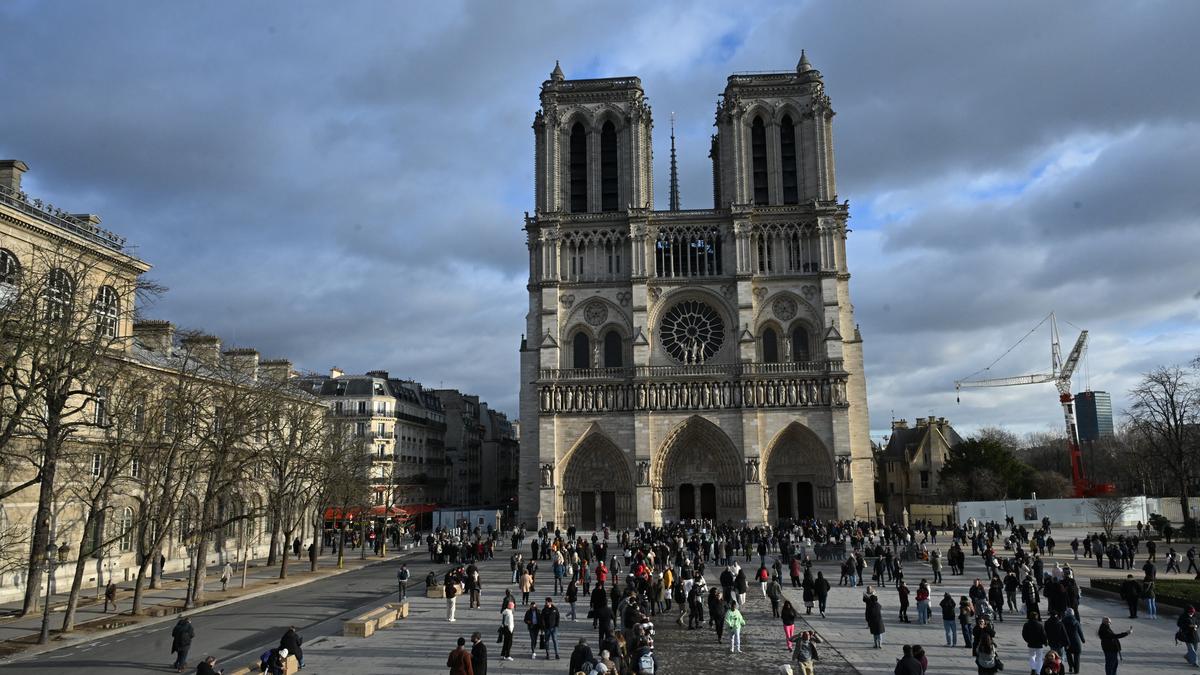
Metamorphosis of a Historic Landmark
Since the catastrophic fire of 2019, Notre Dame has remained largely shrouded by scaffolding, yet its gravitational pull on Paris remains constant. Located on the Île de la Cité—the city's ancient core inhabited by Romans as early as 500 BC—the cathedral serves as a temporal anchor. Construction originally began in 1163 under Maurice de Sully and spanned a century. While the French Revolution saw the structure stripped of precious metals for melting, a major restoration in the mid-19th century stabilized its legacy until the modern disaster forced a massive rebuilding effort.
The current restoration has been both ambitious and debated. To recreate the historic roof structure known as "Le Foret," or The Forest, 1,000 oak trees were harvested from 200 different French forests, sparking criticism from environmental quarters. Today, a collective of nationwide artisans continues work on the site, recently completing the restoration of statues for the famous spire. On September 20, the Towers of Notre Dame and the chimera gallery will welcome the public again. Upcoming technical updates include the replacement of the wooden shafts supporting the massive bells, Emmanuel and Marie.
The Intersection of Parisian Life
The cathedral sits at a cultural crossroads. To its south lies the student-heavy Latin Quarter and the Sorbonne; to the north, the Marais district. Nearby sits the Hôtel Dieu, among the world's oldest hospitals. The massive parvis in front of the cathedral serves as a public theatre where musicians, hip-hop dancers, and pickpockets operate alongside oblivious joggers and tourists from every continent. For many Parisians, the site is a vessel for family tradition. One local resident, attending a performance of Mozart’s Requiem, noted she was returning with her four-year-old child to revive a practice once shared with her own mother.
A Modern Interior Emerges
Stepping inside reveals a stark aesthetic transformation. Conservators utilized a specialized latex paste to lift centuries of grime from the walls, revealing a luminosity previously hidden by soot. The cathedral now functions as a dialogue between eras:
- Artistic Heritage: 20th-century works by Henri Matisse and Georges Braque stand alongside medieval statues and the Crown of Thorns.
- Technological Shift: Visitors now purchase votive candles via digital interfaces and make donations through contactless payment systems.
- Active Renovation: Though mass is being held, shadows of workers are visible through stained glass as full completion is not expected until 2026.
Outside, the contrast of Parisian life persists. While queues form for the cathedral's beauty, a parallel line of immigrants forms daily at the nearby Préfecture de Police seeking residency permits. For the residents and newcomers alike, the cathedral remains a point of universal convergence, transcending simple religious utility to become a symbol of collective endurance.
Source: The Hindu - Lifestyle

