Ancient Roman Merchant Vessel Discovered Near Mazara del Vallo
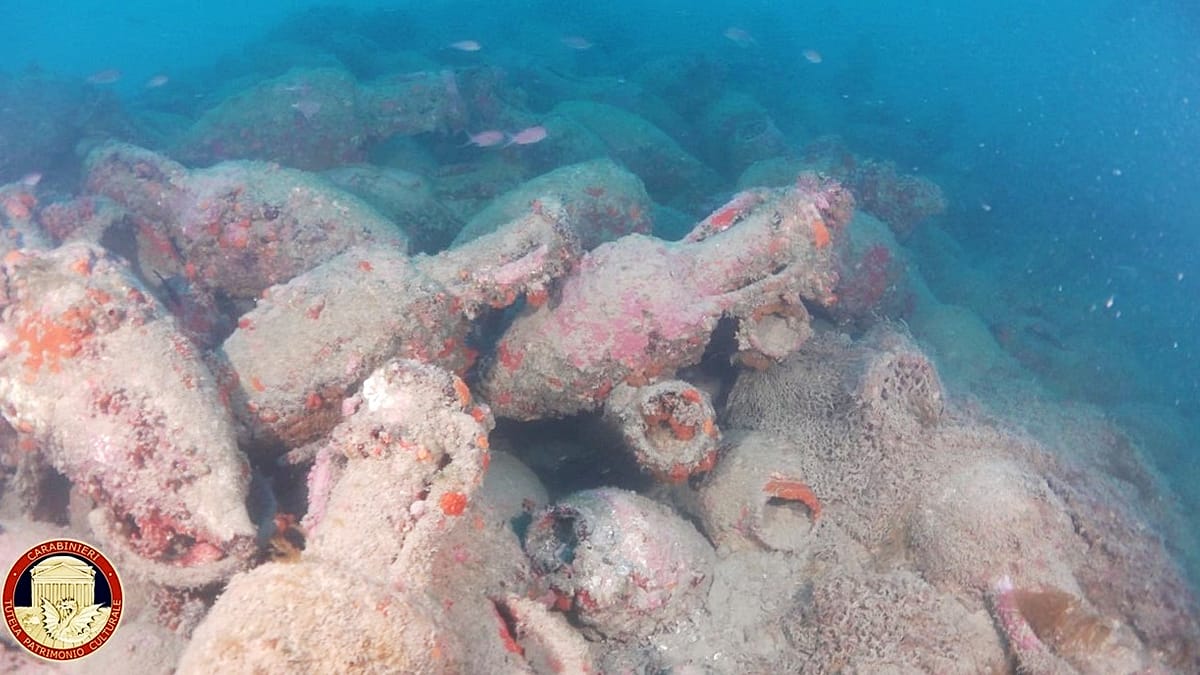
Archaeologists have located a 2,000-year-old Roman shipwreck containing hundreds of ceramic containers off the coast of Sicily. The vessel, dating to the second or first century BC, represents a significant find for Mediterranean maritime history.
Key takeaways
- A 69-foot Roman merchant ship from the 1st or 2nd century BC was found off the Sicilian coast.
- The wreck contains hundreds of amphorae used for transporting wine and olive oil.
- Italian authorities have secured the site for an official archaeological investigation into the vessel's origin.

What Happened
A Roman shipwreck dating to either the first or second century BC has been identified off the coast of Mazara del Vallo, Sicily. The vessel, measuring approximately 69 feet in length and 20 feet in width, was found at a depth of roughly 150 feet. The site includes the remains of the ship and a large cargo of two-handled ceramic amphorae, which were standard containers used in antiquity to transport commodities such as wine and olive oil.
The discovery originated from a report by Giacomo De Mola, a local fisherman and free-diver, who noted an unusual formation on his scanner while surveying the seabed. Following the tip, specialist divers and Italian authorities confirmed the presence of the wreck approximately two miles off the Sicilian coast.
Why It Matters
Italian Culture Minister Alessandro Giuli described the find as one of the most significant underwater archaeological discoveries in recent years. The density and preservation of the amphorae provide a clear look into Roman maritime trade routes and logistics during the late Republican or early Imperial era. The presence of marine life inhabiting the jars highlights how such wrecks integrate into the modern underwater ecosystem over two millennia.
Key Facts
- The shipwreck is estimated to be over 2,000 years old.
- The site is located 150 feet below the surface and two miles from the coast of Sicily.
- The vessel's dimensions are reported as 69 feet long and 20 feet wide.
- The cargo consists of hundreds of well-preserved ceramic amphorae.
- Specialist divers and police were involved in the verification after a civilian sighting.
What Happens Next
Authorities have placed the site under protection to prevent unauthorized access. Experts are initiating a comprehensive archaeological investigation to determine the ship's port of origin and the specific nature of its final voyage. Further analysis of the ceramic containers may reveal more precise details regarding the cargo and trade patterns of the period.
Sources reviewed
Project Chintan independently synthesized and analyzed information cross-checked across the sources listed above.
Related stories
Roman Cargo Ship Discovery off Mazara del Vallo Signals Major Archaeological Find

Rowan Atkinson: From County Durham Origins to Enduring Cultural Influence

Typhoon Dolphin Hits Eastern China Forcing Mass Evacuations and Flight Cancellations