
Roman Cargo Ship Discovery off Mazara del Vallo Signals Major Archaeological Find
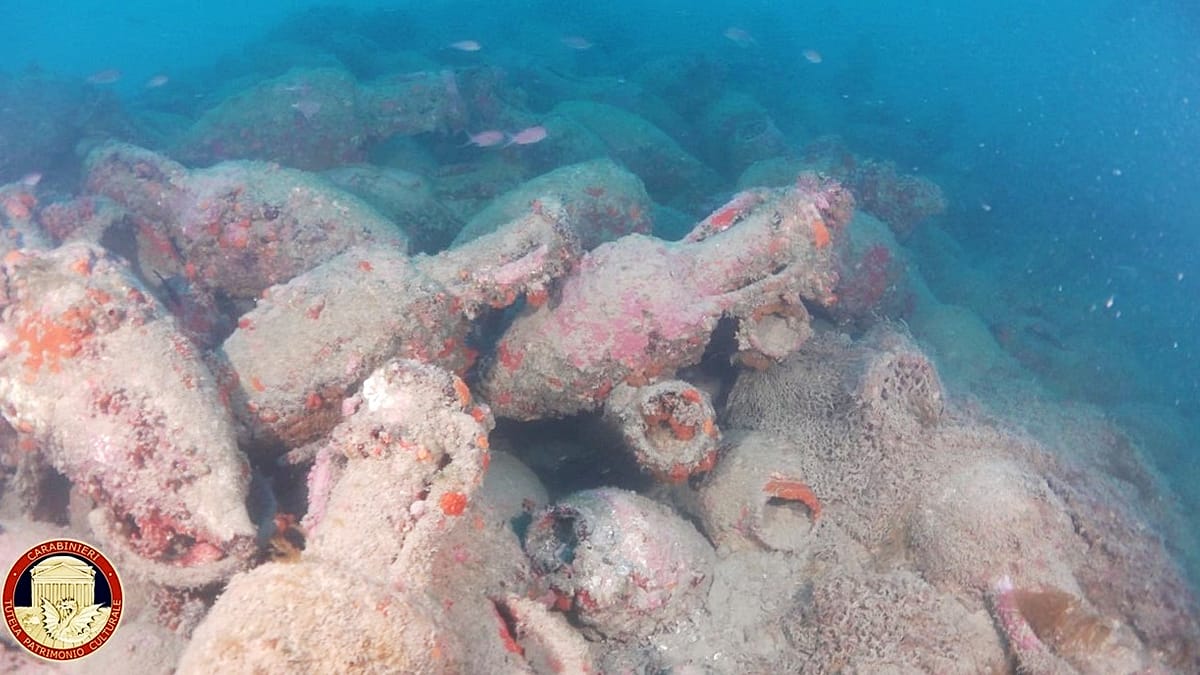
Divers off the western coast of Sicily have located a Roman shipwreck dating back over 2,000 years, containing hundreds of intact storage vessels. The site, situated 150 feet below the surface, represents one of the most significant underwater finds in the region in recent years.
Key takeaways
- A Roman shipwreck from the 2nd or 1st Century B.C. was found 3 miles off the coast of Mazara del Vallo, Sicily.
- The vessel contains hundreds of amphorae once used to transport olive oil, wine, and grain.
- The site was initially detected via sonar by a local fisherman before being confirmed by Italian authorities.
What Happened
Italian divers discovered an ancient Roman shipwreck approximately 3 miles off the coast of Mazara del Vallo, Sicily. The vessel, located at a depth of 46 meters (150 feet), dates to the second or first century B.C. The discovery originated when fisherman and free-diver Giacomo De Mola identified an anomaly on sonar technology while surveying the seafloor. Upon investigation, the mass, initially appearing to be a rock, was identified as a large collection of ancient ceramic containers.
Key Facts
- The shipwreck measures approximately 21 meters (69 feet) in length and 6 meters (20 feet) in width.
- The mound of cargo stands over 6 feet tall on the seabed.
- Hundreds of amphorae, ancient clay jars used to transport wine, olive oil, and grain, were found at the site.
- The discovery was reported to the Sicilian Region’s Superintendency of the Sea, the body responsible for managing marine archaeological sites.
- Specialist police divers and the Italian Ministry of Culture have confirmed the site's age and historical significance.
Why It Matters
Alessandro Giuli, Italy’s Minister of Culture, has categorized the wreck as one of the most important underwater archaeological discoveries made recently. The high density and preserved state of the amphorae provide evidence of ancient Mediterranean trade routes and logistics during the late Roman Republic era. The site currently serves as a marine habitat, with local divers noting significant marine life, including eels and snappers, inhabiting the ceramic jars. The presence of such a large, concentrated cargo pile suggests the vessel was a dedicated merchant ship transporting bulk goods between regional ports.
Sources reviewed
Project Chintan independently synthesized and analyzed information cross-checked across the sources listed above.
Related stories

Ancient Roman Merchant Vessel Discovered Near Mazara del Vallo

SAFA Increases Financial Terms for Pitso Mosimane Following Initial Rejection
Ben Stokes Reverses ODI Retirement for England Series Against New Zealand
