
Last common ancestor likely a tree climber, study suggests
A study analyzing wild sooty mangabey foot flexibility proposes that the last common ancestor of humans and chimpanzees could climb trees. Researchers compared bone flexibility to chimpanzees using video evidence from Ivory Coast to infer locomotor traits.
Key takeaways
- The last common ancestor of humans and chimpanzees is proposed to have been capable of climbing trees.
- Video analysis of sooty mangabey foot flexibility is used to draw parallels with chimpanzee climbing mechanics.
- Midfoot flexion around 46 degrees in mangabeys is similar to chimpanzee flexion around 45 degrees during climbs.
- Fossil records from the Late Miocene are sparse, complicating direct reconstruction of the ancestor's appearance.
- The study relies on field observations from the Taï Forest Monkey Project in Ivory Coast and involves Ohio State researchers.
What Happened
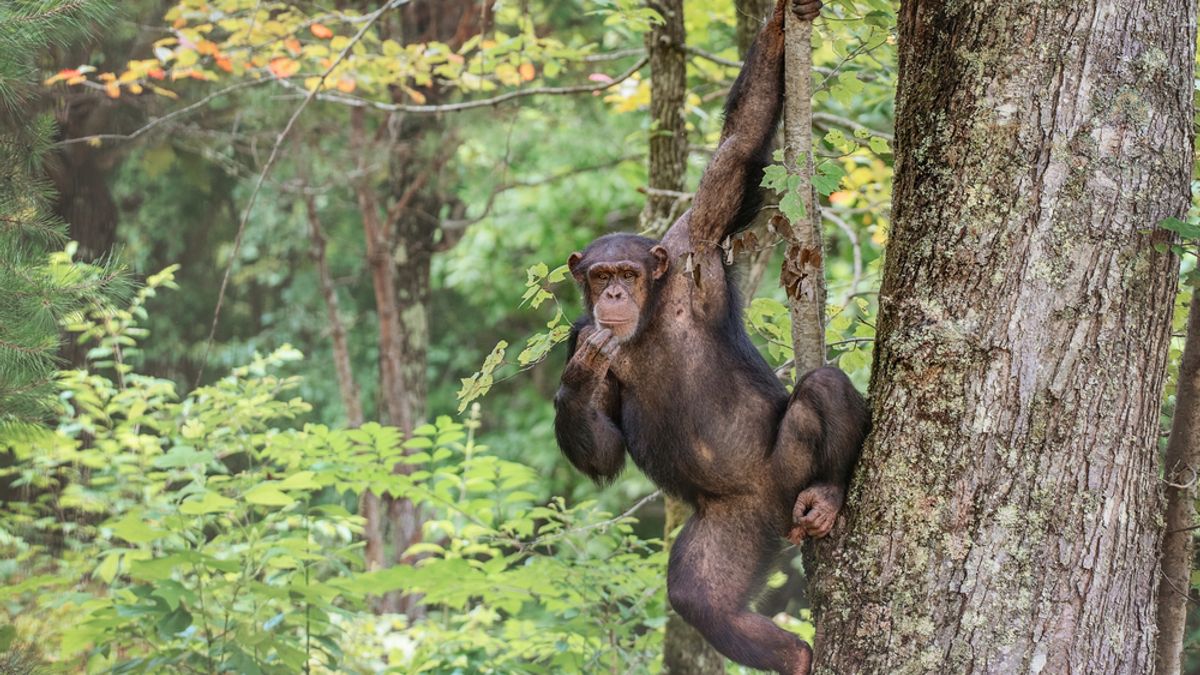
Researchers published findings in the Proceedings of the National Academy of Sciences arguing that the last common ancestor of humans and chimpanzees was likely capable of climbing trees. The conclusion comes from analyzing video footage of wild sooty mangabey monkeys and comparing their midfoot flexibility to that observed in chimpanzees. The work draws on field observations from the Taï Forest Monkey Project in Ivory Coast and involves researchers led by Luke Fannin of Ohio State University and W. Scott McGraw, also of Ohio State.
Key measurements show sooty mangabeys achieving a midfoot flex of about 46 degrees during vertical climbing, a range closely matching the 45-degree ankle flex observed in chimpanzees during tree climbing. The study notes that humans typically have a midfoot flex capability around 20 degrees, highlighting a difference between human and some nonhuman primates’ foot mechanics.
The researchers discuss the ongoing challenge of reconstructing the last common ancestor’s appearance due to a sparse Late Miocene fossil record for African great apes, which historically complicates inferences about movement. The new evidence shifts attention toward locomotor behavior—specifically climbing ability—as a potential commonality linking humans and chimpanzees despite divergent foot morphologies.
The study’s context includes debates over whether the ancestral foot resembled that of apes designed for tree climbing or more like that of cercopithecoid monkeys, which would imply different arboreal behaviors. The video-enabled, high-resolution observation of how joints are loaded during climbing provides a new line of evidence in this paleoanthropological puzzle.
In summary, the new interpretation suggests that tree climbing could have been a shared capability of the lineage leading to both humans and chimpanzees, regardless of the exact ancestral foot anatomy. The authors emphasize that fossils remain scarce and that the picture of the last common ancestor is still incomplete.
Sources reviewed
Project Chintan independently synthesized and analyzed information cross-checked across the sources listed above.
Related stories
TikTok leads to discovery of translucent underground eel species in India
Crocodilians Likely Crowned Miocene South America’s Wetlands
Online Trade of Mummified Remains Linked to Fungal Growth Risks
