
Tabby’s Star Dims Again: Dust, Planets and The Alien Megastructure Debate
Astronomers continue to observe irregular dimming of Tabby’s Star, with theories ranging from dust rings to a planetary companion, and even alien megastructures. The star sits ~1,400 light-years away and exhibits dips up to 20% in brightness, lasting days to weeks.
Key takeaways
- Tabby’s Star (KIC 8462852) experiences irregular dips in brightness.
- Dips can reach about 20% and last from days to weeks.
- Leading natural explanations involve dust rings and possible planetary companions, with megastructure theories remaining speculative.
What Happened
Tabby’s Star, officially designated KIC 8462852, has exhibited irregular dips in brightness that last from days to weeks. The star is described as slightly brighter than the Sun and located roughly 1,400 light-years from Earth. The dips can reduce the star’s light by as much as about 20 percent before the brightness returns to its baseline level. These variations have persisted for years and have prompted a variety of explanatory theories within the astronomical community.
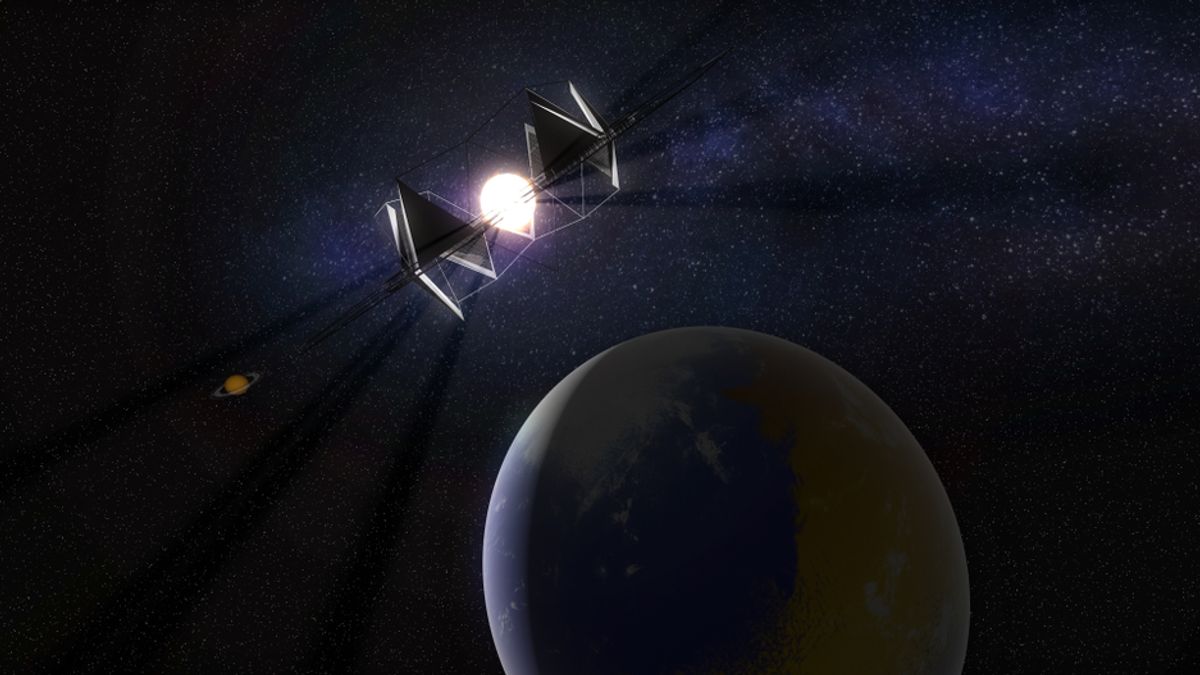
Several scenarios have been proposed to explain the observed dimming. The leading natural explanation involves an uneven ring of dust orbiting the star, which could cause irregular dimming as denser dust clouds pass in front of the star. Another line of thought suggests the presence of a companion body, such as a planet, contributing to the observed light fluctuations. A more controversial hypothesis has centered on the idea of a megastructure built by an advanced civilization, though this notion has not found supporting evidence in measurements and remains a topic of debate among researchers.
Analyses to date have examined how dimming varies across wavelengths. Some studies found that infrared light dimmed less than ultraviolet light during extended dimming phases, a result that supports dust as a partial contributor but does not fully account for the sharp, brief dips. Other work posits that a dust ring could explain longer-term trends but would struggle to explain the brief, extreme dips that occur irregularly.
There have also been simulations suggesting alternative natural mechanisms, including debris from disrupted material associated with a destroyed exomoon in a circumstellar disk, which could form clumps capable of crossing the star’s face and causing dips. A more recent line of inquiry has entertained the possibility that a planetary or substellar companion—such as a planet or brown dwarf—might exist in orbit around Tabby’s Star, potentially influencing the observed light patterns. The field continues to test these competing explanations against new data and models.
Why It Matters
The Tabby’s Star puzzle probes fundamental questions about how stars interact with surrounding material and how to interpret unusual photometric signals. If dust and debris scenarios hold, they illuminate the dynamics of circumstellar environments around sun-like stars. If a planetary or substellar companion is involved, it would add to our understanding of planetary system architectures in distant systems. The speculative megastructure idea, while not supported by current measurements, has historically driven broader discussions about detecting advanced civilizations using indirect astronomical signatures. The ongoing investigation showcases how multi-wavelength observations and comparative modeling help distinguish natural phenomena from extraordinary claims.
From a methodological standpoint, Tabby’s Star has served as a case study in how citizen science contributions can inspire follow-up studies and how researchers weigh competing explanations in the absence of a single smoking gun. The debate underscores the importance of long-term, high-precision monitoring and diverse observational strategies to characterize irregular photometric events in distant stars.
Background
Tabby’s Star was first noted for unusual brightness variations in analyses of data from NASA’s Kepler mission. The star’s nickname derives from Tabetha S. Boyajian, the lead author of a 2016 paper describing the unusual dips. The discourse around the star has included both scientific assessments and popular speculation, reflecting the star’s unusual photometric behavior and the broader interest in whether natural explanations or speculative megastructures could be involved. Early discussions highlighted that the star sometimes dims by a portion of its light and then returns to normal brightness, with the pattern not following a simple periodic cycle.
Key Facts
- Tabby’s Star is also known as KIC 8462852 and is located about 1,400 light-years from Earth.
- It periodically dims by up to around 20 percent, with brightness returning afterward.
- The dimming occurs at irregular intervals, lasting days to weeks each event.
- Leading explanations include an uneven dust ring around the star and a potential planetary or substellar companion.
- Alternative ideas have included the possibility of a megastructure, though there is no evidence supporting this at present.
- Infrared dimming has been observed to be less than ultraviolet dimming in some analyses, suggesting dust-related effects but not fully explaining all dips.
- Several studies have proposed debris or exomoon-related scenarios to account for specific dipping patterns.
What Happens Next
Researchers continue to compare multi-wavelength observations with theoretical models to disentangle the causes of the dips. Future work involves collecting more data across different wavelengths and times to test whether dust, planetary companions, or other mechanisms best explain both the duration and depth of the dips, as well as the irregular timing of events.
Sources reviewed
Project Chintan independently synthesized and analyzed information cross-checked across the sources listed above.
Related stories

NASA Images Show 60-Foot Crater From SpaceX Moon Impact

IIA models 3D forecast for arrival of solar coronal mass ejections
August 2026 lunar eclipse: deep partial event visible across parts of multiple continents