Supreme Court Declines National Policy for Demolition Displaced, Leaves to States
The Supreme Court has refused to establish a national policy for rehabilitating individuals displaced by demolition drives against unauthorized constructions. The court stated that such matters fall under the policy-making authority of individual states and union territories.
Key takeaways
- The Supreme Court has rejected a plea for a national policy on rehabilitation for individuals displaced by demolition drives.
- The court determined that creating such a policy is within the purview of states and union territories.
- The Supreme Court noted that circumstances vary across states, necessitating individualized policy frameworks.
- The petitioner argued for a national policy, citing the constitutional right to shelter and the lack of rehabilitation schemes in many states.
- The court stated that arbitrary or unreasonable state policies could still be subject to judicial review.
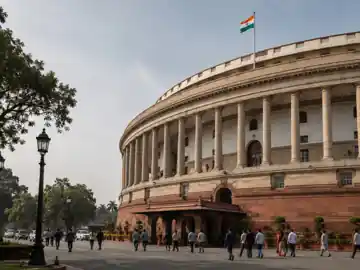
The Supreme Court has declined to create a uniform national policy for the rehabilitation of people displaced by demolition orders targeting unauthorized constructions. A bench, led by the Chief Justice of India, stated that developing such a policy is a matter for states and union territories to address individually.
The court observed that circumstances and needs vary significantly across different regions, warranting distinct policy frameworks. It suggested that the petitioner, the Centre for Law and Good Governance, should directly approach state and union territory governments to discuss their existing policies or the formulation of new ones.
The petitioner had argued that the right to shelter is protected under Article 21 of the Constitution. They highlighted that while some states like Andhra Pradesh, Telangana, and Delhi have settlement and regularization policies, many others lack them, leading to instances where demolition orders are issued without adequate rehabilitation schemes or due process.
The bench acknowledged the complexity of balancing the removal of illegal constructions with the right to shelter, livelihood, and dignity for affected individuals, particularly those from economically marginalized sections occupying public land. The court affirmed that while states have the power to make policy decisions, any such policy found to be arbitrary, unreasonable, or lacking due process remains open to judicial review.
The court also noted that previous judgments have established guidelines, including the requirement of notice before demolition, unless the occupation is on public land or space. It rejected the petitioner's request for a court-appointed committee, stating that such issues require case-by-case examination by governmental authorities rather than a broad policy dictated by the court.
Sources reviewed
Project Chintan independently synthesized and analyzed information cross-checked across the sources listed above.
Related stories

Assam CM Defends Narrower Kaziranga Eco-Sensitive Zone

Supreme Court Considers Sending Krishna Temple Dispute Back to High Court