
Spain Initiates Reciprocal Border Checks as Schengen Dispute with Italy Escalates
Madrid has activated air and sea border controls for travelers arriving from Italy, marking a significant breakdown in passport-free travel between the two EU nations. The move responds to Italy's earlier suspension of the Schengen agreement following a migration surge in the Spanish enclave of Ceut
Key takeaways
- Spain has imposed month-long air and sea border controls on travelers from Italy starting late Saturday.
- The move is a reciprocal response to Italy's suspension of the Schengen agreement following a migration surge in Ceuta.
- Internal EU tension is rising as Finland, Denmark, and the Czech Republic take sides in the border security dispute.
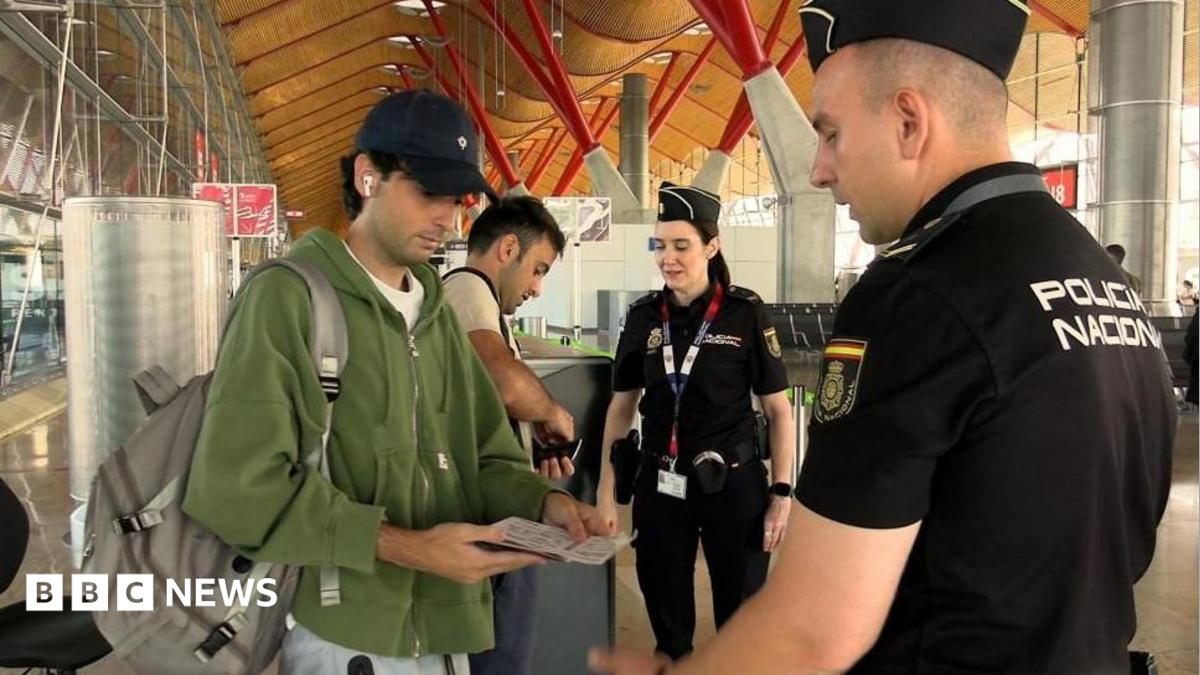
The Escalating Diplomatic Friction
Spain implemented border controls on all air and sea arrivals from Italy starting at midnight on Saturday. This administrative shift, scheduled to remain in effect until 7 September, follows a week of rising tensions between Madrid and Rome. Spanish authorities stated they are currently checking the documentation of 5% to 10% of passengers before disembarkation, characterizing the measures as random. However, eyewitness accounts from Madrid’s airport suggest more rigorous enforcement, with passengers reporting that entire flights were required to present identification before leaving their aircraft.
Why It Matters
This dispute represents a rare fracture in the Schengen Agreement, the framework that typically allows for border-free movement across much of Europe. The political friction pits Spain's socialist Prime Minister, Pedro Sanchez, against Italy’s conservative leader, Giorgia Meloni. While Schengen suspensions are not unprecedented—Italy maintains similar controls on its Slovenian border—the reciprocal nature of these actions highlights deep-seated disagreements regarding Mediterranean migration management and the internal security of the European Union.
Background
The conflict traces back to a massive migration event in Ceuta, a Spanish exclave, where approximately 78,000 individuals crossed from Morocco. Italy preemptively suspended border-free travel with Spain last week, arguing that these migrants might move northward through the Schengen zone. Spain dismissed Rome's justification as spurious arguments, asserting that migrants entering Ceuta lack the legal means to enter the broader Schengen area. Despite Spain's demand for Italy to cease these checks, Rome extended its measures until at least 15 August, citing fears of a secondary migration wave.
Key Facts
- Approximately 100 people are believed to have died during the recent crossing into Ceuta.
- Nearly 1,400 minors remain in the Spanish exclave following the influx.
- Finland and Denmark have voiced support for Italy's border suspension, while the Czech Republic suggested suspending Spain's Schengen membership.
- EU and Spanish citizens are theoretically exempt from Italy's additional checks, though reports from El Pais indicate significant delays and long queues at Italian airport terminals.
- Social media monitoring by BBC Arabic revealed Facebook groups with over 100,000 followers discussing a potential second crossing attempt in mid-August.
What Happens Next
While Spain's Prime Minister's office maintains that it does not expect a repeat of last week’s events, security officials continue to monitor digital platforms where swimming equipment is being advertised for potential crossings. The current Spanish controls are set to expire in early September, but the government has indicated the timeline may shift depending on the evolving security landscape. Italy remains committed to its checks through the middle of August, specifically targeting a window where it anticipates renewed migration activity.
Source: BBC — World
Related stories
Severe Typhoon Dolphin Disrupts Power and Travel in Okinawa Before Approaching China

Jorge Messi, Architect of Son's Football Legacy, Dies at 68

Burnham Proposes Written Constitution to Overhaul British Power Structure
