
New Seahorse Named for Indian Ocean Scientist
A seahorse from southeastern India has been identified as a distinct species and named Hippocampus amandavincentae in honor of Amanda Vincent. The finding redefines regional species boundaries and conservation needs.
Key takeaways
- A new seahorse species, Hippocampus amandavincentae, has been described from southeastern India and named in honor of Amanda Vincent.
- The species was previously misidentified as Hippocampus histrix and is distinguished by a 16 cm length, a five-spined coronet, and a shorter snout.
- DNA analysis links the Indian Ocean specimens to lineages found in Madagascar, Mozambique, the Seychelles, and the northern Red Sea, implying a wider potential range.
- The taxonomic revision clarifies the distribution of related seahorse species and may prompt reexamination of museum records and trade monitoring under CITES guidelines.
What Happened
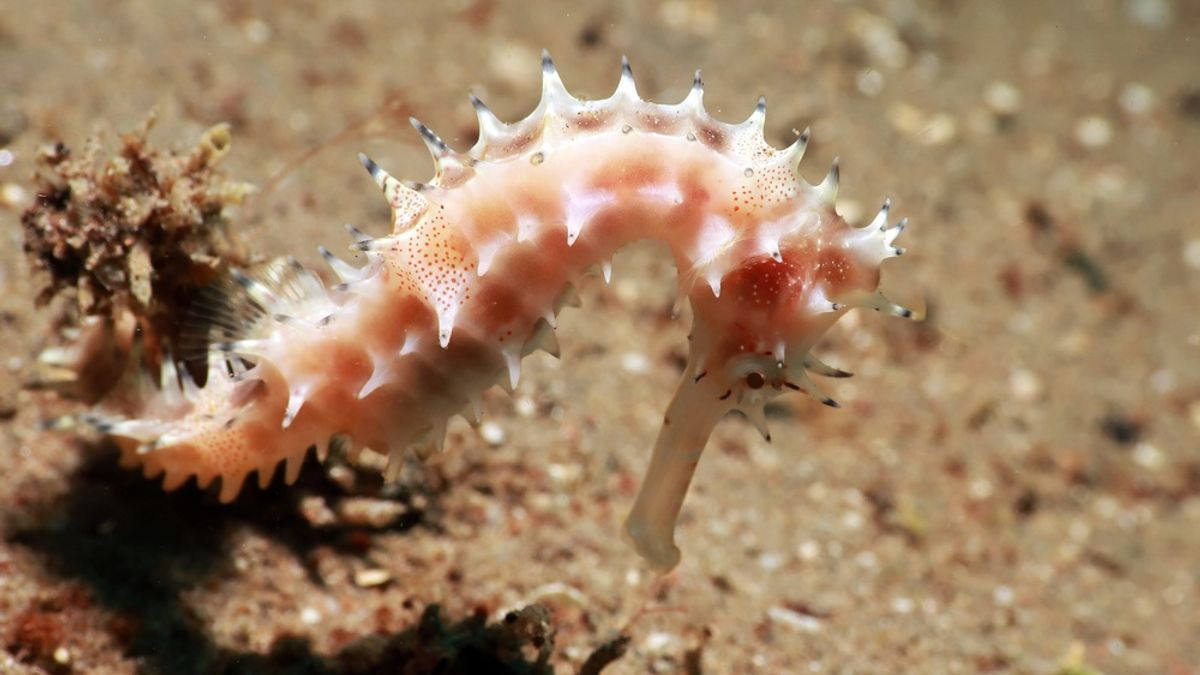
In Tuticorin harbor, southern India, marine biologist Amanda Vincent examined bycatch from fishing activities and found a seahorse that had not been formally recognized as a separate species. A study published in Zootaxa describes this animal as Hippocampus amandavincentae, a distinct spiny seahorse, previously misidentified as Hippocampus histrix. The species was named in honor of Vincent, who co-founded Project Seahorse and has spent decades studying seahorses and their trade.
The described specimen measures about 16 centimeters (6.3 inches) long and features a coronet of five spines above its head. Its snout is shorter than that of H. histrix, and prominent spines line each major ridge of its trunk and tail. The samples used to describe the species originated from southeastern India, with DNA analysis (mitochondrial COI gene) placing them in a distinct lineage that aligns with published sequences from Madagascar, Mozambique, the Seychelles, and the northern Red Sea. This suggests the species may inhabit a broad portion of the Indian Ocean, though fieldwork is needed to determine where ranges overlap with related species. The taxonomic revision also redefines the range of H. histrix, now considered a Pacific-Waters species, and confirms H. jayakari as a separate species in the northwestern Indian Ocean.
The discovery highlights that many museum records and online biodiversity entries labeled as H. histrix may require reexamination to improve population assessments, trade monitoring, and habitat protection decisions. Vincent, who has led underwater seahorse studies and international trade documentation, is associated with Project Seahorse, which marked its 30th anniversary at the time of the study’s publication. The genus Hippocampus falls under Appendix II of CITES, controlling international trade to protect wild populations.
In sum, the finding connects Vincent’s conservation work to a species she helped bring into scientific view, while also signaling broader implications for seahorse taxonomy and conservation planning in the Indian Ocean region.
Sources reviewed
Project Chintan independently synthesized and analyzed information cross-checked across the sources listed above.
Related stories
TikTok leads to discovery of translucent underground eel species in India
Narwhal tusk reveals two opposing spirals in its structure

Elephants help India’s forests store carbon, study says
