
Perseid Meteor Shower Dazzles Stargazers Worldwide
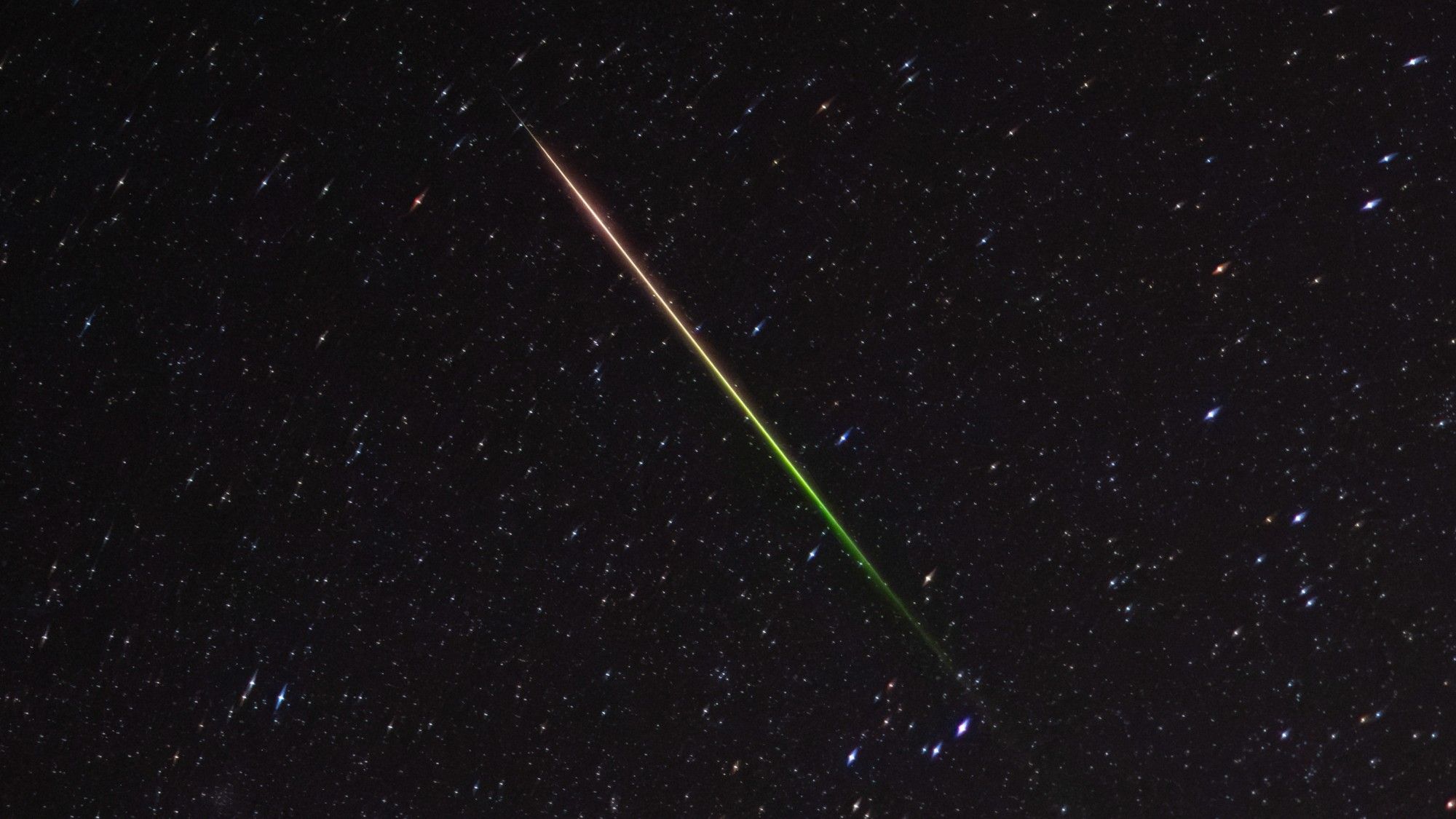
The annual Perseid meteor shower reached its peak, with numerous shooting stars visible across various locations. Earth passes through the debris trail of comet 109P/Swift-Tuttle annually, causing these spectacular displays.
Key takeaways
- The Perseid meteor shower peaked with numerous shooting stars visible globally.
- Meteors result from Earth passing through debris left by comet 109P/Swift-Tuttle.
- Sightings were documented across multiple continents, including North America, Europe, Asia, and the Middle East.
- Earth will remain in the comet's debris trail until August 24, with reduced meteor activity.
What Happened
The Perseid meteor shower achieved its peak display, offering a spectacular celestial event for observers. This annual occurrence is characterized by numerous shooting stars streaking across the night sky. The phenomenon is caused by Earth's passage through the debris trail left by the icy comet 109P/Swift-Tuttle.
Key Facts
- The Perseid meteor shower peaked recently, with shooting stars visible in locations including Macedonia, Iran, Israel, Texas, Spain, Turkiye, and China.
- Photographers captured images of the meteors on dates including August 11, 2026, and August 12, 2026.
- Dimitar Birachoski photographed Perseid meteors over Galicica National Park in Macedonia on August 12, 2026.
- Morteza Nikoubazl captured a Perseid meteor near the Pleiades star cluster in Semnan, Iran.
- A Perseid meteor was observed over the Negev Desert in Israel on August 11, 2026.
- Photographs were taken of meteors over Pedernales Falls State Park in Texas on August 12, 2026.
- A meteor was photographed near Ucayak Church in Kirsehir, Turkiye on August 12, 2026.
- In China, meteors were photographed in Guangdong Province on August 12, 2026, and Anhui Province on August 13, 2026.
- Earth will continue to pass through the Swift-Tuttle debris trail until August 24.
- Meteors are fragments from the comet 109P/Swift-Tuttle, many no larger than a grain of sand, that disintegrate upon entering Earth's atmosphere at an average speed of 59 kilometers per second.
- The peak display occurred shortly after a total solar eclipse was visible in Greenland, Iceland, and Spain.
Background
The Perseid meteors are remnants of comet 109P/Swift-Tuttle. As Earth travels through the comet's debris trail each year, these small particles collide with our atmosphere. Despite their small size, often comparable to dust or sand, their high velocity causes them to burn up, creating visible streaks of light, commonly referred to as shooting stars.
What Happens Next
The Perseid meteor shower remains visible as Earth continues its transit through the comet's debris trail, which will last until August 24. While the peak viewing opportunities have passed, fewer meteors will be observable at a significantly reduced rate.
Sources reviewed
Project Chintan independently synthesized and analyzed information cross-checked across the sources listed above.
Related stories

Suhail Star's Rise Signals Gradual End to UAE Summer Heat
Astronomers Identify New Astrophysical Object: The 'Black Hole Star'

SpaceX Launches Starlink Satellites from California and Florida
