Suhail Star's Rise Signals Gradual End to UAE Summer Heat
The appearance of the Suhail star on August 24 marks a traditional turning point in the UAE's climate, signaling a slow transition from peak summer. Residents can expect a gradual easing of temperatures, though increased humidity may create lingering discomfort.
Key takeaways
- The Suhail star's rise on August 24 is a traditional indicator of the gradual end to peak summer heat in the UAE.
- While temperatures will gradually decrease, rising humidity levels may cause lingering discomfort.
- Brief heat surges are possible after the peak season, but overall conditions will trend towards cooler weather by November.

Residents of the United Arab Emirates can anticipate a gradual shift in weather conditions following the anticipated rise of the Suhail star on August 24. This celestial event is a long-standing marker for the region, indicating the beginning of the end for the most intense summer heat.
Ibrahim Al Jarwan, chairman of the Emirates Astronomy Society, explained that the days after Suhail's appearance typically bring a steady, not abrupt, moderation of temperatures. While cold weather is not expected, a noticeable change in the atmosphere and a softening of conditions should occur. This shift becomes more apparent around Suhail's rise, approximately ten days from the report's context. Although actual temperatures may begin to decrease, a rise in humidity could contribute to periods of discomfort.
The UAE has recently moved past Ayam Al Ghayth, its peak summer period, which usually spans about six weeks from early July to August 10. During this time, temperatures in the UAE exceeded 51°C, with night-time lows reaching 35°C.
Humidity and Fog Expected
As temperatures decline, humidity levels are forecast to climb. Al Jarwan noted that this increase in moisture could lead to a strong perception of heat even when thermometer readings are lower. He elaborated that humid summer air carries significantly more water vapor than winter air at the same humidity level, making conditions more taxing. For instance, air at 40°C and 80 percent humidity contains approximately 50 grams of water per cubic meter, compared to less than 15 grams at 20°C with identical relative humidity. September and October are generally among the UAE's most humid months. This increased moisture may also lead to early morning fog and dew, with initial signs possible in late August and becoming more prevalent in September.
Brief Heat Spells Possible
The possibility of short, intense heat returns, known as Zafarat Al Qayth, should not be discounted. These late summer bursts, while not altering the overall seasonal trend, can cause temporary temperature increases before conditions stabilize around the autumn equinox on September 23. Evenings are expected to become more pleasant after this date, though cooler daytime conditions will take longer to establish, with more significant moderation anticipated in November and a continued cooling trend through mid-December.
Suhail as a Seasonal Marker
Suhail, internationally known as Canopus, does not influence weather patterns. Instead, its emergence has served for generations as a reliable indicator within the traditional Arabian calendar, coinciding with the gradual transition away from peak summer conditions. Al Jarwan emphasized that traditional references to constellations like Virgo, Libra, and Scorpio are used to denote time and season, not to affect weather. These markers broadly align with the months of September, October, and November in local seasonal knowledge.
- The Suhail star is expected to rise on August 24.
- The rise of the Suhail star is a traditional marker for the gradual easing of summer heat in the UAE.
- Temperatures are expected to begin declining after August 24, but increased humidity may create discomfort.
- The UAE experienced peak summer heat exceeding 51°C, with night lows of 35°C, in early August.
- Humidity levels are predicted to rise as temperatures fall, potentially leading to fog and dew.
- Brief periods of intense heat, known as Zafarat Al Qayth, may occur after the peak summer season.
- Autumn equinox occurs on September 23, after which evenings are expected to become more pleasant.
- Cooler daytime conditions are anticipated in November, with a broader cooling trend continuing into mid-December.
- Suhail, or Canopus, does not cause weather changes but serves as a seasonal calendar indicator.
- Traditional constellations like Virgo, Libra, and Scorpio are used as seasonal indicators in local knowledge.
Sources reviewed
Project Chintan independently synthesized and analyzed information cross-checked across the sources listed above.
Related stories
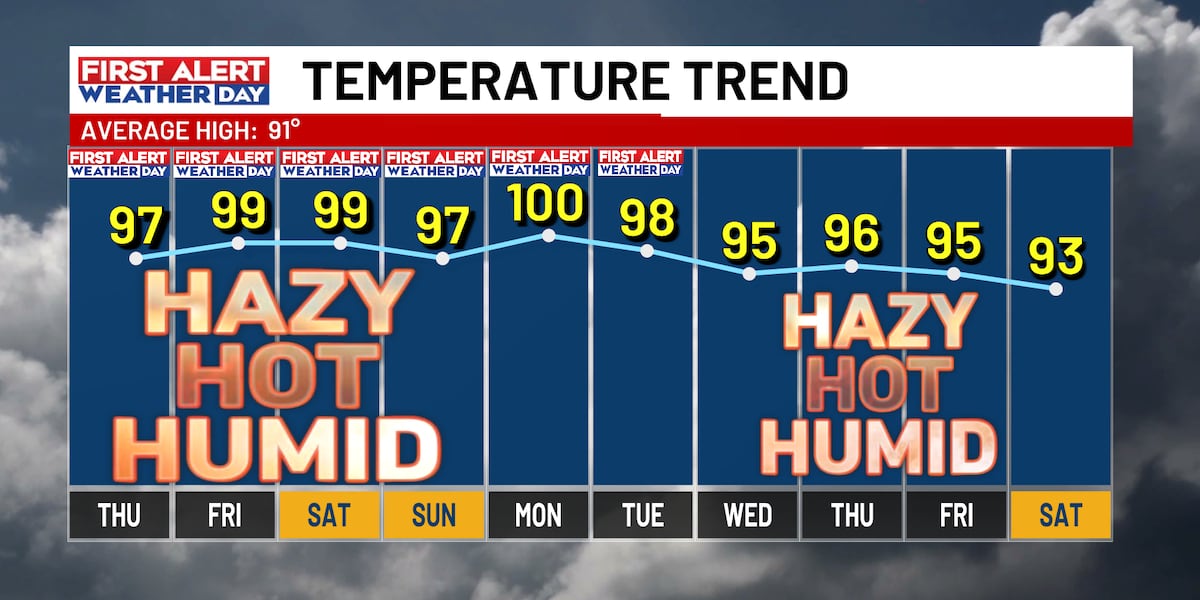
Dangerous Heat and Humidity Prompt Extended 'First Alert Weather Days' in South Carolina

Andhra Pradesh Braces for Rain as Bay of Bengal System Intensifies
Astronomers Identify New Astrophysical Object: The 'Black Hole Star'