
Optimal Conditions Forecasted for 2026 Perseid Meteor Shower Peak
The annual Perseid meteor shower reaches its peak this Wednesday night with visibility enhanced by a new moon and coincidental celestial events. Observers in rural areas may see up to 100 meteors per hour as Earth passes through the debris of Comet 109P/Swift-Tuttle.
Key takeaways
- The Perseid peak occurs Wednesday night into Thursday morning with up to 100 meteors per hour possible.
- A new moon phase provides ideal dark-sky conditions by eliminating competing moonlight.
- The event coincides with a total solar eclipse in Spain, Iceland, and Greenland, plus a six-planet alignment.
- Visibility is highest between midnight and dawn when the constellation Perseus is high in the sky.
What Happened
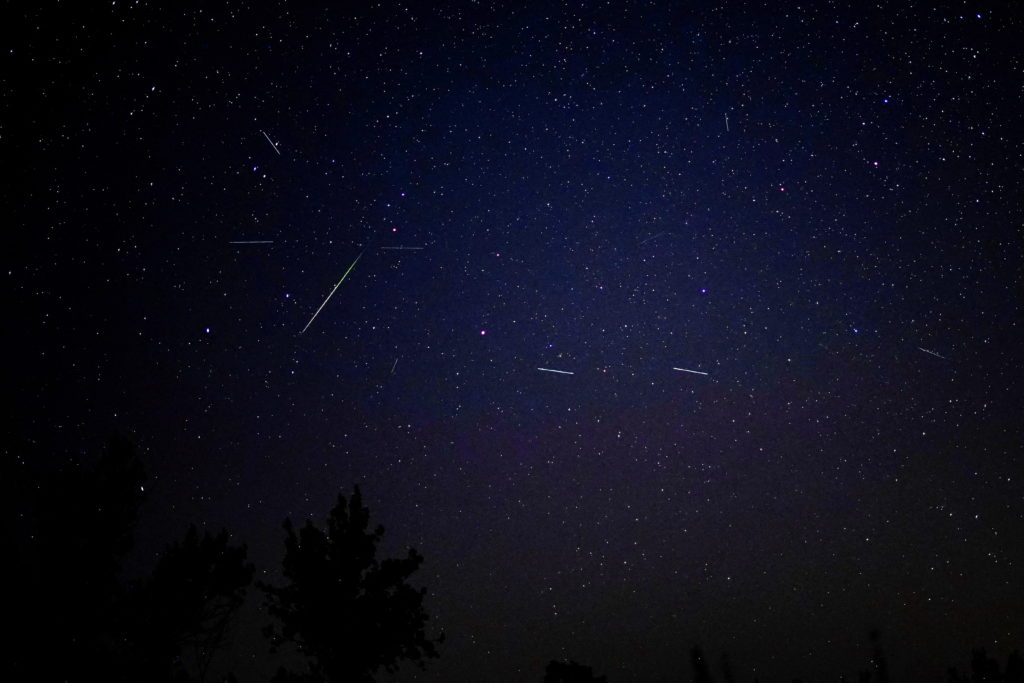
Astronomers are forecasting high visibility for the Perseid meteor shower, which is scheduled to peak between Wednesday night and Thursday morning. This 2026 event coincides with a new moon phase, providing the dark skies necessary to view between 30 and 100 meteors per hour. The shower occurs as Earth enters a debris field left by Comet 109P/Swift-Tuttle, an icy body that last passed the sun in the late 20th century and is not expected to return until 2125.
Viewing conditions are particularly favorable in the Northern Hemisphere. The peak coincides with a six-planet alignment and a total solar eclipse visible across regions of Greenland, Iceland, and Spain. Scientists note that the highest volume of fireballs will likely appear following the conclusion of the solar eclipse totality.
Background
The Perseids have been documented for over two millennia. The phenomenon is caused by comet remnants—frozen dust and rock—that ignite upon entering Earth's atmosphere at high speeds. These meteors appear to originate from the constellation Perseus. Unlike winter meteor showers, the Perseids attract significant public interest due to warmer summer temperatures, which facilitate extended outdoor observation.
Key Facts
- NASA estimates a peak rate of 50 to 100 meteors per hour under ideal, dark conditions.
- The American Meteor Society projects 30 to 50 meteors per hour for observers in rural locations.
- Comet 109P/Swift-Tuttle, the source of the debris, operates on a 133-year orbital cycle.
- A new moon phase will prevent moonlight from obscuring the visibility of smaller, fainter streaks.
- The constellation Perseus serves as the radiant point for the shower in the northern sky.
What Happens Next
The optimal viewing window begins after midnight and continues until dawn on Thursday. Experts recommend that observers relocate away from urban light pollution and allow approximately 30 minutes for their eyes to adjust to the darkness. Astronomers advise against using mobile devices during observation, as screen light can disrupt night vision and lead to missed sightings of peripheral fireballs.
Sources reviewed
Project Chintan independently synthesized and analyzed information cross-checked across the sources listed above.
Related stories
European Regions Prepare for Major Partial Solar Eclipse on August 12

Erika Eleniak Reunites With Original Baywatch Cast as Revival Interest Grows

Miami Hearing Scheduled for Tate Brothers Extradition Case
