
European Regions Prepare for Major Partial Solar Eclipse on August 12
Parts of the UK and Ireland will experience up to 98% solar coverage during a rare deep partial eclipse on Wednesday, August 12. Safety experts warn that specialized ISO-certified glasses or indirect projection methods are required to prevent permanent eye damage.
Key takeaways
- A deep partial solar eclipse will obscure over 90% of the sun across the UK and Ireland on August 12.
- Certified ISO 12312-2 eclipse glasses are mandatory for direct viewing to prevent painless but permanent retina damage.
- The event starts around 18:10 BST, with peak coverage occurring roughly one hour later depending on the specific location.
- Indirect viewing methods like pinhole projectors or kitchen colanders are safe alternatives for observing the sun's shadow.
- This is the most significant solar eclipse in the region since 1999, with the next total eclipse not expected until 2090.
What Happened
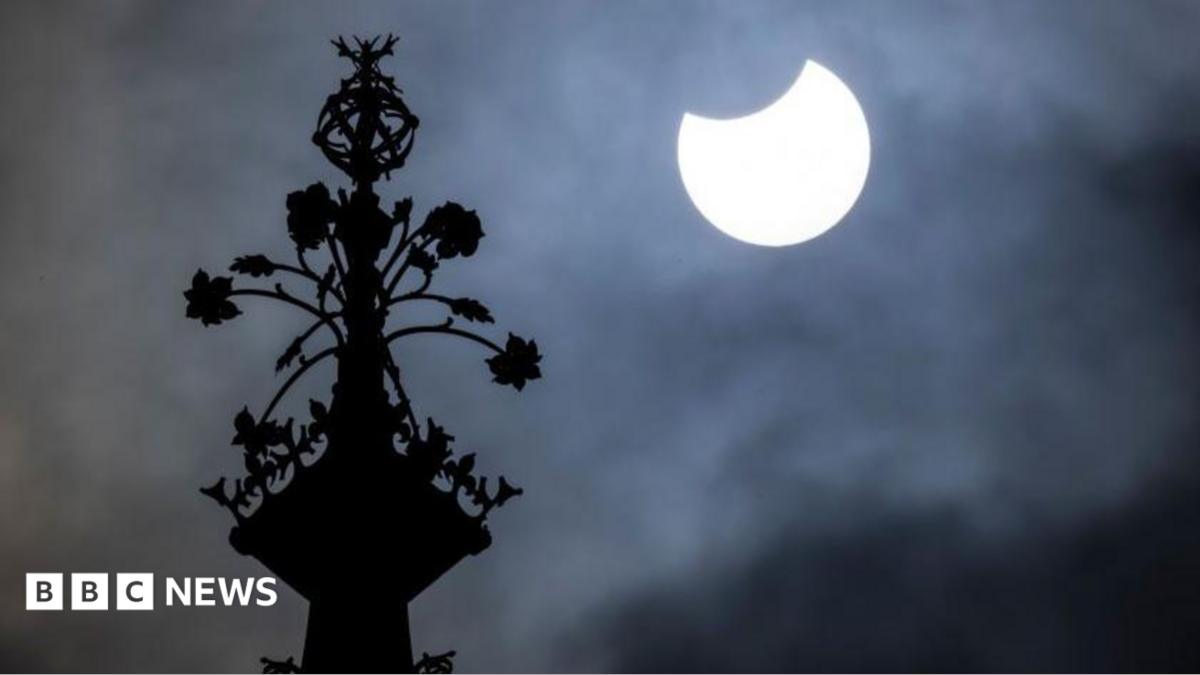
A significant celestial event will occur on Wednesday, August 12, as a partial solar eclipse becomes visible across the United Kingdom and Ireland. During this event, the Moon will transit between the Earth and the Sun, obscuring more than 90% of the solar disk in many regions. In London, coverage is expected to reach approximately 90%, representing the greatest solar obscuration for the city since 1999. In Ireland, coverage levels will be even higher, with Belfast seeing 93.05% and Skellig Michael reaching 98.01%.
The event is scheduled to begin at approximately 18:10 BST, with timings varying slightly by location. In London, the first contact occurs at 18:17 BST, reaching its maximum at 19:12 BST before concluding at 20:06 BST. While total darkness will not occur, observers will notice a drop in temperature and a shift in light levels comparable to heavy cloud cover.
Safe Viewing Practices
Health and astronomical authorities have issued warnings regarding eye safety. Because the retina lacks pain receptors, individuals can sustain permanent damage without immediate discomfort. The UK Health Security Agency and Royal Museums Greenwich emphasize that standard sunglasses do not provide sufficient protection against harmful radiation. Observers must use ISO 12312-2 certified eclipse glasses for direct viewing.
Alternative safe viewing methods include indirect projection. Using a pinhole projector made from a cereal box or even a household colander allows the eclipsed sun to be viewed as a shadow projection on a secondary surface. For photography, specialists advise against pointing unfiltered smartphones or digital cameras at the sun, as the concentrated light can destroy camera sensors. Solar filters or eclipse glasses should be placed over camera lenses to prevent equipment damage.
Background
This event marks a rare opportunity for Western Europe. While a total eclipse will be visible in Spain, the UK and Ireland will see their deepest partial eclipse in decades. Following this event, a similar deep partial eclipse will not occur in the UK until 2050, and a total solar eclipse will not be visible from British or Irish soil until September 2090. The eclipse coincides with a period of high celestial activity, including the Perseid meteor shower and an upcoming lunar eclipse later in the month.
Key Facts
- Date: Wednesday, August 12.
- Maximum coverage: 90% in London, up to 98.01% in County Kerry, Ireland.
- Start time: Approximately 18:10 to 18:17 BST.
- Safety requirement: ISO 12312-2 certified eclipse glasses or indirect projection.
- Equipment warning: Unfiltered smartphone sensors can be damaged by direct solar photography.
Sources reviewed
Project Chintan independently synthesized and analyzed information cross-checked across the sources listed above.
Related stories

UK Enhances Space Weather Monitoring as Severe Storms Hit South Africa
Daniel Kinahan Extradited to Ireland Following UAE Court Decision

Irish Authorities Receive Daniel Kinahan Following Successful Extradition from Dubai
