Student Activist Neha Bora Discusses Protests, Politics, and "Azadi"
AISA National President Neha Bora spoke about the Jantar Mantar protests, asserting they were politically driven despite claims of being leaderless. She addressed a controversial incident in Jharkhand and discussed the evolution of protest movements in India.
Key takeaways
- Student activist Neha Bora stated that the Jantar Mantar protests were politically motivated.
- Bora participated in a 23-day hunger strike and faced an incident where ink was thrown at her in Jharkhand.
- She believes that uniting under common agendas, rather than specific leaders, is a political act.
- Bora noted that protests often face attempts at discrediting through accusations and labels.

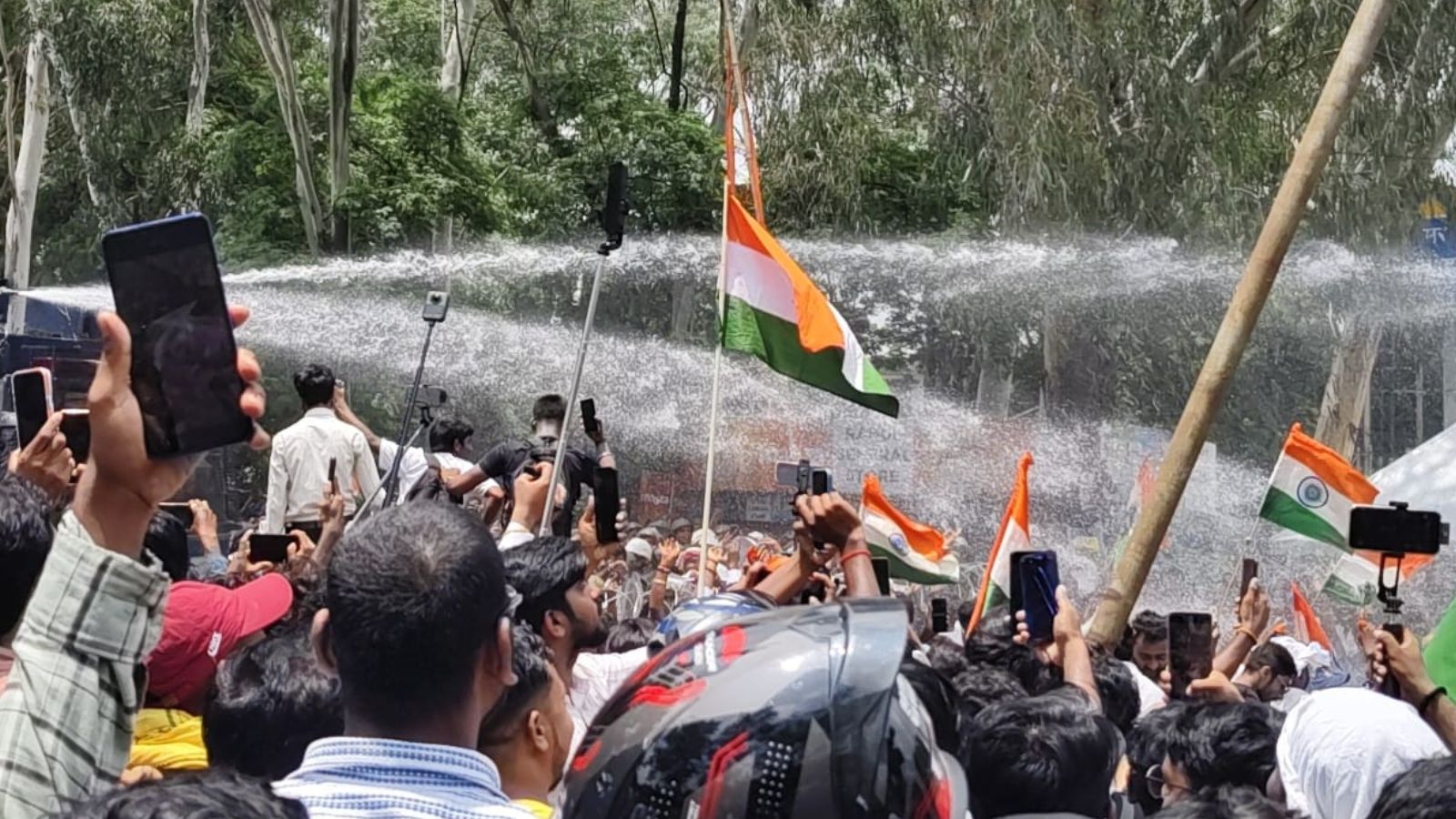
National president of the All India Students Association (AISA) and Jawaharlal Nehru University (JNU) PhD scholar Neha Bora has described the Jantar Mantar protests in Delhi as politically motivated, countering descriptions of the movement as leaderless. Bora, a prominent figure in protests that have occurred across India, was interviewed by The Indian Express. She participated in a 23-day hunger strike in Delhi alongside educationist Sonam Wangchuk and faced an incident where ink was thrown at her during a student protest in Jharkhand.
Key Facts
- Neha Bora, national president of the All India Students Association (AISA) and a PhD scholar from Jawaharlal Nehru University (JNU), spoke to The Indian Express.
- Bora participated in a 23-day hunger strike at Jantar Mantar in Delhi with educationist Sonam Wangchuk.
- During a student protest in Jharkhand, ink was thrown at Bora.
- Reports suggested protesters in Jharkhand objected to Bora's presence, but she stated she received a warm welcome in Ranchi, with videos circulating showing media being asked to step down from a stage, not her.
- AISA collaborates with the Cockroach Janta Party (CJP), with Bora indicating willingness to work with them as long as their objectives align with serving the public.
- Bora discussed the political nature of slogans like "Azadi," the shifting political climate at JNU, the decline of the Left in elections, Naxalbari, and Umar Khalid.
- She addressed the perception of protests being "leaderless," stating that uniting under common agendas rather than specific leaders or ideologies is a political stance in itself.
- Bora noted that a potential drawback of such movements is that individuals might not consolidate their engagement as politics once the protests conclude.
- She drew parallels between the Jantar Mantar protests and previous movements like the anti-CAA protests and the farmers' agitation, acknowledging that mass movements build upon historical precedents.
- Bora highlighted differences, noting that protests like the anti-CAA demonstrations were labelled as Muslim protests and the farmers' movement as Khalistani, with similar accusations of students being called "terrorists" or "viruses" by ministers like Dharmendra Pradhan and Nitin Nabin.
What Happened
Neha Bora, a leading figure in student activism and the national president of AISA, asserted that the Jantar Mantar protests in Delhi were fundamentally political, despite characterizations of the movement as lacking leaders. Bora, also a PhD scholar at JNU, has become a recognizable voice in nationwide demonstrations. She shared her experiences, including a nearly three-week hunger strike in Delhi with Sonam Wangchuk and an incident in Jharkhand where ink was thrown at her during a student demonstration. Bora addressed reports of local objections to her presence in Jharkhand, recounting a positive reception in Ranchi and suggesting that widely circulated videos misrepresented the situation.
Background
Bora discussed the nature of protests and their evolution, noting that mass movements draw from and are influenced by prior agitations. She cited the anti-CAA protests and the farmers' movement as examples that provided a framework for subsequent collective action. Bora emphasized that labelling protests and participants with terms like "terrorists" or "viruses" is a tactic used to discredit movements, drawing parallels to how previous demonstrations were characterized by religious or regional affiliations.
Sources reviewed
Project Chintan independently synthesized and analyzed information cross-checked across the sources listed above.
Related stories
Ram Temple Trust Questions Candidates on Religious Practices for CEO Role

Bengaluru Underpass Collapse Kills Two Construction Workers
Inquiry Report on Justice Yashwant Varma to Be Tabled in Lok Sabha