
Kovind's Memoir Highlights Democratic Journey and 'One Nation, One Election'
Former Indian President Ram Nath Kovind's memoir, 'Triumph of the Indian Republic: My Life, My Struggles,' details his ascent from a village boy to the nation's highest office. The book also advocates for the 'One Nation, One Election' proposal.
Key takeaways
- Former Indian President Ram Nath Kovind's memoir, 'Triumph of the Indian Republic,' was launched by Prime Minister Narendra Modi.
- The book chronicles Kovind's journey from a discriminated Dalit student to India's president, calling it a symbol of democratic greatness.
- Kovind's memoir advocates for the 'One Nation, One Election' proposal, drawing on his committee's extensive consultations.
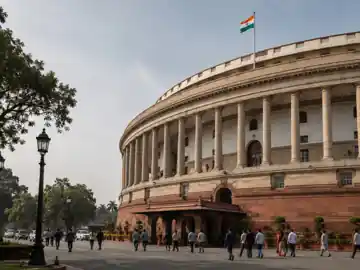
Former Indian President Ram Nath Kovind has detailed his life's journey and political insights in his new memoir, 'Triumph of the Indian Republic: My Life, My Struggles.' The book, released by Prime Minister Narendra Modi, chronicles Kovind's path from a Dalit student facing discrimination in a Uttar Pradesh village to becoming India's second Dalit president on July 25, 2017.
Kovind views his election to the presidency as a testament to the strength of India's democracy. The memoir also touches upon his life after leaving office in July 2022, offering personal reflections on his interactions with prominent political figures including Narendra Modi, Atal Bihari Vajpayee, and L.K. Advani.
Background
The book provides glimpses into Kovind's engagement with opposition leaders throughout his career as a Bharatiya Janata Party (BJP) worker, Member of Parliament, governor, and president. It also covers his role as head of the high-level committee examining simultaneous elections.
Key Facts
- Former President Ram Nath Kovind's memoir, 'Triumph of the Indian Republic: My Life, My Struggles,' was released by Prime Minister Narendra Modi in Delhi.
- Kovind stated that his election as President symbolized the greatness of India's democracy.
- The memoir discusses his personal experiences and interactions with political figures like Narendra Modi, Atal Bihari Vajpayee, and L.K. Advani.
- Kovind supports the 'One Nation, One Election' (ONOE) plan, citing its potential to increase electoral system efficiency and reduce costs.
- The high-level committee he chaired on ONOE held 65 meetings over 191 days, consulting 62 political parties, of which 32 supported the proposal and 15 opposed it.
- Kovind's entry into the BJP is linked to the Ram Janmabhoomi movement, and he recalls attending a VHP rally on April 4, 1991, where Modi was also present as a volunteer.
- He cites Atal Bihari Vajpayee's speech on inclusivity as a significant factor in his decision to join the BJP in April 1991.
- The book mentions BR Ambedkar's influence on Kovind's life and work, referencing Vajpayee's declaration that his government would function on the basis of 'Bhim Smriti' rather than 'Manusmriti'.
What Happened
The memoir recounts that as a Dalit student in Uttar Pradesh, Kovind, like others from his community, faced restrictions on drinking water at school, requiring a teacher's intervention, unlike students from 'savarna' families. Kovind's book details his trajectory from this background to becoming the First Citizen of India.
Why It Matters
Kovind's memoir offers insights into the evolution of Indian democracy and the political landscape, particularly concerning social inclusivity and electoral reforms. His advocacy for 'One Nation, One Election' stems from his role in the high-level committee, which consulted extensively with political stakeholders. The differing opinions on this proposal, with parties like the Congress opposing it while the BJP and some regional parties supported it, highlight ongoing debates in Indian electoral politics.
Sources reviewed
Project Chintan independently synthesized and analyzed information cross-checked across the sources listed above.
Related stories
Kovind's Memoir Details Journey From Dalit Student to President, Supports 'One Nation, One Election'
Modi Recalls Mother's Sacrifice at Kovind's Autobiography Launch

Modi Launches Kovind's Autobiography, Advises Youth Against Shortcuts
