
India's Supreme Court to Review Legality of Facial Recognition Surveillance on Protesters
India's Supreme Court will examine the legality of Delhi Police's use of facial recognition and biometric surveillance against protesters at Jantar Mantar. The court will consider whether this mass surveillance infringes on fundamental rights.
Key takeaways
- India's Supreme Court will review the legality of Delhi Police using facial recognition and biometric surveillance on protesters.
- The challenge argues these surveillance methods violate fundamental rights to privacy, dignity, free speech, and peaceful assembly.
- The petition highlights concerns over data being held by private companies and the lack of specific laws authorizing such surveillance.
- The court has issued notices to the Centre and Delhi Police and will link the case with other related petitions.
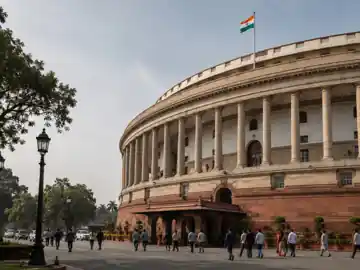
India’s Supreme Court has agreed to review the legal basis for the Delhi Police’s deployment of facial recognition technology and biometric surveillance during protests at Jantar Mantar. The court will assess whether these surveillance methods violate citizens’ fundamental rights, including privacy, dignity, freedom of speech, and the right to assemble peacefully.
What Happened
A public interest litigation filed by CPI(M) Rajya Sabha MP AA Rahim prompted the Supreme Court’s review. The petition challenges the alleged use of AI-powered surveillance systems, facial recognition technology, and biometric identification tools against demonstrators. Senior advocate Menaka Guruswamy, representing Rahim, informed the court that the plea specifically targets the Delhi Police’s facial recognition system, alleging that the collected data is retained by private companies. The surveillance reportedly involved a facial recognition vehicle and smart glasses, with data gathered without the consent of individuals being monitored. The court issued a notice to the Centre and the Delhi Police commissioner and will link this case with other pending petitions concerning allegations of police misconduct during the July 20 “Sansad Chalo” protest.
Key Facts
- The Supreme Court will examine the legality of facial recognition and biometric surveillance used by the Delhi Police at Jantar Mantar.
- The legal challenge was initiated by CPI(M) Rajya Sabha MP AA Rahim through a public interest litigation.
- The petition alleges that data collected via surveillance is held by private companies.
- Surveillance methods reportedly included a facial recognition vehicle and smart glasses, with data collected without permission.
- The plea challenges the deployment of these technologies against peaceful protesters, citing violations of privacy, dignity, free speech, and assembly rights.
- The court issued notices to the Centre and the Delhi Police commissioner.
- The case will be linked to other pending petitions related to alleged police excesses during the July 20 “Sansad Chalo” protest.
- The petition seeks disclosure of surveillance technologies, databases, standard operating procedures, and vendor agreements.
- It also requests the deletion of protesters’ biometric data from systems like NAFIS and CCTNS.
- Alleged surveillance tools include CCTV cameras, drones, a Mobile Command and Control Vehicle, “Ikshana” surveillance vehicle, “AjnaLens” smart glasses, and the “Abhigyan” application for fingerprint matching.
- The petition contends that no law currently authorizes biometric surveillance of individuals participating in lawful protests.
- It argues that neither Delhi Police standing orders nor the Criminal Procedure (Identification) Act, 2022, permit such surveillance of peaceful demonstrators.
- RTI responses reportedly indicate that no privacy impact assessment was conducted before the surveillance.
- The petition notes an 80% similarity score is treated as a positive facial recognition match without publicly available validation.
Background
The legal challenge asserts that thousands of protesters, journalists, and citizens have been subjected to continuous biometric surveillance since the Jantar Mantar sit-in began on June 20. The petition seeks a declaration that indiscriminate use of facial recognition and biometric surveillance against peaceful protesters is unconstitutional. It also requests directives to restrain the Delhi Police from deploying such technologies until Parliament establishes a specific law authorizing their use. The petition further argues that existing laws, including the Criminal Procedure (Identification) Act, 2022, and Delhi Police standing orders, do not authorize the biometric surveillance of peaceful demonstrators. Allegations suggest that a standard 80% similarity score is used for facial recognition matches without established validation.
Why It Matters
The Supreme Court’s examination addresses critical questions about the balance between national security, law enforcement, and fundamental civil liberties in India. The case scrutinizes the legality and ethical implications of deploying advanced surveillance technologies, such as facial recognition and AI-powered systems, against citizens exercising their right to protest. The outcome could set a precedent for the regulation of mass surveillance technologies and the protection of privacy rights in the digital age, particularly concerning data held by private entities and the absence of specific legislative frameworks.
What Happens Next
The Supreme Court has issued notices to the central government and the Delhi Police commissioner. The petition will be tagged with other pending cases related to alleged police excesses during recent protests. The court will proceed to hear arguments on the legality and constitutionality of the surveillance technologies and methods employed by the Delhi Police.
Sources reviewed
Project Chintan independently synthesized and analyzed information cross-checked across the sources listed above.
Related stories

India's Supreme Court Reinforces Rights of Arrested Individuals

Supreme Court Criticizes FSSAI Over Delayed Food Warning Labels
Trump Administration Seeks Supreme Court Review of Mail-In Ballot Restrictions
