
India Examines White House Report on Chinese Goods Transshipment
India is reviewing a White House report alleging its use for transshipping Chinese goods to circumvent US tariffs. The external affairs ministry stated that India possesses robust laws to prevent such practices and is studying the report's findings and methodology.
Key takeaways
- India is examining a White House report that implicates the country in the transshipment of Chinese goods to circumvent US tariffs.
- The Ministry of External Affairs asserted that India possesses strong customs, rules-of-origin, and export regulations to prevent such activities.
- The report estimated significant US-bound trade value transshipped via India, contributing to potential tariff revenue loss.
- India's government stated that its legislative processes are internal matters and not subject to external pressure.
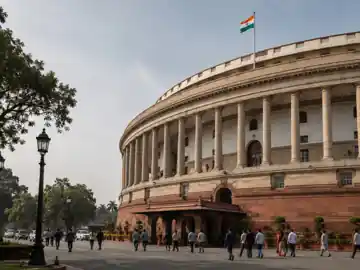
India is examining a White House report that identifies the nation as a key country for the transshipment of Chinese goods, a practice aimed at evading United States tariffs. The report, compiled by the White House’s Office of Trade and Manufacturing Policy, places India in the top tier of countries perceived to be involved in this activity.
India’s Ministry of External Affairs (MEA) has stated that the country maintains strong legal frameworks, including customs, rules-of-origin, and export regulations, to prevent such practices. Official spokesperson Randhir Jaiswal indicated that the government had only become aware of the report on Friday morning and is currently in the process of studying its findings and the methodology employed.
What Happened
The White House report, intended to curb Chinese products from bypassing US tariffs through third countries, listed India among over 40 nations identified as having transshipment risks associated with China. The report categorised these jurisdictions, including India, as “China’s biggest enablers”. The report estimated that approximately $67 billion in US-bound goods were transshipped from China through hubs like Mexico, India, and Vietnam in 2025, potentially resulting in $28 billion in lost tariff revenue.
Background
The report placed India in Tier 1, alongside Canada, the European Union, Israel, Japan, Mexico, South Korea, and Taiwan. This tier comprises countries and trading blocs that handle substantial volumes of China-linked goods, possess diversified industrial bases, and serve as major export platforms to the US. The report asserted that in these locations, the risk of illegal transshipment is integrated within normal, legitimate trade flows.
Separately, the MEA spokesperson dismissed suggestions that India’s legislative process regarding a bill to amend the Foreign Contribution (Regulation) Act (FCRA) was influenced by US pressure. He emphasized that legislative matters within India are internal affairs decided solely by the Indian Parliament.
Key Facts
- India is examining a White House report on Chinese goods transshipment.
- The report identifies India as a country used to evade US tariffs on Chinese products.
- India’s Ministry of External Affairs stated the nation has robust customs, rules-of-origin, and export laws.
- The White House report listed India among countries perceived to be exposed to China-linked transshipment risks.
- The report estimated $67 billion in US-bound goods were transshipped from China through hubs including India in 2025.
- India was placed in Tier 1 of countries and trading blocs accounting for large absolute volumes of China-linked goods.
- India’s MEA stated that legislative matters concerning India are internal affairs.
Sources reviewed
Project Chintan independently synthesized and analyzed information cross-checked across the sources listed above.
Related stories
India Rejects Norway FM's Kashmir Comments, Cites Pakistan-Backed Terrorism

COVID-19 Shifts to Summer Surge in the U.S., Health Officials Note

Kharge Questions Government on Alleged Chinese Activity in Arunachal Pradesh
