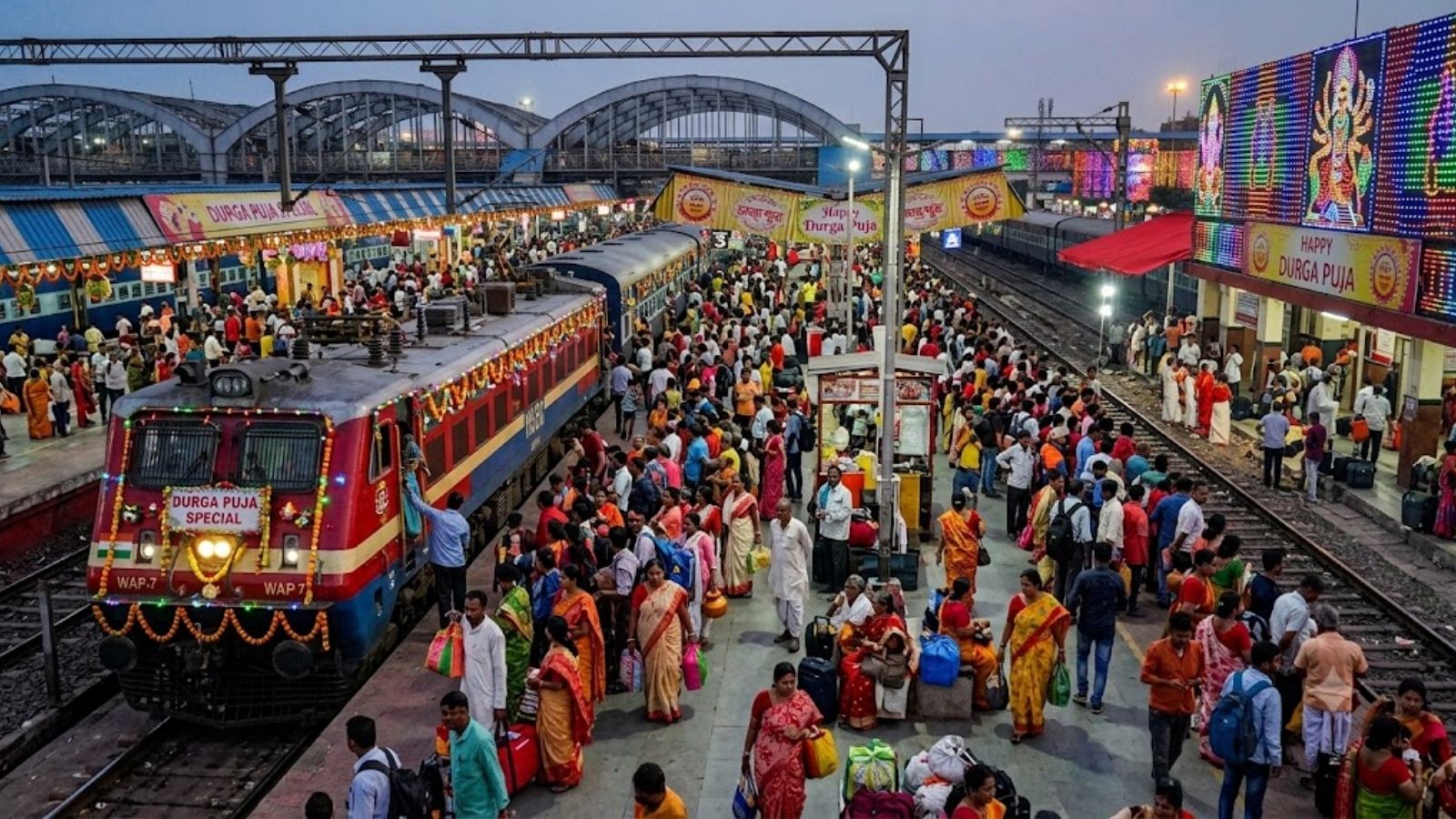
Ganpati special trains see 1.17 lakh bookings; Railways issues advisory
Over 1.17 lakh passengers have booked Ganpati special train tickets, prompting Central Railway to issue a travel advisory. The network plans 262 trips, starting Sept 9, with enhanced crowd-management measures at major stations.
Key takeaways
- Over 1.17 lakh passengers have booked Ganpati special train tickets as the festival approaches.
- A total of 262 trips are planned: 200 reserved trains and 62 unreserved trains, servicing routes from Mumbai, Pune and Nagpur to Konkan region destinations in Maharashtra and Goa.
- An advisory outlines crowd-management measures, extra ticket counters, holding areas, and increased staffing to ensure orderly travel.
What Happened
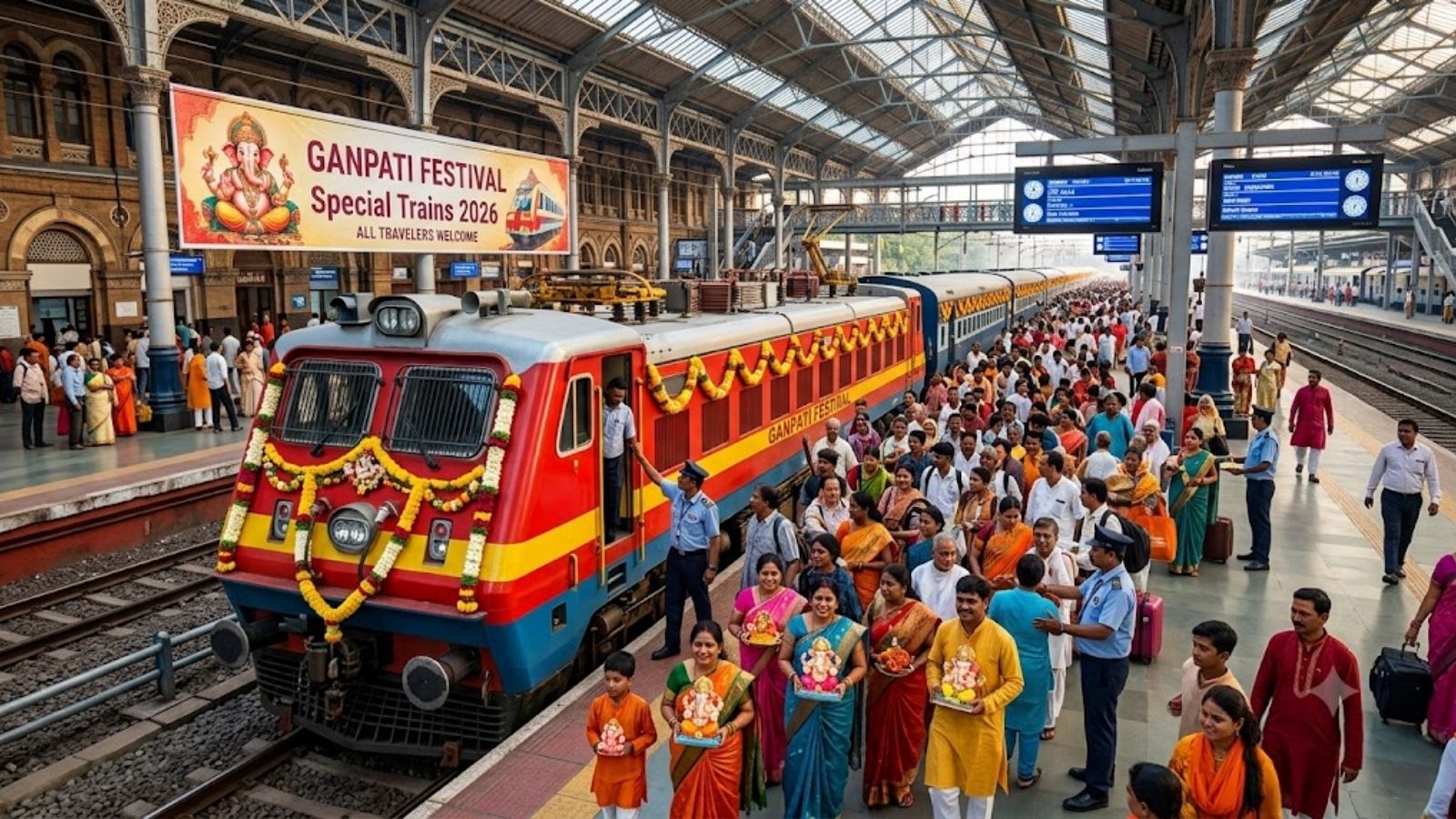
Ganpati special train services for 2026 have attracted bookings exceeding 1.17 lakh passengers. Central Railway has announced a total of 262 trips under these special services, comprising 200 reserved trains and 62 unreserved trains. The reserved trains include configurations with AC, Sleeper, and General coaches. Operations are scheduled to run from Mumbai, Pune, and Nagpur to multiple destinations across the Konkan region of Maharashtra and Goa. The services will commence on September 9, 2026.
In official remarks, Central Railway spokesperson Dr. Swapnil Nila confirmed that bookings for the 200 reserved services have already reached 1,17,682 passengers to date. Specific routes include 112 onward-and-return trips to Sawantwadi Road, 64 trips to Ratnagiri, and 24 trips to Madgaon. To manage the expected crowd, the railway has rolled out a travel advisory with several crowd-control and passenger-convenience measures.
Why It Matters
The advisory aims to streamline boarding and reduce congestion during the Ganpati festival, a period of heightened travel demand across Maharashtra and Goa. By increasing ticketing capacity at multiple counters, providing holding areas, and deploying additional staff, the railway seeks to minimize last-minute rush and improve passenger flow at key stations. The measures also emphasize the need for passengers to carry valid tickets and identification, potentially lowering the risk of confusion or irregular travel during peak hours.
Background
The Ganpati special trains are part of a broader public-transport framework designed to support festival-related mobility in the Konkan corridor. The 262 trips include both reserved and unreserved services, with the former offering a range of coach configurations to accommodate different passenger needs. The routes emphasize service from major Marathi-speaking urban centers toward smaller regional destinations, aligning with the festival’s family-centric travel patterns.
Key Facts
- Total Ganpati special train trips: 262 (200 reserved, 62 unreserved).
- Booked passengers for reserved services: 1,17,682 (as of now).
- Start date for these services: September 9, 2026.
- Primary origin points: Mumbai, Pune, Nagpur.
- Key routes with specific trips: Sawantwadi Road (112 to-and-fro), Ratnagiri (64 trips), Madgaon (24 trips).
- Regions covered: Konkan region of Maharashtra and Goa.
- Advisory measures: reach station at least 30 minutes before departure; extra ticket counters; holding areas; drinking water, food, and toilet facilities at select locations; queue management systems; additional RPF and ticket-checking staff; verification of tickets and IDs.
- Alternative booking options cited: NTES app, Indian Railways Enquiry site, UTS system for unreserved tickets, RailOne app for ticketing.
What Happens Next
Railways will continue to monitor bookings and crowd-management needs as September approaches. Passengers are advised to consult official information channels for detailed timings, routes, and halts of the Ganpati Special trains and to use the recommended apps or enquiry portals for up-to-date travel details. The advisory signals ongoing coordination between stations, railway police, and non-governmental partners to support passenger services during the festival rush.
Sources reviewed
Project Chintan independently synthesized and analyzed information cross-checked across the sources listed above.