Indian Railways to four-lane 11,000-km high-density network to raise capacity
Railways plan a four-lane upgrade across about 11,000 km of high-density routes to ease congestion and increase passenger and freight capacity. The move targets seven routes carrying a large share of traffic while Kavach 4.0 safety upgrades are being rolled out on key corridors.
Key takeaways
- Indian Railways intends to four-lane approximately 11,000 route kilometres on its high-density network to increase capacity.
- Seven routes account for about 41% of railway traffic while representing around 16% of the network.
- Kavach 4.0 safety system has been expanded to 2,490 route kilometres on the Delhi-Mumbai and Delhi-Howrah corridors as of July 2026.
What Happened
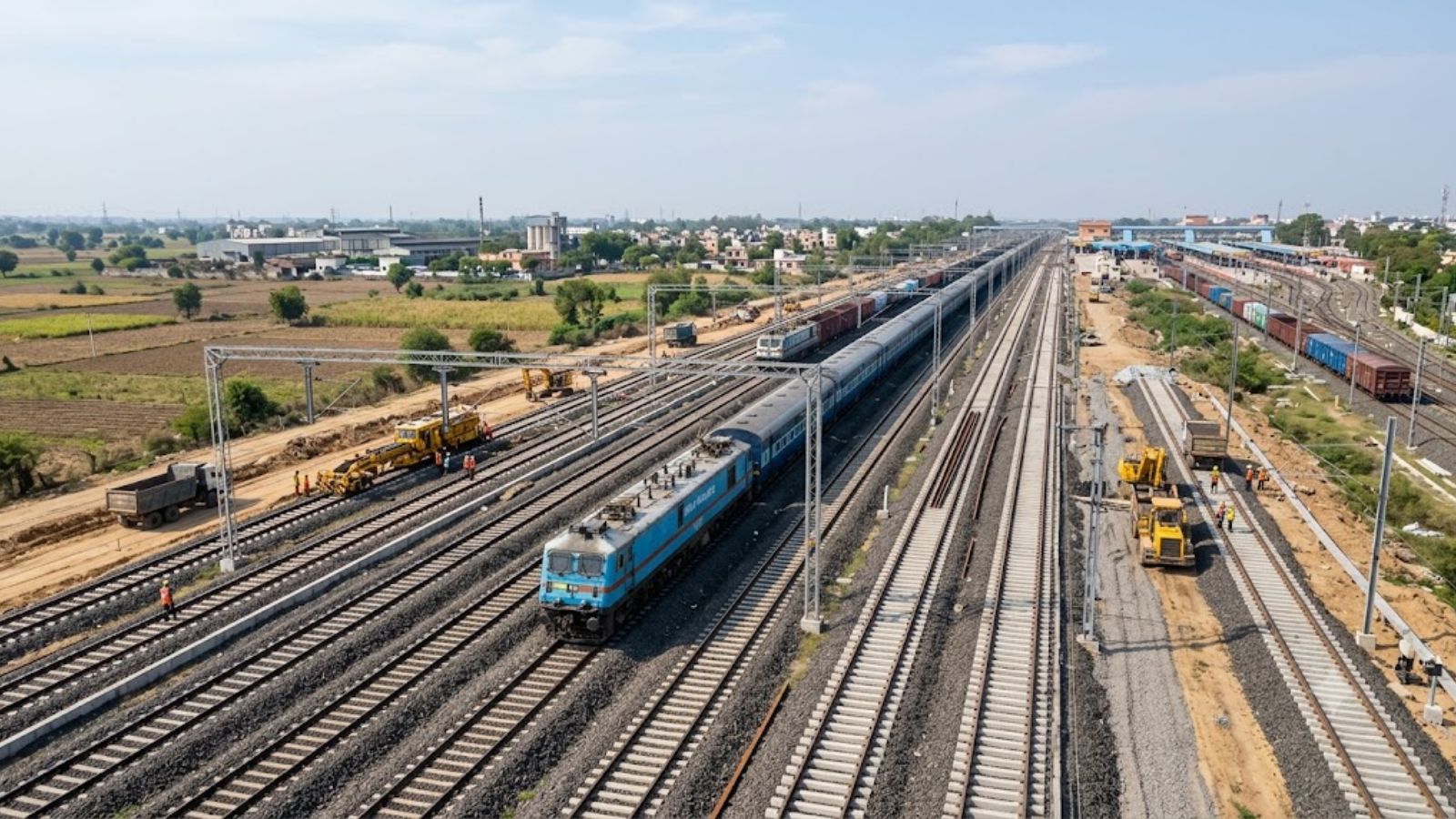
The Indian Railways announced plans to four-lane roughly 11,000 route kilometres of its high-density network. The aim is to expand capacity for both passenger and freight services on routes that handle a large portion of rail traffic. Seven high-density corridors have been identified as priority routes: Delhi-Howrah, Howrah-Chennai, Chennai-Mumbai, Mumbai-Delhi, Delhi-Chennai, Mumbai-Howrah, and Delhi-Guwahati. The expansion is framed as a step to improve flexibility and reduce congestion on these busy corridors as part of a broader capacity-creation push for the network.
Separately, Kavach 4.0, India’s domestically developed automatic train protection system, has been extended to cover 2,490 route kilometres across the Delhi-Mumbai and Delhi-Howrah corridors. The minister overseeing the project noted upgrades including improved train location accuracy, better signal information in large yards, and a station-to-station interface via fibre optics. Kavach 4.0 is now commissioned on portions of the two routes with ongoing section-wise progress reported as of mid-July 2026.
Why It Matters
Officials emphasise that adding more tracks on the busiest routes will enable trains to operate with greater scheduling flexibility and reduce the load on existing lines. The plan aligns with expectations of rising demand for both passenger journeys and freight movement as the network seeks to accommodate more traffic on key arteries while integrating advanced safety and signaling upgrades. The Kavach 4.0 enhancements are presented as boosting protection and reliability on routes already undergoing capacity expansion.
Background
The announcement frames the four-laning as part of Indian Railways’ wider efforts to increase capacity and prepare for future passenger and freight demand across major corridors. Kavach 4.0 has been described as an upgraded ATP system designed to integrate with existing signaling and interlocking infrastructure, with route-wise commissioning updates provided in an official briefing.
Key Facts
- About 11,000 km of high-density network will be four-laned to raise capacity.
- Seven high-density routes carry around 41% of total railway traffic while comprising roughly 16% of the network.
- The seven routes are: Delhi-Howrah, Howrah-Chennai, Chennai-Mumbai, Mumbai-Delhi, Delhi-Chennai, Mumbai-Howrah, and Delhi-Guwahati.
- The Kavach 4.0 automatic train protection system has been expanded to 2,490 route kilometres across the Delhi-Mumbai and Delhi-Howrah corridors as of mid-July 2026.
- Kavach 4.0 upgrades include improved train location accuracy, better signal information in large yards, and an optical fibre-based station-to-station interface; it can integrate with the existing Electronic Interlocking System.
- Commissioning progress for Kavach 4.0 is reported route-wise, with specific section progress noted on the Delhi-Howrah and Delhi-Mumbai routes as of July 2026.
What Happens Next
The four-laning plan is described as part of ongoing capacity expansion efforts, with the broader objective of handling anticipated future demand for both passenger and freight services. Kavach 4.0 implementation is being advanced with continued route-wise commissioning on the identified corridors, aligning safety upgrades with the capacity upgrades on the high-density network.
Sources reviewed
Project Chintan independently synthesized and analyzed information cross-checked across the sources listed above.