
China's Assertiveness in South China Sea Intensifies: Philippines Alarmed
China is escalating its maritime activities in the West Philippine Sea, refusing to comply with a decade-old arbitral award. The Philippines reports facing cyber and information warfare alongside aggressive actions at sea.
Key takeaways
- China is intensifying maritime coercion in the West Philippine Sea, ignoring a 2016 arbitral award.
- Record Chinese maritime activity is being observed, with 2026 expected to see new highs.
- A Filipino sailor was injured by Chinese Coast Guard forces in the Second Thomas Shoal on July 20, 2026.
- The Philippines reports facing multiple forms of warfare, including cyber and information warfare from China.
What Happened
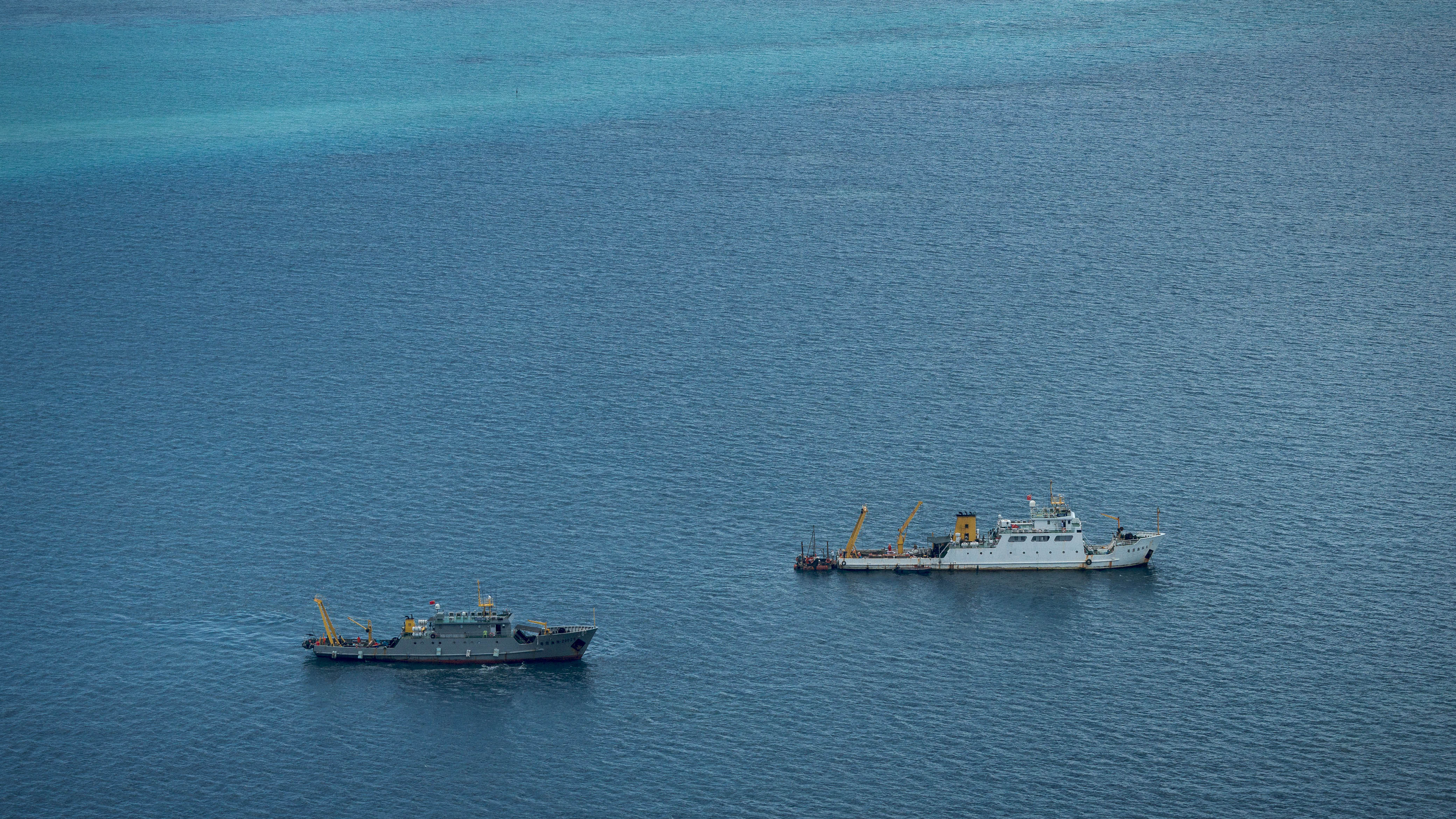
China has intensified its campaign of maritime coercion and occupation in the West Philippine Sea, refusing to acknowledge a 10-year-old arbitral award that invalidated its expansive historical claims and affirmed the Philippines' sovereign rights. Record levels of Chinese maritime activities have been tracked, with projections indicating further increases. Beijing has also employed aggressive public messaging, including an animated video depicting the Philippines negatively, in response to international statements reaffirming the arbitral award. On July 20, 2026, Chinese Coast Guard forces reportedly injured a Filipino sailor in the Second Thomas Shoal, illustrating a willingness to combine information operations with direct actions.
The actions in the West Philippine Sea are described as a microcosm of a broader effort by China to target the entire Philippines archipelago. Philippine officials have acknowledged facing cyber warfare, information warfare, cognitive warfare, and political warfare, alongside United Front activities. China claims almost the entirety of the South China Sea, a vital trade route, based on historical rights within its "nine-dash line." The Philippines, under international maritime law, has a 370-kilometer Exclusive Economic Zone (EEZ) in the area, which it calls the West Philippine Sea. A 2016 arbitration court ruling at The Hague rejected China's nine-dash line claims as having no basis under international maritime law.
Why It Matters
The ongoing contestation in the South China Sea, particularly between China and the Philippines, has intensified over the past decade. China's actions, which include deliberate ambiguity and deniability, make it challenging to monitor the scale of their effects and decipher an overarching strategic logic. The situation highlights a high-stakes contest for control over a strategically critical waterway that connects Asia and Europe and through which a significant portion of global trade passes.
Background
A decade ago, an arbitration court at The Hague ruled that China's "nine-dash line" claims in the South China Sea lacked legal basis under international maritime law, affirming the Philippines' EEZ. China, a signatory to the UN Convention on the Law of the Sea (UNCLOS), rejected this ruling as invalid.
Key Facts
- China has refused to comply with a 10-year-old arbitral award that invalidated its historical claims in the South China Sea and affirmed the Philippines' sovereign rights.
- Record levels of Chinese maritime activities have been observed, with 2026 projected to set new highs.
- On July 20, 2026, China Coast Guard forces attacked and injured a Filipino sailor in the Second Thomas Shoal.
- Philippine officials report experiencing cyber warfare, information warfare, cognitive warfare, and political warfare from China.
- China claims historical rights within its "nine-dash line" in the South China Sea.
- An arbitration court ruling in 2016 found China's "nine-dash line" had no basis under international maritime law.
- The Philippines has a 370-kilometer Exclusive Economic Zone (EEZ) under international law.
Sources reviewed
- CSIS | Center for Strategic and International Studies
- ABC News & Headlines – Australian Broadcasting Corporation
Project Chintan independently synthesized and analyzed information cross-checked across the sources listed above.
Related stories

Gold Prices Rise in India Amid Middle East Tensions and Crude Oil Volatility

North Korea Launches Ballistic Missile Amid US-South Korea Drills

China's EV Sales Rise as Combustion Engine Vehicles Plummet
