Australian Wheat Outlook Improves as Favorable Rains Bolster Export Prospects
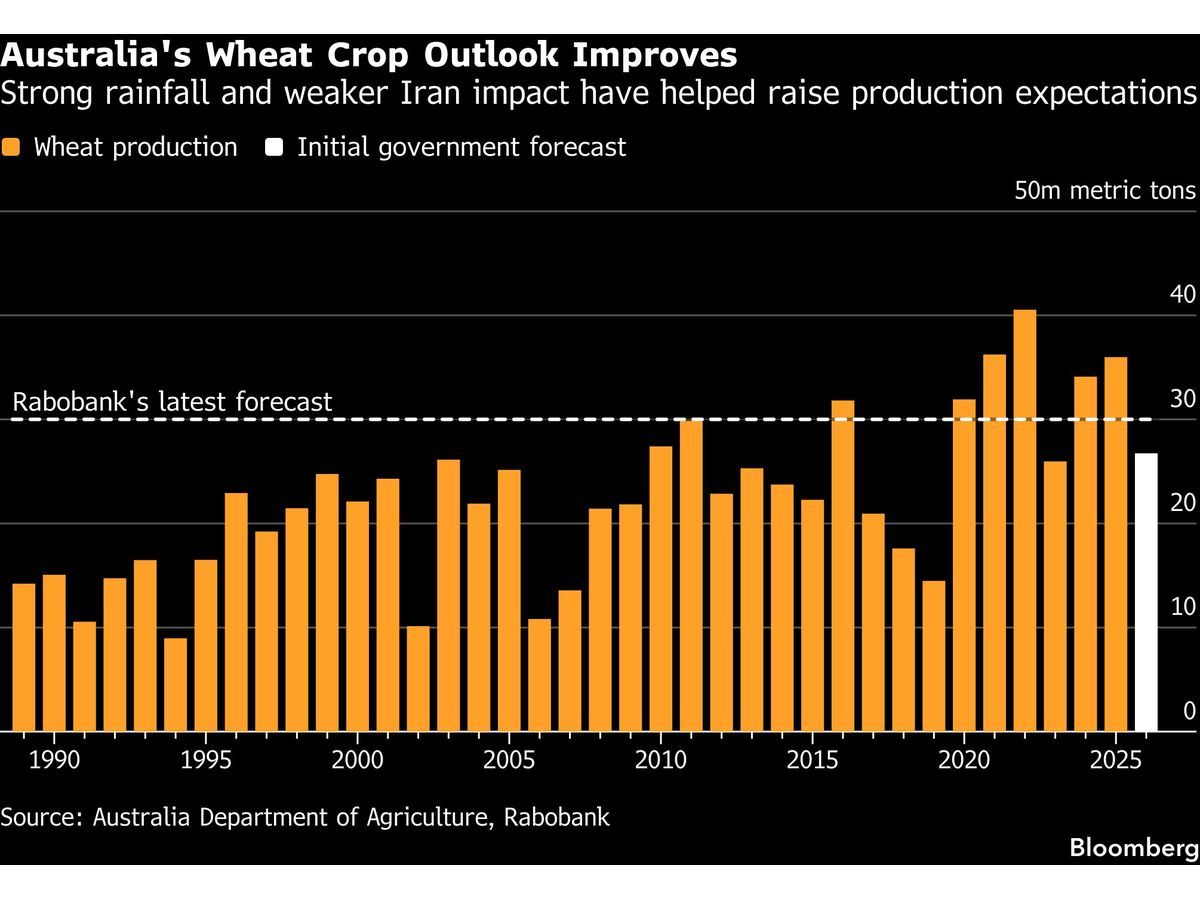
Recent rainfall across Australia's eastern grain belts has significantly improved wheat yield projections for the upcoming harvest. Major lenders have revised their production forecasts upward to approximately 30 million tons, offering relief to tight global supply chains.
Key takeaways
- Australian wheat production forecasts have been upgraded to 30 million tons following favorable weather conditions.
- The improved outlook for the 2026 crop follows significant rainfall in New South Wales, Queensland, and Victoria.
- Despite a year-on-year decline from 35.8 million tons, the projected harvest will likely surpass the 10-year national average.
- Easing concerns over fuel and fertilizer availability have contributed to more stable agricultural operations.
What Happened
Australia’s wheat production outlook for the 2026 crop has shifted from dire to optimistic following significant rainfall in key eastern growing regions. The states of New South Wales, Queensland, and Victoria have received well-timed precipitation, leading agricultural analysts to increase their harvest estimates. Additionally, supply chain pressures related to fertilizer and fuel, previously exacerbated by geopolitical tensions in Iran, have begun to stabilize.
Why It Matters
The upward revision in Australian yields arrives as global grain markets face tightening supply. While the projected harvest remains below the 35.8 million tons recorded last year, a yield of 30 million tons or higher would exceed Australia's 10-year production average. This surplus is expected to serve as a critical buffer for international markets currently grappling with high demand and volatile stock levels.
Key Facts
- Rabobank has increased its production forecast from a low of 21.3 million tons in May to a new estimate of 30 million tons.
- Bendigo Bank Agribusiness projects a harvest of approximately 30 million tons, with potential upside reaching 33 million tons.
- The current forecast represents a decline from the previous year's 35.8 million ton total but remains above the long-term national average.
- Supply chain stabilization for essential farming inputs like fuel and fertilizer has supported the improved outlook.
- Primary growth is concentrated in the eastern states of New South Wales, Queensland, and Victoria.
Sources reviewed
Project Chintan independently synthesized and analyzed information cross-checked across the sources listed above.
Related stories

Drought Forces Water Emergency Protocols and Freight Shifts in Southern Germany

Mitigating Prolonged Drought: Professional and Veteran Strategies for Dutch Gardens
Indonesia's Meme Factories and Diplomatic Friction Over Melbourne Detention Death