Turnbull Warns of Total Collapse in Australian Submarine Capability Under AUKUS
Former Prime Minister Malcolm Turnbull will testify that US industrial limitations pose a severe risk to Australia's submarine acquisition. The critic argues that doubling Virginia-class production by 2029 is highly unlikely, potentially leaving Australia without a fleet.
Key takeaways
- Former PM Malcolm Turnbull argues the US is unlikely to double its submarine production rate in time to meet AUKUS commitments.
- A failure to deliver Virginia-class vessels could leave Australia with zero submarine capability during the transition from the Collins-class fleet.
- Pentagon officials emphasize that the submarine deal is based on meeting specific industrial conditions rather than strict calendar deadlines.
What Happened
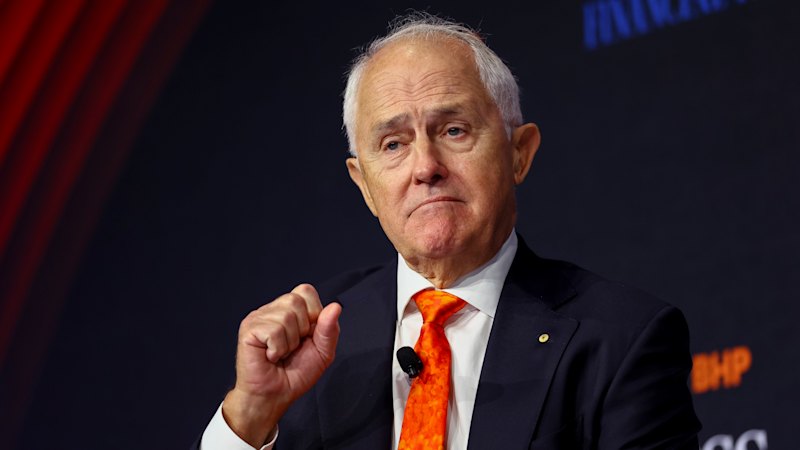
Former Prime Minister Malcolm Turnbull is set to deliver a critical assessment of the AUKUS security pact to an independent, crowd-funded inquiry chaired by former Labor minister Peter Garrett. In his formal submission, Turnbull describes the agreement as a bipartisan error and warns that Australia faces a significant risk of receiving no nuclear-powered submarines from the United States.
Turnbull's critique focuses on the industrial capacity of the United States. To fulfill its own naval requirements while supplying Australia, the US must increase its production of Virginia-class submarines to more than two vessels per year by 2029. Turnbull argues that achieving this rate within six years is improbable, creating a scenario where the US may prioritize its own undersea warfare capabilities over international sales.
Why It Matters
The acquisition of Virginia-class vessels is intended to serve as a bridge between the decommissioning of the current Collins-class conventional fleet and the eventual arrival of UK-built AUKUS submarines in the 2040s. If the US fails to deliver these interim vessels, Turnbull warns that Australia will experience a period of zero submarine capability. He characterizes this potential outcome as the most severe failure of domestic defense planning in modern history.
Government officials have acknowledged production challenges. Deputy Prime Minister Richard Marles recently stated that while increasing US output is difficult, it is achievable, noting that 130 Australian tradespeople have been sent to assist with US manufacturing bottlenecks. However, US Pentagon official Austin Dahmer has clarified that the agreement is based on specific conditions rather than fixed timelines, emphasizing that billions in additional funding from both nations have not yet accelerated delivery schedules.
Background
The AUKUS agreement involves the transfer of second-hand and new nuclear-powered submarines to Australia. However, these transfers are legally contingent on the sale not degrading the undersea warfare capabilities of the United States. While the Australian government maintains there is no need for a "Plan B," critics like Turnbull suggest this public confidence is a strategic posture intended to avoid discouraging US commitment to the sale.
Key Facts
- The US must exceed a production rate of two Virginia-class submarines per year by 2029 to meet the needs of both nations.
- US Pentagon officials describe the AUKUS deal as a conditions-based agreement rather than a time-based one.
- Australia has deployed 130 tradespeople to the US to address production bottlenecks.
- The proposed AUKUS-specific submarines built in the UK are not expected to arrive until the 2040s.
- Under US law, the transfer of vessels can only proceed if it does not diminish US naval strength.
Sources reviewed
Project Chintan independently synthesized and analyzed information cross-checked across the sources listed above.
Related stories

Sushi On Little Bourke: Osaka-Style Dining Anchors Melbourne’s Central Business District
Elements of Byron: Ten Years Tracking the Shift From Hippie Enclave to Luxury Destination
Bo Bichette Evaluates Mets Future Amid Roster Rebuild and Opt-Out Deadlines