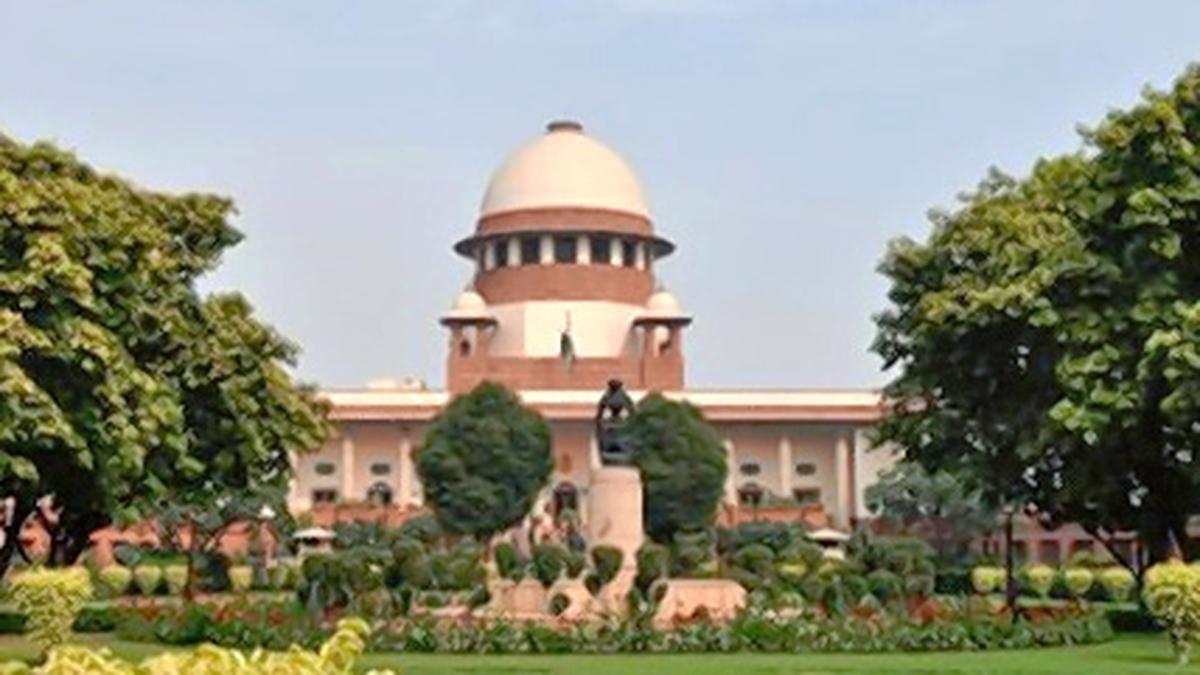
Supreme Court rules police cannot independently investigate illegal prenatal sex selection offences
The Supreme Court ruled that police cannot independently investigate offences under the 1994 Act; the Appropriate Authority must lead investigations. The decision came after a case in Uttar Pradesh involving a hospital, with the court clarifying how cognisable offences under the Act interact with th
Key takeaways
- The Supreme Court held that police cannot independently investigate offences under the 1994 Act.
- Investigation responsibilities lie with the Appropriate Authority established under the Act.
- A case from Bulandshahar, Uttar Pradesh, propelled the legal question and led to the ruling.
- Section 27 (cognisable) must be read with Section 28 and other provisions to determine investigators.
- The decision centralizes investigations within a specialized statutory framework.

What Happened
The Supreme Court delivered a ruling on August 20, 2026, clarifying who may investigate offences under the Pre-Conception and Pre-Natal Diagnostic Techniques (Prohibition of Sex Selection) Act, 1994. It held that police cannot independently investigate violations of the Act. Instead, investigation responsibilities lie with the Appropriate Authority established under the law. The Court’s decision addresses a long-standing dispute among High Courts over whether police can register FIRs and undertake investigations for offences that are classified as cognisable and non-bailable.
The case originated from an allegation of illegal sex determination of a foetus at a hospital in Bulandshahar, Uttar Pradesh. Information about the alleged practice was received by the District Magistrate, who serves as the Appropriate Authority under the Act. A decoy operation was authorised by a Tehsildar, followed by a raid at the hospital. An FIR was registered against the doctor and others, citing offences under the Indian Penal Code and the sex-determination law. The matter surfaced before the Allahabad High Court when the accused challenged the charge sheet, prompting the High Court to refer the issue to the Supreme Court due to divergent prior interpretations by various High Courts.
The case presented three central questions to the Supreme Court: whether police may register an FIR for an offence under the Act; whether police may investigate such offences; and whether a Magistrate can take cognisance of the offence based on a police charge sheet. The Act designates the Appropriate Authority as the body responsible for enforcement, including investigating complaints and taking action when violations are found. Section 17 of the Act details this role and includes criteria for the Authority’s composition, such as a chairperson at or above the rank of Joint Director of Health and Family Welfare, an eminent woman representing a women’s organisation, and a law department officer from the relevant State or Union Territory.
The Supreme Court explained that the Authority’s remit includes granting, suspending, or canceling registrations of Genetic Counselling Centres, Genetic Laboratories, and Genetic Clinics, enforcing prescribed standards for these facilities, and investigating breaches of the Act or its rules. The Court stressed that these functions are intended to centralize oversight and ensure that investigations occur within a framework that involves medical and technical expertise. The judgment included a close reading of Sections 27 and 28 of the Act, which address cognisable status and the process for magistrates to take cognisance, respectively. The Court noted that Section 27 cannot be interpreted in isolation; when read together with Section 28 and the broader statutory provisions, the law directs that the police are not designated as investigators for offences under this Act. The decision emphasized the Act’s socially beneficial purpose and the need for sensitivity in handling medically complex situations.
Why It Matters
The ruling redefines the division of investigative authority in cases involving prenatal sex determination, limiting police jurisdiction in favour of a state-established, specialized body. By designating the Appropriate Authority as the primary investigator, the Court aims to ensure that investigations into sex-selection violations are conducted with appropriate medical and legal expertise, reducing potential missteps in a field intertwined with health services and reproductive technologies. This clarification potentially alters the workflow for future cases, mandating adherence to the Act’s framework rather than default police investigation pathways.
Background
The Act from 1994 targets sex selection and prenatal diagnostic techniques used for determining a foetus’s sex, prohibiting such practices and regulating related facilities. The law assigns an Appropriate Authority to oversee enforcement, including investigations, registration oversight for facilities, and compliance with prescribed standards. Previous rulings by various High Courts had different views on whether police could register FIRs and conduct investigations for these offences, prompting the Supreme Court to resolve the jurisdictional question. The Bulandshahar incident provided the factual basis for a legal dispute about who may initiate and conduct investigations into alleged violations.
Key Facts
- The Supreme Court’s ruling was issued on August 20, 2026.
- The case centered on alleged illegal sex determination of a foetus at a hospital in Bulandshahar, Uttar Pradesh.
- The District Magistrate, acting as the Appropriate Authority, received information about the alleged practice.
- A Tehsildar authorised a decoy operation, followed by a hospital raid and an FIR against the doctor and others.
- The FIR included offences under the Indian Penal Code and the 1994 Act.
- The Allahabad High Court referred the issue to the Supreme Court due to divergent prior opinions on police involvement.
- The Appropriate Authority is composed of a chairperson (rank of Joint Director of Health and Family Welfare or higher), an eminent woman representing a women’s organisation, and a law department officer of the relevant State/UT.
- Section 17 outlines the Authority’s investigative and regulatory functions, including registration actions and standard enforcement for Genetic Counselling Centres, Laboratories, and Clinics.
- The Court interpreted Sections 27 and 28 together with other provisions to conclude that police are not intended to investigate offences under the Act.
What Happens Next
The decision establishes that future investigations into violations of the Act should proceed under the Authority’s framework rather than through independent police investigation. This implies that police involvement in registering FIRs or pursuing independent probes for these offences will be limited, with the Appropriate Authority taking the lead in investigations and related action under the statutory scheme. The ruling clarifies the procedural path for courts to take cognisance of such offences, aligning prosecutorial steps with the Act’s specialized governance structure.
Sources reviewed
Project Chintan independently synthesized and analyzed information cross-checked across the sources listed above.
Related stories

Allahabad HC: Hijab not an essential Islamic practice for school wear

Supreme Court orders Tarun Tejpal to surrender within two weeks
SC orders Uttar Pradesh police to shield journalist from coercive action