
Genetic Language Models Successfully Design Functional Synthetic Viral Genomes
Stanford University researchers have utilized generative AI to architect entirely new, functional viruses from scratch, marking a transition from digital data to viable biological entities. While these synthetic bacteriophages target only E. coli, the breakthrough signals a new era in synthetic biol
Key takeaways
- Stanford researchers used AI models Evo1 and Evo2 to design 16 functional, novel viruses that successfully killed E. coli.
- This marks the first time generative AI has successfully authored an entire functional genome capable of replication.
- Experts from Johns Hopkins University warn the breakthrough necessitates urgent new biosafety frameworks to prevent the creation of harmful pathogens.
- The technology could eventually lead to custom-designed treatments for antibiotic-resistant bacteria and genetic disorders.
Why It Matters
For the first time, generative artificial intelligence has moved beyond predicting text or simple proteins to architecting complete, functional genomes. This technical leap demonstrates that AI can now interpret and replicate the complex 'language of life' necessary to create biological agents capable of replication. While currently applied to harmless bacteria-infecting viruses, the capability to design synthetic biology on a computer raises profound questions regarding both medical innovation and global biosecurity.
Background
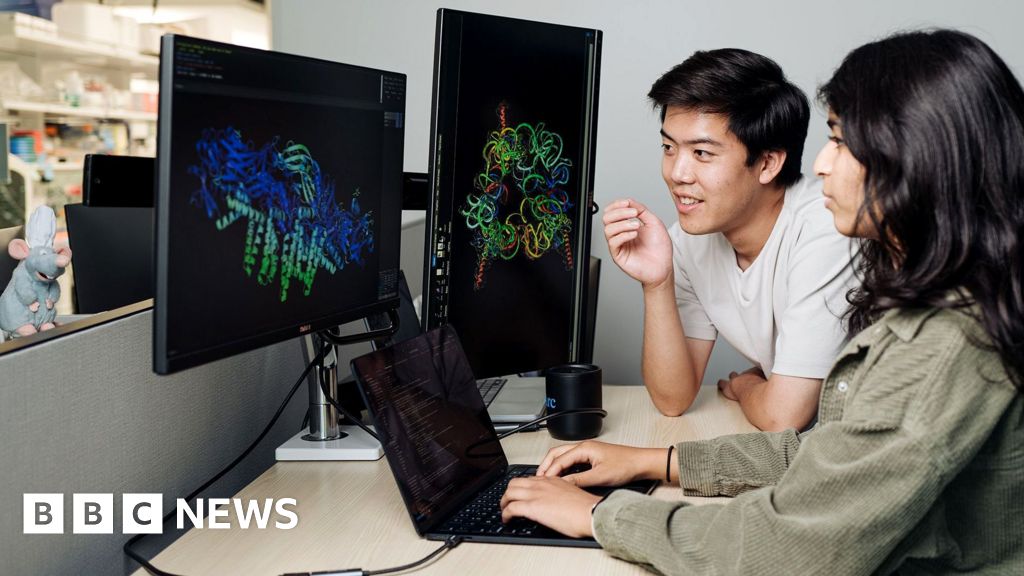
The research team, led by Stanford Assistant Professor Brian Hie, employed two specific AI models named Evo1 and Evo2. Operating on principles similar to large language models like ChatGPT, these systems were trained on vast genetic databases spanning viruses, bacteria, plants, and humans. Instead of predicting the next word in a sentence, the models predicted genetic sequences. The project focused on bacteriophages—viruses that specifically target and kill bacteria—as a controlled proof of concept for this unprecedented computational approach.
Key Facts
- Researchers synthesized 302 AI-generated designs in a laboratory setting to test viability.
- 16 of the novel viruses successfully infected and eliminated E. coli bacteria, proving they were fully functional.
- The synthetic phage genomes consist of approximately 5,400 base pairs, significantly smaller than the 500,000 required for the simplest living cells.
- The training data intentionally excluded viruses capable of infecting complex organisms to mitigate immediate risks.
- Proponents suggest this technology could lead to new treatments for antibiotic-resistant infections through customized phage therapy.
What Happens Next
The success of these 16 synthetic viruses opens a path toward more complex biological engineering. Professor Hie indicated that while moving from viral genomes to the much larger genomes of living organisms would require substantial effort, such a feat is no longer viewed as impossible. However, the scientific community is now facing a reckoning over regulation. Writing in the journal Science, experts from Johns Hopkins University emphasized that the primary challenge is now ensuring this generative capability does not facilitate the creation of harmful human pathogens.
Source: BBC
Related stories

Modi to Address IIT Delhi Convocation Amid Scrutiny of National Exam Systems

Generative AI Engineers Functional Viral Genomes to Combat Antibiotic-Resistant Bacteria

Sarvam AI Targets Trillion-Parameter Scale in Race for Indian Sovereign Intelligence
