
New snake Lielaphis slashi named for Slash finds place in New Guinea forests
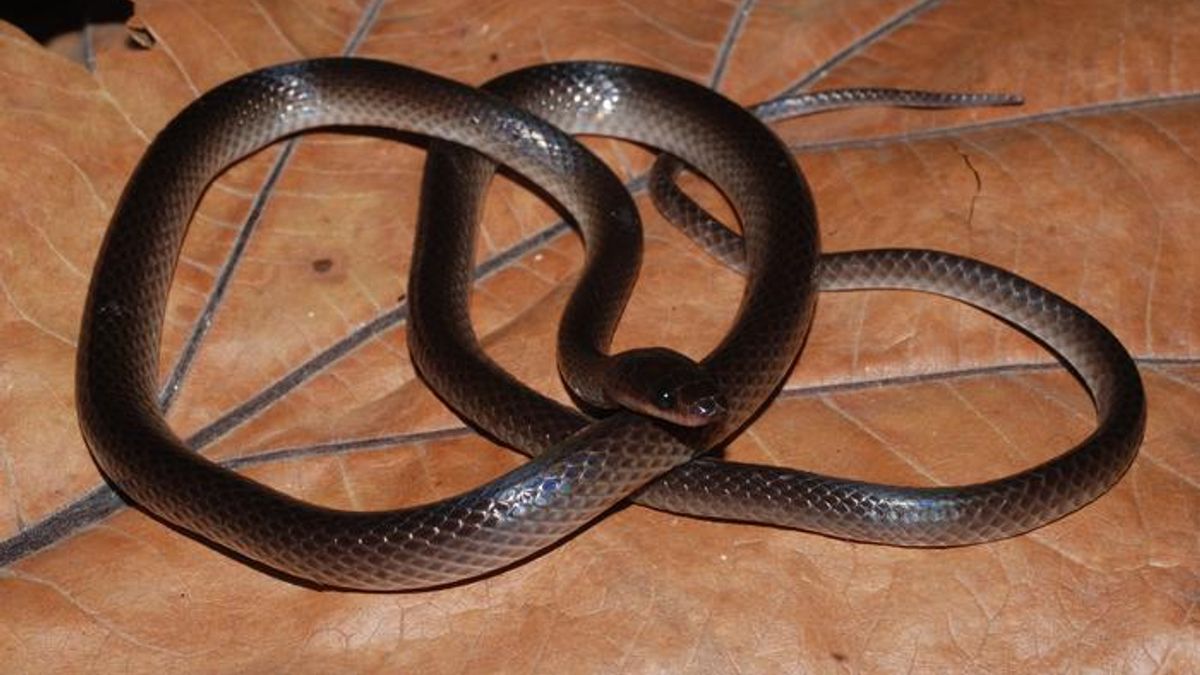
A newly described reddish-brown groundsnake from New Guinea has been named Lielaphis slashi in honor of Guns N’ Roses guitarist Slash. The species is non-venomous, about 28 inches long, and the naming aims to raise conservation awareness amid habitat threats.
Key takeaways
- Researchers have described a new groundsnake species in New Guinea named Lielaphis slashi in honor of Slash.
- The snake is about 28 inches long and considered non-venomous to humans.
- Habitat threats in its forest range include coffee farming and mining, underscoring conservation relevance.
What Happened
A new species of reddish-brown groundsnake found in New Guinea has been scientifically described and given the name Lielaphis slashi, commonly referred to as Slash’s groundsnake. The description appears in a study published in the journal Zootaxa and honors the guitarist Slash for his long-standing interest in reptiles, zoos, museums, and natural history.
According to the researchers, including Sara Ruane as a co-author, the snake measures about 28 inches in length and belongs to a group of groundsnakes that are typically elusive and nocturnal, with distribution centered in New Guinea. The species is described as not dangerous to people and not venomous in a way that would cause serious harm.
Fieldwork leading to the discovery began with a 2006 encounter when co-author Chris Austin came across an unfamiliar specimen during field activities in New Guinea. Subsequent analysis involved comparisons of scale patterns, genetics, and ecological niche with related snakes, using multiple genetic analyses to establish that L. slashi represents a distinct evolutionary lineage within its genus. Researchers emphasize that formal naming supports conservation planning by clarifying where the species lives and what threats it faces.
Slash himself commented in a press release that he is honored by the naming. Ruane, a long-time herpetologist and researcher, also spoke in a press release about the significance of recognizing, naming, and studying new species as a step toward understanding ecosystems and guiding conservation actions.
Why It Matters
The designation of Lielaphis slashi highlights how formally recognizing a species can facilitate its conservation, particularly in New Guinea, an area noted for high biodiversity and limited documentation. The researchers point to habitat pressures from human activities such as coffee farming and mining in the forests where Slash’s groundsnake occurs, underscoring the link between species description and potential protection strategies.
The study frames the naming of the species as a means to draw attention to biodiversity and the need to document organisms that may still be slipping through the forest’s gaps. By situating the discovery within a broader effort to map and protect New Guinea’s fauna, the authors argue that naming is a first step toward assessing where the species lives and what threats it faces.
Background
New Guinea groundsnakes have a nocturnal lifestyle and are typically found near the bases of large trees after sunset as they search for prey. The newly described L. slashi shares this nocturnal tendency with related snakes, and researchers note that its anatomy hints at a diet that includes small, slippery-scaled lizards and reptile eggs rather than constricting prey. The scientific journey to its recognition involved comparing morphology, genetic data, and ecological context to establish a distinct lineage within its genus.
The journal Zootaxa serves as the formal publication venue for the species description, and the study’s co-authors include Huang and Austin alongside Ruane. The processing of the data reflects a multi-year effort to differentiate L. slashi from other similar species in the same genus based on genetics and ecology.
Key Facts
- Species name: Lielaphis slashi (Slash’s groundsnake).
- Common name: Slash’s groundsnake.
- Location: New Guinea forests.
- Measured length: about 28 inches.
- Non-venomous and not dangerous to people.
- Discovery began with a 2006 field encounter in New Guinea.
- Genetic analyses indicate a distinct evolutionary lineage within its genus.
- Habitats in the area face threats from coffee farming and mining.
- Publication venue: Zootaxa; researchers include Sara Ruane, Tianqi Huang, and Chris Austin.
- Slash provided a response in a press release acknowledging the honor.
What Happens Next
The article notes that naming a species helps establish a framework for understanding its distribution and threats, which is a prerequisite for conservation planning. The researchers imply that further work is needed to map the species’ precise range and assess ongoing threats within New Guinea’s forests, potentially guiding future protective measures and habitat management actions.
Sources reviewed
Project Chintan independently synthesized and analyzed information cross-checked across the sources listed above.
Related stories

Delhi CM: engineers to make India an AI creator, not just a consumer market

Delhi teen builds 500-plant terrace garden that wildlife loves

San Andreas Is Slipping Faster, Researchers Say