Singapore-Registered Firm Linked to Foreign Espionage Tactics and Falsified Operations
An investigation reveals that Infoassa, a purported Singaporean think-tank, utilized fake employee records and plagiarized event listings to target individuals with sensitive government backgrounds. The entity's recruitment methods closely mirror established foreign intelligence playbooks designed t
Key takeaways
- Infoassa used plagiarized content and fake staff profiles to build institutional credibility.
- The firm targeted individuals with access to sensitive geopolitical data using financial incentives for non-public analysis.
- Technical links exist between Infoassa's infrastructure and websites previously seized by U.S. authorities in anti-espionage operations.
- The entity's website was taken offline following public exposure by regional security analysts.
What Happened
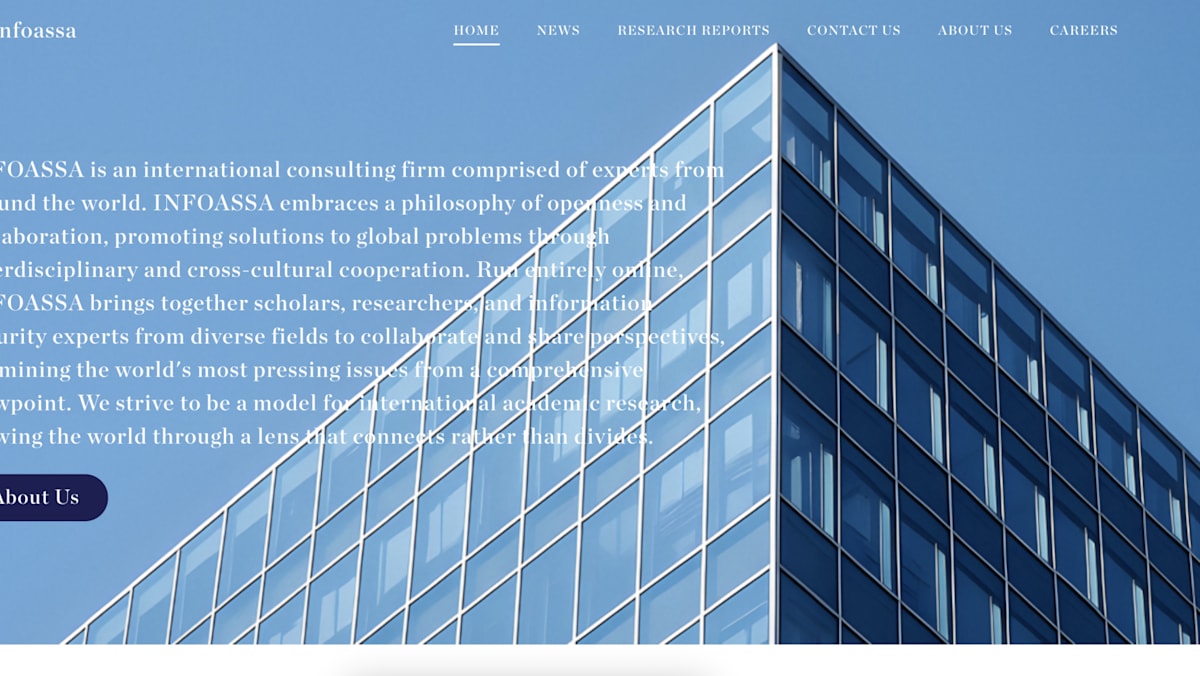
A Singapore-registered entity operating under the name Infoassa has been identified for utilizing deceptive recruitment practices that align with foreign intelligence operations. The organization, which marketed itself alternatively as a think-tank and a consulting firm, targeted former government employees and policy analysts for remote roles. A Project Chintan review of the entity's activities uncovered a pattern of fabricated professional identities and fraudulent operational claims.
During recruitment, candidates were offered financial incentives to produce reports on sensitive geopolitical topics, such as diplomatic relations between Washington and Beijing. Notably, recruiters requested analysis that avoided publicly available information, a hallmark of intelligence-gathering efforts. Suspicions were further raised when representatives communicated via personal email accounts and the organization lacked a verifiable footprint within the professional think-tank community.
Background
Infoassa established its digital presence in September 2025 through domain registration. Its operational model mirrors the Institute of East Asia Strategic Studies (IEASS), another Singapore-linked entity previously flagged by experts for using fabricated personas to recruit individuals with access to classified information. While the specific operators behind Infoassa remain unidentified, the organization's website infrastructure shared characteristics with TheTruthInfo, a domain recently seized by United States authorities. That seizure was part of a broader crackdown on a dozen websites allegedly linked to Chinese intelligence operations.
Key Facts
- Infoassa advertised physical events at a Beach Road location in Singapore, but the event descriptions were plagiarized directly from the Council on Foreign Relations.
- Recruiters offered prospective employees $500 to write reports based on non-public information regarding U.S.-China summit dynamics.
- At least one staff member listed by the firm was found to have a falsified professional history.
- The firm's website was deactivated shortly after external researchers raised public concerns about its authenticity on social media.
- The organization maintained an online-only presence despite claiming to host physical geopolitical summits.
Why It Matters
The incident highlights a growing trend of utilizing 'front' organizations in neutral hubs like Singapore to conduct digital social engineering. By mimicking the structure of legitimate research institutions, these entities attempt to bridge the gap between open-source research and espionage. The use of fabricated staff and stolen content serves to create a veneer of institutional credibility, aimed at lowering the defenses of professionals who hold or previously held high-level security clearances.
Sources reviewed
Project Chintan independently synthesized and analyzed information cross-checked across the sources listed above.
Related stories
Singapore to Lower Driver Suspension Thresholds as Experts Evaluate Deterrence Tactics
DNA Evidence Links Leipzig Airport Drone Incident to 2024 Logistics Center Sabotage