
Indian Railways tightens catering checks and Rail Madad response
Railways will implement real-time kitchen monitoring and faster handling of Rail Madad complaints. A review led by the Railway Board Chairman directed automation of Rail Madad, expanded camera coverage in kitchens, and closer scrutiny of third-party inspectors.
Key takeaways
- Railways will automate the Rail Madad complaint interface to streamline passenger reporting.
- Real-time monitoring of catering kitchens will be expanded with more cameras and upgraded surveillance.
- Inspecting agencies must routinely publish deficiency and performance data, with delisting possible for poor performers.
- AI-based monitoring may trigger formal corrective actions following issue detection.
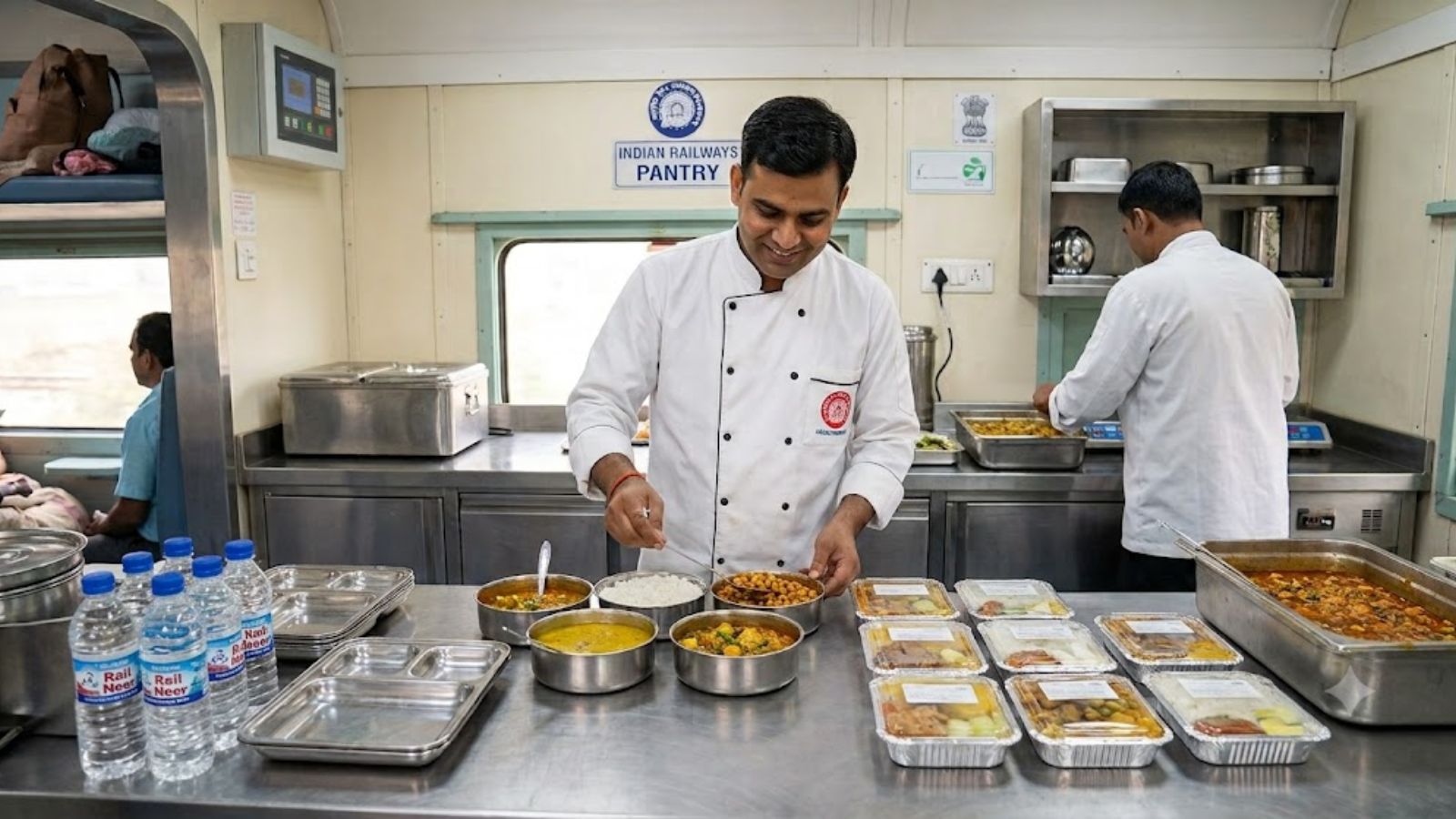
What Happened
Indian Railways announced plans to strengthen catering checks and reduce response times for passenger complaints received through the Rail Madad system. The initiative follows a review conducted by the Railway Board Chairman and CEO Satish Kumar at the IRCTC War Room, where the systems for monitoring catering services and passenger feedback were examined. The objective is to make monitoring more responsive and technology-driven, and to ensure quicker action on issues raised by passengers.
Key operational changes include automating the Rail Madad interface to allow passengers to report concerns more easily and enabling closer monitoring of complaints by railway officials. The Railway Board also emphasized improving accountability by requiring inspecting agencies to systematically publish details of deficiencies observed and their performance during inspections. The review highlighted the use of real-time kitchen monitoring and expanding camera coverage to better oversee kitchen operations.
Additional cameras will be installed in raw material storage areas, and Pan-Tilt-Zoom cameras will be deployed for broader surveillance of kitchen activities. The existing four camera feeds are part of the current monitoring setup. The review identified a specific kitchen in Anantapur, within the South Central Railway zone, as needing improvement, particularly in the preparation of roti and paratha, prompting a closer examination of the entire preparation process. Third-party inspection agencies were told to document deficiencies and their own performance more regularly, with the possibility of delisting agencies that perform consistently poorly. Artificial intelligence systems for monitoring issues such as pests were discussed, with the emphasis that AI alerts should lead to warning letters and corrective actions rather than ending the process at detection.
Why It Matters
The moves aim to raise the standard of catering services by tightening oversight, increasing transparency of inspection results, and speeding up redressal of complaints. A more automated and camera-backed monitoring regime could improve food quality and hygiene, bolster passenger confidence, and create clearer accountability for both railway catering facilities and the agencies that inspect them. Implementing AI-augmented monitoring and stronger follow-up actions signals a shift toward proactive problem-solving rather than reactive checks.
Background
Railway catering has been under scrutiny for quality and hygiene issues, with passenger complaints typically routed through the Rail Madad interface. The IRCTC War Room serves as a focal point for tracking catering performance and passenger feedback, and it is the locus for reviewing systems used to monitor catering services. The latest instructions reflect a broader push to modernize inspection mechanisms and to increase the visibility of inspector performance to ensure continuous quality assurance.
Key Facts
- Railways plans real-time monitoring of catering kitchens.
- Rail Madad complaints to be more automated and closely tracked.
- Railway Board directed posting of deficiencies and performance by inspecting agencies.
- Additional cameras to be installed in raw material storage areas and PTZ cameras for kitchen surveillance.
- Four camera feeds are currently used for kitchen monitoring; expansion planned.
- Anantapur kitchen flagged for improvement, with roti and paratha preparation highlighted.
- Third-party inspection agencies to be regularly recorded for deficiencies and performance; delisting possible for consistently ineffective agencies.
- AI-based monitoring discussed to identify pests and other deficiencies, with AI alerts to trigger corrective actions.
What Happens Next
The Railways will implement automated Rail Madad interfaces, expand camera coverage, and tighten the oversight of third-party inspectors. Action on AI alerts will be followed by warnings and corrective steps. No specific dates are provided for the rollout, but the measures are framed as immediate steps arising from the recent review by the Railway Board.
Sources reviewed
Project Chintan independently synthesized and analyzed information cross-checked across the sources listed above.