
Rahul Gandhi Outlines Triad of Hardship in Economic Critique for Indian Youth
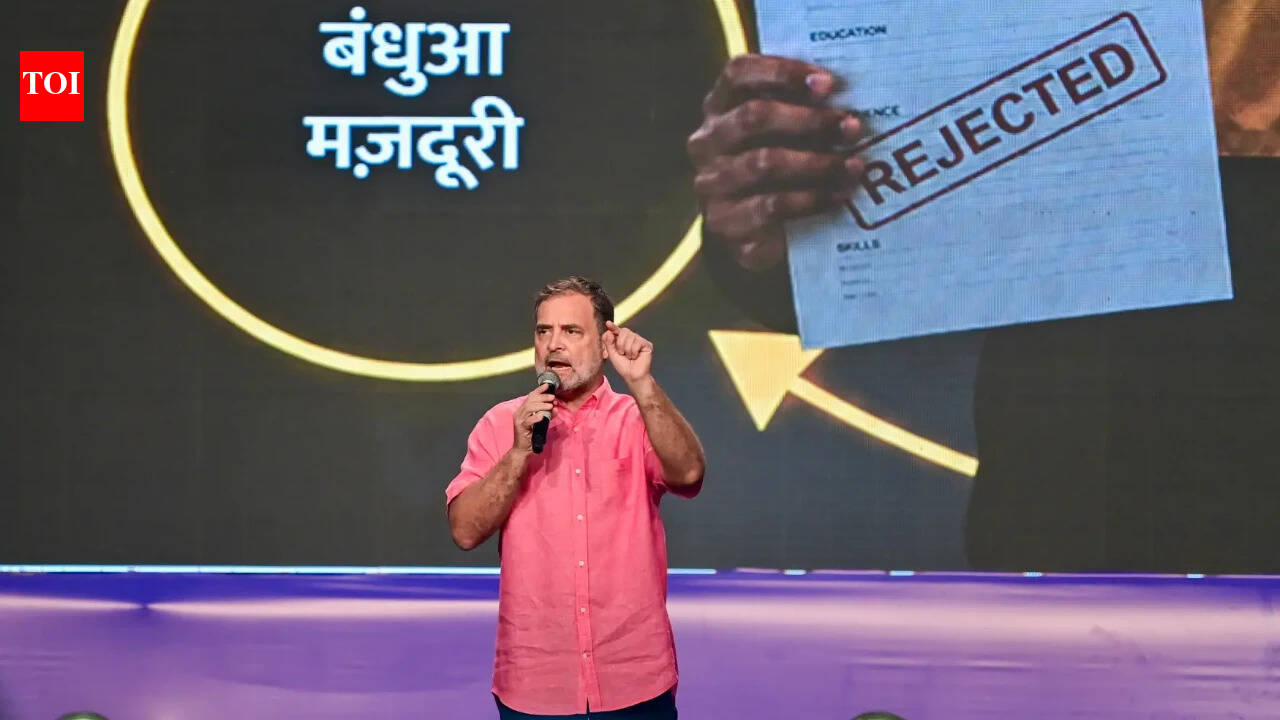
In a Prayagraj address, the Congress leader linked systemic unemployment to the concentration of wealth and the misuse of data assets. Gandhi argued that students are trapped in a cycle of expensive degrees that fail to yield stable career paths.
Key takeaways
- Rahul Gandhi identified lack of credit, paper leaks, and manufacturing decline as the primary drivers of Indian unemployment.
- He argued that data generated by the public is a national asset that should not exclusively benefit large corporations building AI.
- The Congress leader claimed that educational degrees in India have lost their value as they no longer guarantee stable employment for graduates.
- Gandhi called for a systemic change to address the concentration of wealth among a few entities and the government's influence over institutions.
Why It Matters
The economic outlook for India's 400 million young citizens serves as a primary political battleground. Rahul Gandhi's address at the Chhatron Ki Goonj event in Prayagraj positions youth grievances—ranging from exam integrity to corporate wealth concentration—as the central failure of current governance. By framing data as a national asset, he introduces a new dimension to the debate over technological disruption and industrial decline.
The 'Chakravyuh' of Modern Education
Speaking at KP Ground, Gandhi asserted that India’s youth represent a global strength unparalleled by the United States, China, or Russia. However, he contended that this potential is being stifled by a structural chakravyuh. He noted that while families invest heavily in schooling, the resulting certificates have lost their utility in the labor market. The leader specifically pointed to the decline of institutions like Allahabad University, which he claimed no longer offers the reliable path to success it once did.
Key Facts
- India possesses a youth population of approximately 40 crore, which Gandhi described as the nation's pride and primary power.
- The Congress leader identified four major barriers to employment: the collapse of manufacturing, lack of bank credit for small businesses, frequent government exam paper leaks, and the rise of AI.
- Gandhi alleged that demonetization and the current GST structure have severely handicapped small-scale industries.
- He argued that data generated by Indians is a form of daulat (wealth) that should benefit the public rather than being monopolized for corporate AI development.
- The speech emphasized non-violence, urging students to challenge systemic concentration of power by the government and RSS through peaceful means.
Economic Barriers and the AI Threat
Gandhi highlighted a growing disconnect between technological advancement and job security. He argued that artificial intelligence, built upon the data of the masses, threatens to further reduce corporate headcount while pushing young workers toward precarious gig labor. He criticized the banking sector for failing to provide loans to small and medium enterprises, while simultaneously alleging that public-sector privatizations have closed traditional employment avenues. According to Gandhi, this economic 'pain' is the direct result of power being held by a small group of influential entities that control national institutions.
Source: The Times of India
Related stories

Musk Ventures Unveil Terafab: A $119 Billion Texas Semiconductor Hub for AI and Space

Generative AI Engineers Functional Viral Genomes to Combat Antibiotic-Resistant Bacteria

Sarvam AI Targets Trillion-Parameter Scale in Race for Indian Sovereign Intelligence
