
NUS Scientists Engineer Light-Responsive Yeast to Program Biological Manufacturing
Researchers at the National University of Singapore have developed a method using red and blue light to precisely control gene expression in yeast. This optogenetic breakthrough allows for programmable biological production of medicines and fuels without traditional chemical additives.
Key takeaways
- NUS researchers created y-iLight to control yeast gene expression using red light without external chemical additives.
- The team solved blue-light interference by fusing y-iLight with blocking protein modules, allowing for multi-color light control.
- This optogenetic advancement makes biological manufacturing more predictable and environmentally sustainable.
What Happened
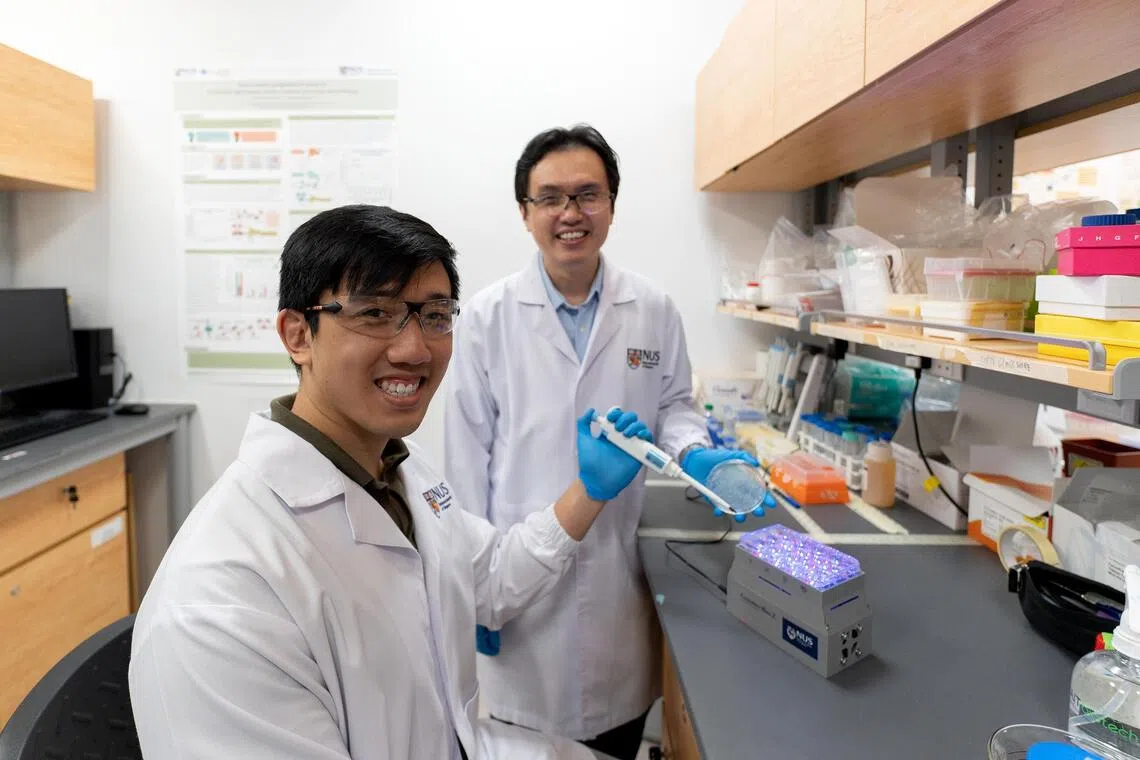
Researchers from the National University of Singapore (NUS) have engineered a new optogenetic system that allows yeast to be controlled using specific colors of light. The team, led by Associate Professor Poh Chueh Loo, adapted a light-sensitive genetic tool known as iLight to create 'y-iLight,' a protein that activates specific yeast genes when exposed to red light. By fusing this tool with protein modules that block blue light sensitivity, the researchers created a reliable switch that functions without the need for external chemical inducers or helper molecules.
Why It Matters
Traditional synthetic biology often relies on chemical triggers to manage cellular activity, which can lack precision and increase production costs. By using light instead of chemicals, biological manufacturing becomes more predictable, cost-effective, and environmentally friendly. Red light is particularly valuable in this field because it can penetrate biological tissues deeply without causing the cellular damage often associated with other wavelengths. The ability to use multiple colors of light—multiplexed optogenetics—allows scientists to deliver complex, multi-step instructions to microorganisms, turning them into programmable biological factories.
Key Facts
- Yeast is currently used in biotechnology to convert sugar into products like medicines and fuels.
- The NUS team developed y-iLight, a protein that attaches to DNA sequences in yeast in response to red light.
- The system functions using only naturally occurring molecules within the yeast, eliminating the need for added cofactors.
- Researchers combined y-iLight with EL222, a blue light-responsive protein derived from marine bacteria, to enable dual-color control.
- Experimental applications included adjusting the production of the antioxidant luteolin and controlling flocculation by connecting the FLO1 gene to red-light triggers.
What Happens Next
The development of multiplexed optogenetics moves yeast engineering toward more complex applications. By manipulating different amounts of red and blue light, researchers can now fine-tune the production levels of specific compounds. This programmable approach provides a foundation for scaling up the sustainable manufacturing of high-value chemicals and pharmaceuticals using light-responsive microorganisms.
Sources reviewed
Project Chintan independently synthesized and analyzed information cross-checked across the sources listed above.
Related stories

Dividend Contrast: Pfizer Defends 6.75% Yield Amid COVID Decline as Merck Eyes Pipeline

James and Ola Jordan Confirm Separation After Decades of Marriage
Reader Perspectives: Educational Relevance and Vehicle Size Disparities
