
NALSAR Alumni Condemn Bar Council of India's Letters
Alumni of NALSAR University of Law have condemned letters from the Bar Council of India president concerning students' views on inviting the Chief Justice of India. The letters, initially barring graduates from legal practice, were withdrawn amid public pressure.
Key takeaways
- NALSAR University of Law alumni have condemned letters from the Bar Council of India president.
- The letters concerned student views on inviting the Chief Justice of India to a future convocation.
- Initial BCI demands included barring 2026 graduates from advocate enrollment and an inquiry.
- These demands were withdrawn due to public pressure, but alumni criticized the BCI's approach.
- Alumni emphasized the right to free speech and questioned the BCI's jurisdiction over university matters.
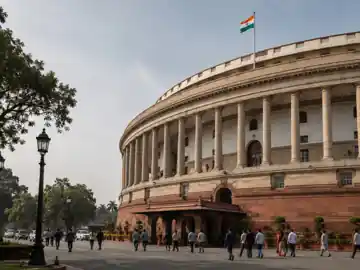
Alumni of NALSAR University of Law have voiced strong disapproval of communications sent to their institution by the president of the Bar Council of India (BCI). The letters, dated Thursday and sent by BCI president Manan Kumar Mishra, addressed student opinions regarding an invitation extended to the Chief Justice of India for the university's 2026 convocation.
In a statement, the alumni group characterized the BCI president's correspondence as demonstrating a "lack of empathy" for students, failing to acknowledge the fundamental right to free speech, and exhibiting an "arbitrary and high-handed" stance. Initially, one letter proposed barring NALSAR students set to graduate in 2026 from enrolling as advocates and instructed the Vice-Chancellor to investigate and identify individuals involved in what was termed a 'campaign'.
These restrictive measures and the call for an inquiry were rescinded shortly after facing public backlash. However, the alumni group criticized what they perceived as the BCI's "coercive threats" and challenged the council's authority to interfere in internal university affairs. They asserted that the BCI's mandated role is confined to advancing legal education and establishing its standards, not to control free speech on campuses or impose sanctions without due process.
The alumni also took issue with the language used in the BCI's letters, which reportedly accused individuals of "groupism, dirty politics, and misguiding students." They highlighted that expressing dissent is not a criminal offense in India and maintained that universities should be environments that support free inquiry and peaceful protest. The NALSAR alumni urged the BCI to reconsider its actions and to engage with universities and students through dialogue and discussion rather than through forceful means.
Sources reviewed
Project Chintan independently synthesized and analyzed information cross-checked across the sources listed above.
Related stories

Bar Council of India's Batch-Wide Enrolment Freeze on NALSAR Graduates Questioned

Bar Council Faces Criticism Over NALSAR Student Enrolment Reversal

Supreme Court Rebukes Bar Council Over NALSAR Student Enrolment Freeze
