1994 F1 Season: Schumacher's Title Marked by Controversies and Bans
The 1994 Formula 1 season, which saw Michael Schumacher win his first world title, was overshadowed by numerous controversies involving his Benetton team. These included allegations of illegal electronic aids, safety breaches during pit stops, and disqualifications for technical infringements.
Key takeaways
- Michael Schumacher's first Formula 1 world title in 1994 was surrounded by controversy.
- His Benetton team faced multiple investigations for alleged illegal electronic aids and technical infringements.
- Schumacher was disqualified from one race and banned from two others due to penalties and rule violations.
- A pit stop fire involving Jos Verstappen highlighted safety equipment breaches by the Benetton team.
- Technical non-compliance, including a too-thin plank under Schumacher's car, led to race wins being revoked.
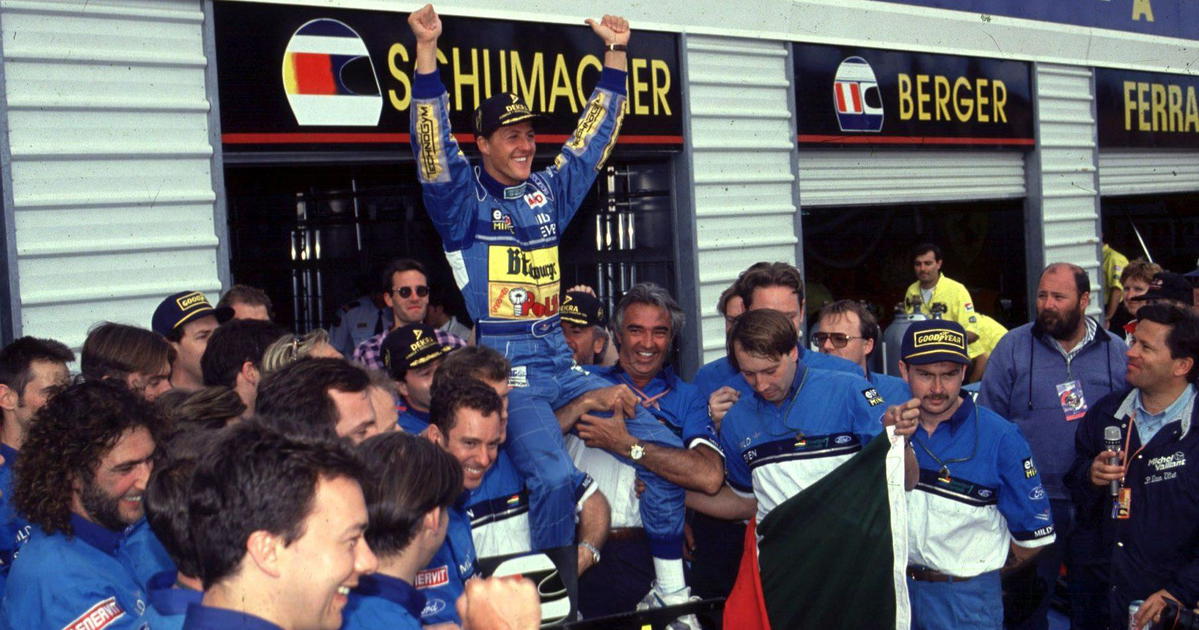
The 1994 Formula 1 season was marked by significant controversies, particularly surrounding Michael Schumacher's maiden world championship title with the Benetton team. The season followed new regulations from the FIA that banned electronic driver aids such as traction control and active suspension to emphasize driver skill.
What Happened
Following the fatal accidents of drivers Roland Ratzenberger and Ayrton Senna, the FIA intensified its scrutiny of teams, demanding source code for car electronics. Benetton, along with Ferrari and McLaren, initially refused to comply, leading to fines. LDRA, a specialized company, later discovered a hidden launch control system within Benetton's car software. While Benetton claimed it was for testing only and the FIA could not prove its race use, evidence of traction control emerged in 2015.
During the German Grand Prix, a pit stop involving Jos Verstappen resulted in a fire when fuel spilled and ignited. An FIA investigation revealed Benetton had removed a safety filter from the fueling rig, allowing for faster refueling but increasing the risk of such incidents. The team was fined for using non-compliant equipment.
Further controversies led to Schumacher's disqualification and bans. At Silverstone, he was penalized for overtaking during a formation lap and later ignored a black flag, resulting in disqualification and the loss of six points. The FIA World Motor Sport Council later increased Benetton's fine and suspended Schumacher for two races.
In Spa, Schumacher's win was revoked after a wooden plank beneath his car was found to be thinner than the mandated 9 millimeters. This suggested the car was running too low, providing an aerodynamic advantage. Benetton's explanation of wear due to a curb spin was rejected.
Key Facts
- The 1994 Formula 1 season aimed to return focus to driver skill by banning electronic aids.
- The FIA demanded source code from Benetton, Ferrari, and McLaren after Ayrton Senna's fatal crash.
- Benetton and McLaren were initially fined for refusing to provide source code.
- A hidden launch control system was discovered in Benetton's car software.
- Benetton claimed the launch control system was only for testing and not used in races.
- In 2015, former Benetton engineer Willem Toet confirmed the team had developed a traction control system.
- A fire occurred during Jos Verstappen's pit stop at the German Grand Prix due to a removed safety filter on the fueling rig.
- Benetton was fined for using non-compliant equipment related to the fueling rig.
- Michael Schumacher was disqualified at Silverstone for ignoring a black flag after a pit lane penalty.
- Schumacher received a two-race ban from the FIA World Motor Sport Council.
- Schumacher's victory in Spa was disallowed because the plank under his car was too thin (7.4mm vs. 9mm minimum).
- Benetton's explanation for the thin plank, citing wear from a curb spin, was rejected.
Background
The 1994 season represented a period of significant change in Formula 1, with the FIA implementing stricter safety measures and technical regulations following tragic accidents. The focus on electronic aids was intended to level the playing field and highlight driver performance.
Sources reviewed
Project Chintan independently synthesized and analyzed information cross-checked across the sources listed above.
Related stories
)
Brooklyn Beckham Faces Backlash for Seawater Pasta Recipe
John Cleese's Online Statements Spark Controversy Over Migrant and Islam Comments
MLB's Bizarre Seventh-Inning Run Sparks Fan Confusion