July CPI Report Anticipated to Show Modest Inflation Increase
The upcoming Consumer Price Index report for July is expected to indicate a slight rise in inflation, potentially influencing the Federal Reserve's interest rate decisions. Analysts are closely watching the core reading, which excludes food and energy prices, for signs of persistent price pressures.
Key takeaways
- The July Consumer Price Index report is expected to show a 0.1% monthly increase in headline inflation and a 0.2% increase in core inflation.
- Annual inflation is projected to be 3.4% (headline) and 2.5% (core), both down slightly from June.
- The Federal Reserve's interest rate decisions may be influenced by these inflation figures.
- Market expectations suggest a 50-50 chance of a rate hike in September, with higher probabilities in October or December.
- Recent economic data presents a mixed outlook, with signs of a softening labor market alongside persistent inflation concerns.

The Consumer Price Index (CPI) report, scheduled for release by the Bureau of Labor Statistics on Wednesday at 8:30 a.m. ET, is anticipated to show a modest inflation increase for July. Economists surveyed expect the all-items headline number to rise by 0.1%, with the core reading, which omits volatile food and energy costs, projected at 0.2%.
On an annual basis, these figures are forecast to be 3.4% for the headline rate and 2.5% for the core rate, both representing a slight decrease from June's readings. Despite these projected decreases, annual inflation rates are expected to remain above the Federal Reserve's target of 2%.
The Federal Reserve's Federal Open Market Committee (FOMC) faces decisions on interest rates. Following a July meeting where the FOMC voted 9-3 to maintain the key borrowing rate between 3.5% and 3.75%, some officials have indicated a willingness to increase rates if inflation data does not improve. However, recent economic indicators, including a softening labor market and easing geopolitical tensions, have led to adjusted market expectations regarding future rate hikes.
Traders now assign a 50-50 probability to a rate hike in September, with increased likelihoods suggested for October or December, according to the CME's FedWatch tool. Federal Reserve officials will have the benefit of reviewing both the July and August inflation data before their next meeting. The central bank will observe a hiatus in August, preceding the Kansas City Fed's annual symposium in Jackson Hole, Wyoming.
Recent economic data has presented a mixed picture. July saw a decrease in nonfarm payrolls by 23,000, while the unemployment rate fell to 4.1%. Despite these signs of a potentially cooling labor market, some economists remain cautious, anticipating that the July inflation data could reveal persistent price pressures that the Fed cannot overlook. Some financial institutions, such as Bank of America, continue to forecast multiple rate increases in the coming months, emphasizing the Fed's strong focus on inflation data.
The specific outcome of the July CPI report could significantly influence the FOMC's September decision. A consistent average monthly increase of 0.25% over the next two months would likely lead to a September rate hike. Conversely, an average below 0.2% could defer an increase, while intermediate figures would render the decision uncertain, dependent on the policy stance of Fed Chairman Kevin Warsh.
Sources reviewed
Project Chintan independently synthesized and analyzed information cross-checked across the sources listed above.
Related stories
US Inflation Cools in July, Easing Pressure for Federal Reserve Rate Hike
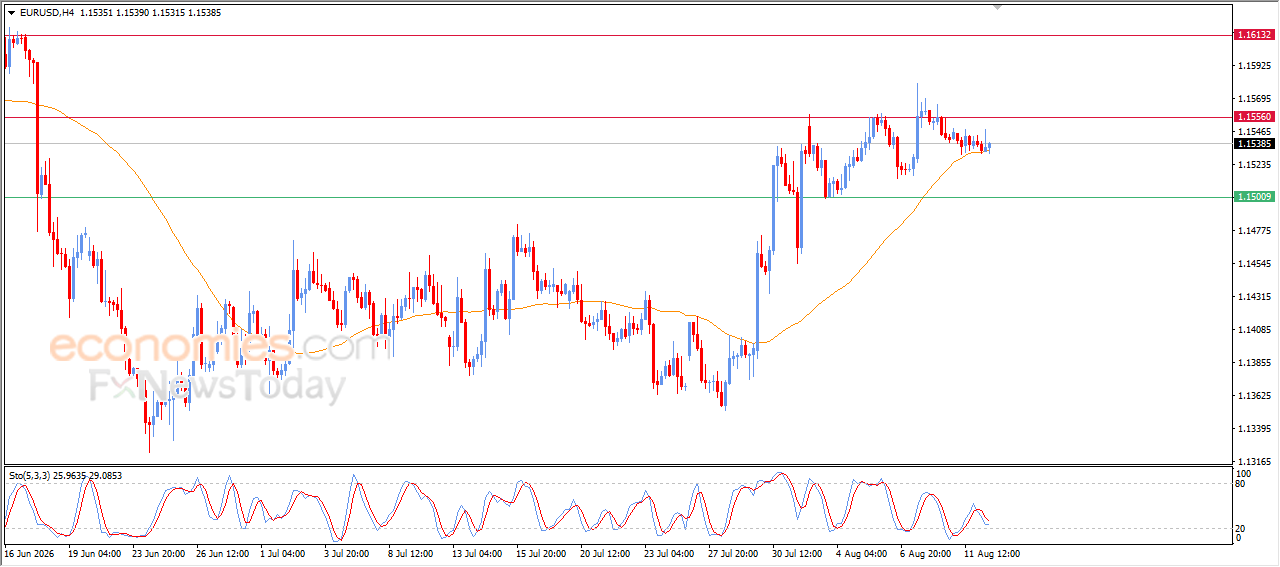
US CPI Data Could Influence EUR/USD Movement, Analysts Say

CUSMA Report Warns of Job Losses Amid Tariff Escalation