
Monsoon Session Ends Amidst Protests; Key Bills Passed Without Debate
India's Monsoon parliamentary session concluded on August 13, 2026, marked by opposition protests and the passage of several bills without discussion. The Lok Sabha was adjourned sine die following disruptions over student protests and alleged donation theft.
Key takeaways
- The Monsoon parliamentary session in India concluded on August 13, 2026, marked by opposition protests.
- Twelve bills were passed by the Lok Sabha during the session, with only two subjected to debate.
- Opposition concerns included police action against students and allegations regarding Ram temple donations.
- A report finding Justice Yashwant Varma guilty of charges has been tabled, potentially leading to impeachment proceedings.

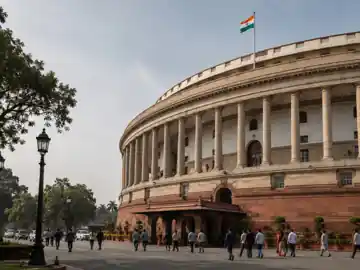
India's Monsoon parliamentary session concluded on August 13, 2026, with the Lok Sabha adjourned sine die. The session was characterized by continuous protests from the opposition, leading to the passage of numerous bills without substantive debate. Speaker Om Birla adjourned the House indefinitely after the national song was played. Notably, Mr. Birla did not deliver his customary address summarizing the session's productivity.
What Happened
The Lok Sabha adjourned on August 13, 2026, marking the end of a turbulent Monsoon session. Opposition members persistently protested government actions, including police intervention during student demonstrations and allegations concerning Ram temple donations. These disruptions led to repeated adjournments and prevented the Question Hour from being completed on any day.
Despite the procedural obstructions, 12 bills were passed during the session, with only two undergoing debate. The rest were approved without discussion. The Prime Minister, Home Minister, and Defence Minister were present when the House convened briefly on the final day. Home Minister Amit Shah had previously indicated his readiness to debate the students' issues and address opposition queries.
Key Facts
- The Lok Sabha was adjourned sine die on August 13, 2026.
- The session began on July 20, 2026.
- Opposition protests focused on police action against students and alleged theft of Ram temple donations.
- Twelve bills were passed during the session, with debate occurring on only two.
- Home Minister Amit Shah stated his willingness to debate the students' protest issues.
- A report on charges against Justice Yashwant Varma was tabled, finding him guilty of certain allegations.
- The government may consider impeachment proceedings against Justice Varma in the Winter session.
Background
Opposition protests initially centered on the NEET exam paper leak before shifting to police actions against students protesting at Jantar Mantar in New Delhi on July 20. These students sought accountability within the education system. Home Minister Amit Shah, on August 12, 2026, expressed his readiness for a debate and proposed consultations with the Speaker and opposition to schedule discussions.
A bill to amend the anti-paper leaks law was extensively debated for 10 hours. Another bill, making insult to the national song 'Vande Mataram' a punishable offense, saw minimal participation with only two members speaking amid the noise. The Foreign Contributions (Regulation) Amendment Bill was sent to a joint parliamentary committee for further review, having previously faced opposition from religious organizations.
Separately, a probe panel report found Justice Yashwant Varma guilty of unspecified charges. The government may initiate impeachment proceedings against him during the upcoming Winter session.
Sources reviewed
Project Chintan independently synthesized and analyzed information cross-checked across the sources listed above.
Related stories

Congress MP Urges Telangana Govt. to Oppose Trans Law Amendments in Supreme Court
India's Monsoon Session Ends in Disarray, Key Bills Passed Amidst Protests

Parliament Approves Mines and Minerals Bill, Limiting State Tax Powers
