
India's First Independence Day: A New Beginning Amidst Challenges
India's first Independence Day on August 15, 1947, marked the end of British rule but was shadowed by the partition and its ensuing violence. Celebrations in Delhi were marked by massive crowds, while Mahatma Gandhi focused on peace efforts in Calcutta.
Key takeaways
- India celebrated its first Independence Day on August 15, 1947, following the end of British rule.
- Jawaharlal Nehru delivered his iconic 'Tryst with Destiny' speech, acknowledging both freedom and the nation's challenges.
- The day was marked by widespread public gatherings in Delhi and official ceremonies.
- India's independence was concurrent with the partition, which led to significant violence and displacement.
- Mahatma Gandhi focused on peace efforts in Calcutta rather than participating in the Delhi celebrations.
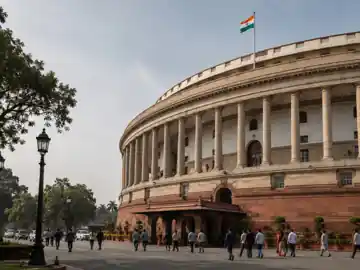
India's inaugural Independence Day on August 15, 1947, signaled the conclusion of British dominion but differed significantly from contemporary observances. The transition commenced on the night of August 14 within Constitution Hall in New Delhi, with an assembly session that opened with the song 'Vande Mataram'.
What Happened
Assembly President Dr. Rajendra Prasad addressed attendees, honoring those who had sacrificed for the nation's freedom. As midnight approached, Jawaharlal Nehru delivered his 'Tryst with Destiny' speech, acknowledging the achievement while highlighting the ongoing challenges of poverty, ignorance, disease, and inequality that the new nation faced. By the morning of August 15, newspapers reported that India was independent, with headlines such as 'Journey's end - Beginning of another' appearing on the front page of the Hindustan Times. The newspaper also featured photographs of key figures like Lord Mountbatten, Nehru, and Prasad, alongside accounts of the unfolding events. Independence activist Hansa Mehta formally presented the national flag, which had been adopted by the Constituent Assembly weeks earlier.
Delhi experienced immense public gatherings, with crowds reportedly overwhelming police cordons around the Constituent Assembly. People congregated around Nehru and Lord Mountbatten, expressing their jubilation. The transfer of power officially ended British rule, establishing India as an independent Dominion with Nehru as its first prime minister and Lord Louis Mountbatten as its first Governor-General.
Background
India's attainment of freedom was accompanied by the partition of British India into India and Pakistan. This division led to widespread communal violence, particularly in Punjab and Bengal, displacing millions and resulting in the separation of families. An estimated 2 to 20 lakh people died due to violence during this period.
While Delhi observed official ceremonies and public celebrations, Mahatma Gandhi was in Calcutta, dedicated to fostering peace. He stayed at Hyderi Manzil in Beliaghata, undertaking a fast and engaging with people to promote unity between Hindus and Muslims.
Key Facts
- India became independent on August 15, 1947.
- Jawaharlal Nehru delivered his 'Tryst with Destiny' speech on the night of August 14, 1947.
- The Hindustan Times newspaper's headline on August 15, 1947, read "Journey's end - Beginning of another."
- Lord Louis Mountbatten served as the first Governor-General of independent India.
- Mahatma Gandhi was in Calcutta working towards peace during India's first Independence Day.
- The partition of India resulted in significant communal violence and displacement.
- An estimated 2 to 20 lakh people died during the Partition violence.
- Jawaharlal Nehru hoisted the national flag at the Red Fort for the first time on August 16, 1947.
What Happens Next
The article indicates that the Independence Day ceremony known today, including the Red Fort tradition, had not yet taken shape in 1947. Jawaharlal Nehru first hoisted the flag at the Red Fort on August 16, and this event later evolved into the annual tradition.
Sources reviewed
Project Chintan independently synthesized and analyzed information cross-checked across the sources listed above.
Related stories

Artist Creates Miniature Graphite Statue of Alluri Sitarama Raju
President Murmu Announces Comprehensive Reforms for Public Examinations

M. Krishnasamy to Receive Thagaisal Thamizhar Award on Independence Day