Amit Shah outlines three-year plan to push India toward 2029 drug-free goal
India aims to become drug-free by 2029, with a three-year roadmap and four-pillar strategy. The plan builds on NCORD, expands network-centric enforcement, and targets supply, demand, and harm reduction.
Key takeaways
- Amit Shah announced a 2026–2029 mission-mode plan to eliminate drugs in India by 2029.
- The plan builds on the NCORD framework with state/UT anti-narcotics task forces and a shift to network-centric enforcement.
- Seizure data cited: 2004–2014 total 26 lakh kg; 2014–July 2026 total more than 1.19 crore kg.
- The strategy encompasses supply reduction, demand reduction, and harm reduction through four pillars.
- A Delhi building collapse led to the Goa event’s partial cancellation surrounding the speech.
What Happened
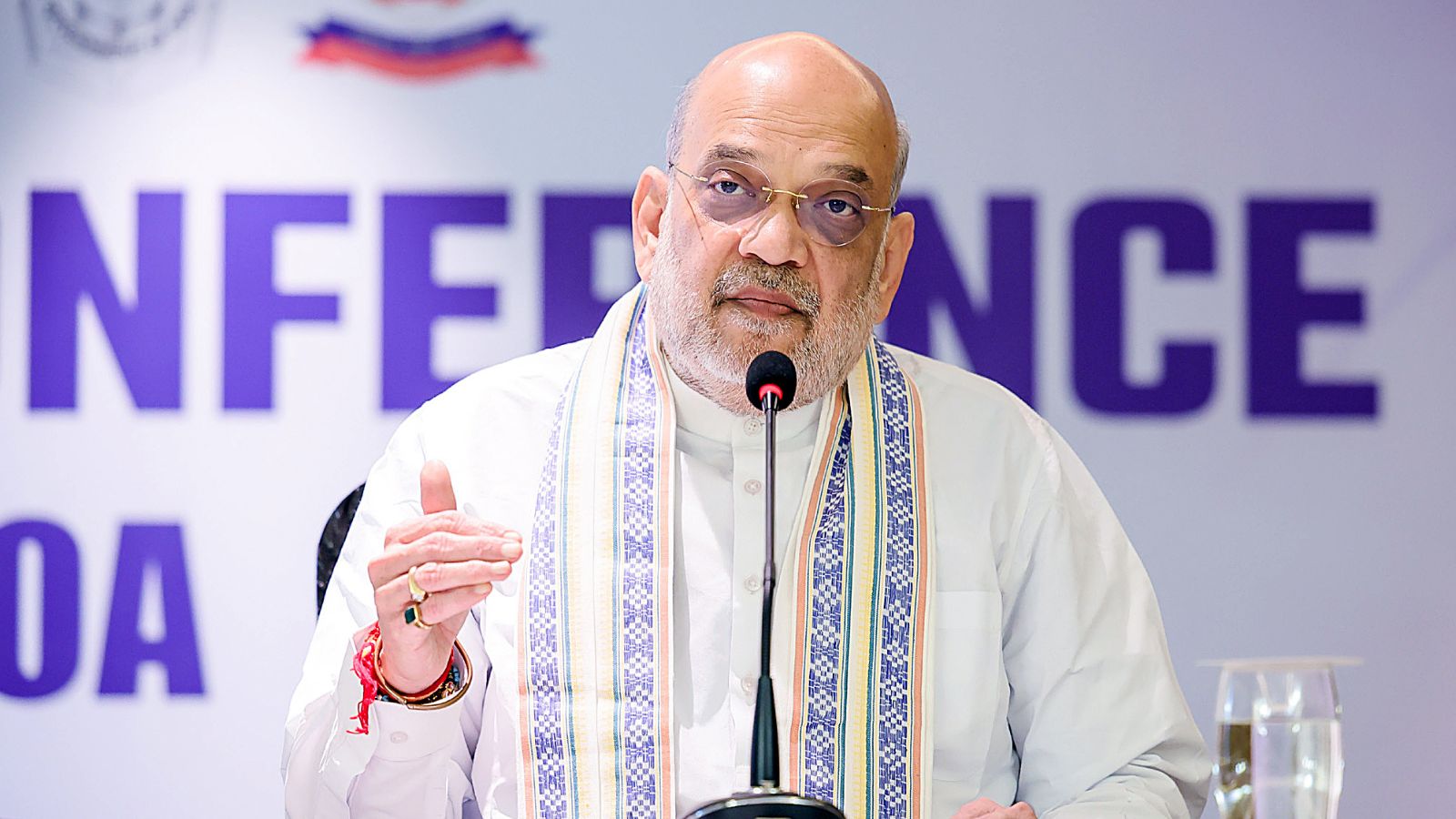
Union Home Minister Amit Shah held a press conference in Panaji, Goa, where he unveiled a three-year roadmap and a vision document for narcotics control. The objective is to achieve a drug-free India by 2029. Shah framed narcotics trafficking as a crime that undermines future generations and noted that the proceeds often fund terrorism. He described a shift from prior episodic actions to a national, coordinated, continuous campaign involving multiple agencies.
Shah announced that since 2019 the government has strengthened its narcotics effort by creating a four-tier Narco Coordination Centre (NCORD) and integrating local police with the national strategy through dedicated anti-narcotics task forces across states and union territories. He said the approach moved from seizures alone to network-centric enforcement targeting kingpins, associates, distributors, and suppliers through multi-level investigations.
The plan presents a mission-mode period for 2026–2029 with defined timelines, ministry accountability, measurable outcomes, and quarterly reviews. It identifies three outcomes: supply reduction, demand reduction, and harm reduction, and outlines a four-pillar roadmap to achieve its goals.
Why It Matters
The roadmap frames narcotics control as India’s foremost national security challenge after the end of Naxalism and signals a major shift toward a sustained, organized campaign. By linking the goal of a drug-free India to national security and funding networks (including potential ties to terrorism), the plan aims to justify long-term, cross-agency coordination and resource allocation. Shah’s emphasis on outcome-based accountability and quarterly reviews suggests a move toward institutionalized monitoring of progress rather than episodic action.
The stated emphasis on three outcomes and four pillars indicates a comprehensive approach that goes beyond seizures to address the full cycle of the narcotics ecosystem, including precursor controls and capacity building. If implemented as described, the strategy could affect policing, border controls, and public health sectors, along with local and national governance.
Background
Shah noted that prior to 2014, actions against narcotics were fragmented and limited to smaller seizures. Since 2014, the government has claimed an “unprecedented increase” in drug seizures, contrasting 2004–2014 totals (26 lakh kilograms) with 2014–2026 (till July) totals (>1.19 crore kilograms). The NCORD mechanism and state UT task forces were established to integrate local and national efforts into a single coordinated framework.
The press conference followed the government’s assertion that the fight against narcotics is now a national security priority, positioned after the earlier focus on counterinsurgency and internal security challenges. A related event in Goa—Shah’s appearance alongside the BJP state headquarters inauguration—was curtailed due to a Delhi building collapse, according to Goa Chief Minister Pramod Sawant.
Key Facts
- Speaker and setting: Amit Shah, Union Home Minister, in Panaji, Goa, at a press conference on narcotics control.
- Policy goal: Make India drug-free by 2029.
- Policy timeline: Three-year roadmap with 2026–2029 mission-mode period.
- Enforcement framework: Four-tier NCORD mechanism; integration of local police; dedicated anti-narcotics task forces across states and UTs.
- Strategy shift: From seizure-centric action to network-centric enforcement targeting kingpins, distributors, and suppliers.
- Historical comparison: 2004–2014 seizures totaling 26 lakh kg; 2014–July 2026 seizures exceeding 1.19 crore kg.
- Strategic outcomes: Supply reduction, demand reduction, and harm reduction.
- Four pillars: Intelligence/operations, precursor and synthetic drugs control, demand/harm reduction, capacity building/coordination.
- Temporary disruption: BJP Goa state HQ inauguration planned but canceled due to Delhi building collapse.
What Happens Next
The plan proposes quarterly reviews and accountable ministries for each goal, with a focus on achieving measurable outcomes within the 2026–2029 window. The next steps include implementing the four-pillar framework, expanding and coordinating anti-narcotics task forces, and pursuing further actions to reduce supply, demand, and harms associated with narcotics trafficking as part of a national security-centric strategy.
Sources reviewed
Project Chintan independently synthesized and analyzed information cross-checked across the sources listed above.