
Google DeepMind Open-Sources WeatherNext 2 Following Cyclone Prediction Breakthrough
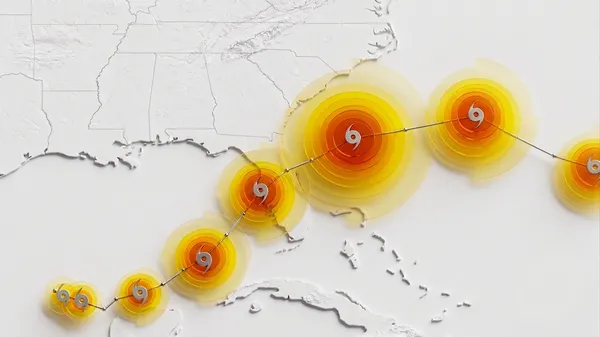
Google researchers have unveiled a machine learning model that achieves state-of-the-art accuracy in tracking and measuring tropical cyclones. The technology provides an additional day of lead time for warnings, potentially mitigating the impact of these destructive weather events.
Key takeaways
- Google's WeatherNext AI achieves state-of-the-art accuracy in predicting cyclone tracks, intensity, and wind structures.
- The model provides an additional day of warning time compared to previous forecasting standards.
- WeatherNext 2 has been open-sourced to help the global research community build better climate resilience.
- The technological advancement represents roughly ten years of meteorological progress achieved in a single model.
The Acceleration of Meteorological Forecasting
Predicting the trajectory and evolution of tropical cyclones has historically served as one of meteorology's most difficult hurdles. Because these events rank among the most devastating natural disasters globally, the window for emergency preparation is extremely narrow. New research published in the journal Nature indicates that Google’s WeatherNext AI model has reached a new benchmark in forecasting accuracy.
Why It Matters
The WeatherNext 2 model effectively condenses roughly ten years of traditional meteorological advancement into a single technological leap. By improving the precision of wind structure, intensity, and track predictions, the system offers authorities and vulnerable populations an extra 24 hours of advance warning. This extension of the lead-time window is vital for evacuation logistics and disaster risk management.
Key Facts
- Google researchers published their findings regarding the WeatherNext model's state-of-the-art performance in the journal Nature.
- The model provides a significant improvement in predicting a cyclone's specific track, its intensity, and its internal wind structure.
- Experts estimate the accuracy gains represent approximately one decade of progress in the field of meteorology.
- To support global climate resilience, Google is open-sourcing the WeatherNext 2 model to the international research community.
What Happens Next
By releasing the WeatherNext 2 source code to the global community, Google DeepMind aims to facilitate collaborative development in storm forecasting. Researchers worldwide can now access the model to refine local weather predictions and integrate AI-driven insights into existing disaster response frameworks.
Source: Google
Related stories
Jony Ive and OpenAI Developing Kinetic Smart Speaker for 2027 Release

Google Integrates Ecosystem Data to Automate Complex Multi-Step Travel Planning
Alphabet Overhauls AI Leadership as DeepMind Integration Deepens
