
From Doodles to Professional Edits: Five Prototypes Powering the Gemini Omni Ecosystem
Developers are utilizing the new Gemini Omni Flash model to transform simple sketches into realistic video and automate complex cinematic editing. These early projects demonstrate the model's ability to maintain physical logic while applying diverse artistic styles and environmental shifts.
Key takeaways
- Gemini Omni Flash allows for 360-degree perspective shifts and cinematic zooms through simple text or voice prompts.
- Developers are using Google Flow to animate static hand-drawn sketches into realistic, moving 3D objects.
- The model maintains consistent physical logic even when transitioning a scene between day, night, or different seasons.
- Enterprise applications include transforming dry business data into animated instructional characters and landscape design previews.
Why It Matters
The release of Gemini Omni Flash to the developer community marks a shift in video production where natural language replaces traditional editing suites. By integrating real-world physics with generative capabilities, the model allows for professional-grade visual adjustments—such as lighting changes or perspective shifts—without requiring manual frame-by-frame manipulation. This accessibility permits both creative hobbyists and enterprise teams to prototype visual concepts at a fraction of the traditional time and cost.
Key Facts
- Perspective Manipulation: Leon Lin demonstrated the ability to generate over 20 distinct camera angles of a single subject, ranging from aerial shots to close-up profiles, while maintaining scene consistency.
- Environmental Control: Carlos Santana utilized voice commands to alter global scene parameters, including weather effects, time-of-day lighting, and seasonal shifts in foliage.
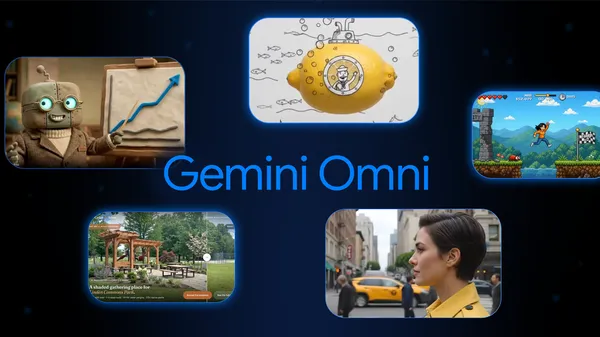
- Sketch-to-Video Animation: Using Google Flow, developer Pan converted basic hand-drawn doodles into lifelike objects, such as transforming a matchstick into a launching rocket and kitchen scissors into a shark.
- Style Transfer: Jerrod Lew showcased the model's fluidity by transitioning a single live-action clip through anime and claymation aesthetics without interrupting the character's movement.
- Business Integration: The Hyperagent team applied the technology to functional use cases, including architectural landscaping previews and animated data visualization for business dashboards.
Background
Introduced at this year’s I/O, Gemini Omni is engineered to process text, image, video, and audio references as inputs. Unlike previous generative models that often struggled with spatial awareness, Omni is designed to follow real-world logic and physics. This foundational understanding ensures that when a user edits an object or an environment, the resulting motion and interaction remain coherent. The technology is currently accessible through Google AI Studio, the Gemini API, and the Gemini Enterprise Agent Platform.
What Happens Next
As builders continue to test the limits of Omni Flash within Google Flow and the broader Gemini app ecosystem, the focus shifts toward deeper integration into professional workflows. Future developments likely involve refining the precision of natural language triggers and expanding the model's ability to handle increasingly complex data-to-video personifications for enterprise applications.
Source: Google
Related stories

Greek Authorities Detain Mayor and Two Others in Connection with Massive Athens Wildfire

Direct Global Connectivity Targets for Bhogapuram as Commercial Operations Begin

India's Foreign Secretary Engages Top CPC Officials in Diplomatic Push to Reset Ties
