
Expanding the Scientific Frontier of Indian Traditional Medicine
India's latest Union Budget and a new trade pact with the EU signal a strategic shift for AYUSH systems. Success depends on moving traditional practices into the global mainstream through rigorous, independent scientific validation.
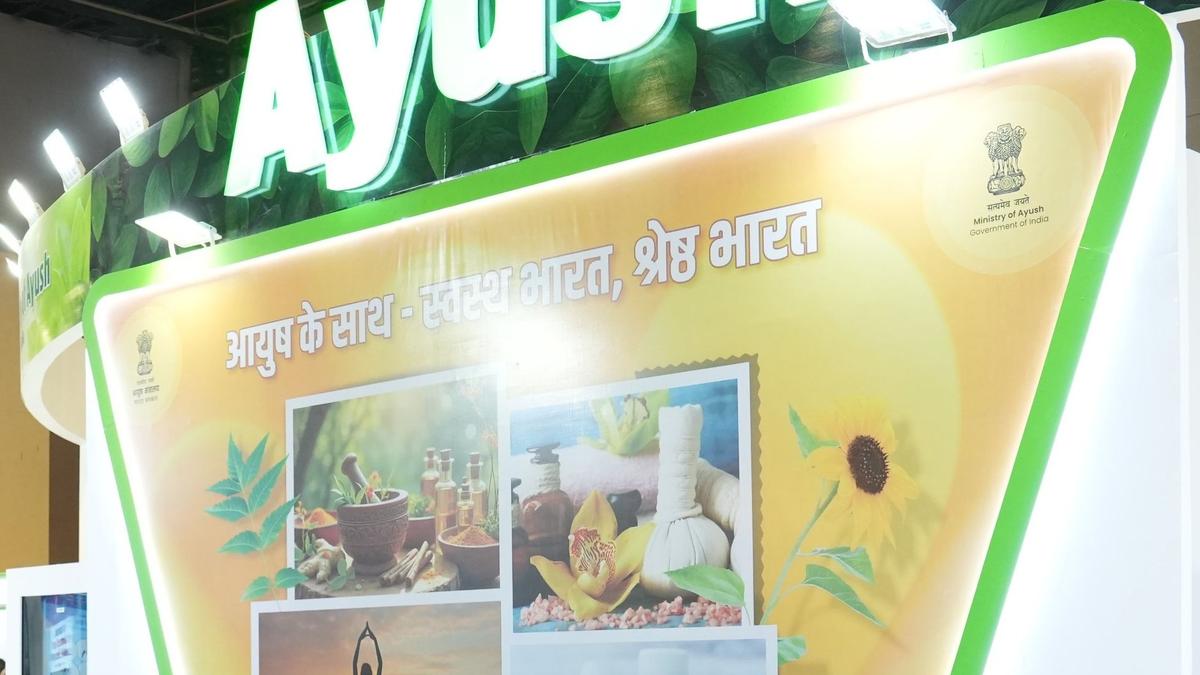
Funding and Institutional Scaling
The 2026-27 Union Budget marks a significant financial commitment to the Ayurveda, Yoga and Naturopathy, Unani, Siddha, and Homoeopathy (AYUSH) sector. Over the last five years, the Ministry's budget has effectively doubled, reaching ₹4,408 crore. Finance Minister Nirmala Sitharaman has outlined plans for three fresh All-India Institutes of Ayurveda, designed to act as benchmarks for traditional medicine in the same vein that AIIMS serves modern clinical practice. These centers will integrate treatment with advanced research and pedagogy.
Simultaneously, the National AYUSH Mission received a 66% funding boost. This capital is earmarked for the modernization of dispensaries, the establishment of integrated clinics within government hospitals, and the upgrading of drug-testing laboratories. These measures indicate an intent to weave traditional medicine into the broader national healthcare infrastructure.
Global Market Access via the India-EU FTA
The Free Trade Agreement (FTA) between India and the European Union provides a new regulatory pathway for practitioners. In EU member states where traditional medicine lacks specific local regulation, Indian AYUSH professionals can now offer services based on qualifications earned in India. This agreement protects Indian firms from abrupt policy shifts while laying the groundwork for the mutual recognition of safety certifications.
However, entering the European market subjects Indian products to strict regulatory and vigilance frameworks. To sustain this momentum, India must reconcile heritage with an evidence-based clinical discipline. When these treatments move from localized traditional use to the international stage, they undergo evaluation as Traditional, Complementary, and Alternative Medicine (TCAM), requiring proof of safety and manufacturing quality that meets global benchmarks.
The Necessity of Independent Validation
For Ayurveda to achieve global credibility, the current research model requires evolution. Many existing studies are funded or overseen by the same governing body responsible for promoting AYUSH, creating potential conflicts of interest. Genuine institutional authority relies on several factors:
- Independent clinical trials conducted by third-party research organizations.
- The use of transparent methodologies and peer-reviewed publishing.
- The disclosure of negative findings alongside successful trials.
- Adhering to international standards for safety and efficacy claims.
Advocates argue that demands for empirical data are not an act of colonial bias. Rather, scientific scrutiny is a prerequisite for global participation. Validating traditional knowledge through rigorous testing does not diminish its cultural significance; it ensures its survival in an era of scientific accountability.
Conceptual Synthesis in Modern Healthcare
Traditional systems like Ayurveda offer a systemic view of health, treating the body as an interdependent entity linked to diet, environment, and psychology. In contrast, modern biomedicine typically focuses on anatomical localization and specific causal mechanisms. These two approaches need not be in competition. Integrating these diverse epistemologies allows for a more holistic understanding of health and illness, moving toward a dialogue between ecological body models and targeted clinical interventions.
Source: The Hindu — Sci-Tech

