
South Korean Orbiter Documents SpaceX Rocket Impact Crater on Moon
The Korea Aerospace Research Institute released imagery confirming a Falcon 9 second stage successfully struck the lunar surface after a year in unstable orbit. These photographs provide the first visual verification of the man-made crater alongside spectral data from Earth-based telescopes.
Key takeaways
- South Korea's Danuri satellite provided 'before and after' imagery of the SpaceX Falcon 9 impact site from 62 miles above the surface.
- The 12-foot deep crater was confirmed by both orbital photography and ground-based detection of sodium and lithium plumes.
- SpaceX attributed the crash to gravitational forces and solar activity affecting the rocket stage after its January 2025 mission.

Visual Evidence of Lunar Collision
South Korea’s Danuri orbiter has captured the first photographic evidence of a SpaceX Falcon 9 rocket stage striking the moon. The Korea Aerospace Research Institute (KARI) released images taken from an altitude of 62 miles, comparing the target region before and after the collision. The impact occurred after astronomers spent weeks calculating the specific trajectory of the discarded hardware.
Key Facts
- The Danuri orbiter maintains a lunar altitude of approximately 100 kilometers (62 miles).
- Astronomers estimated the resulting crater would measure dozens of feet in width and reach a depth of 11.8 feet.
- Ground-based observations from the Very Large Telescope confirmed the strike by detecting plumes of sodium and lithium.
- The Falcon 9 launched in January 2025 to deliver lunar landers before its second stage entered a graveyard orbit.
Background
The rocket fragment spent over a year navigating an unstable path influenced by the competing gravitational pulls of the Earth, the Moon, and the Sun. Unlike standard low-Earth orbit missions where SpaceX can perform a controlled maritime deorbit, high-energy lunar transfer missions often exhaust the vehicle's performance capabilities. SpaceX noted that solar activity and gravity eventually nudged the second stage into its terminal lunar trajectory. While the company aims for responsible hardware disposal, they acknowledged that controlled maneuvers are not always feasible for complex deep-space missions.
What Happens Next
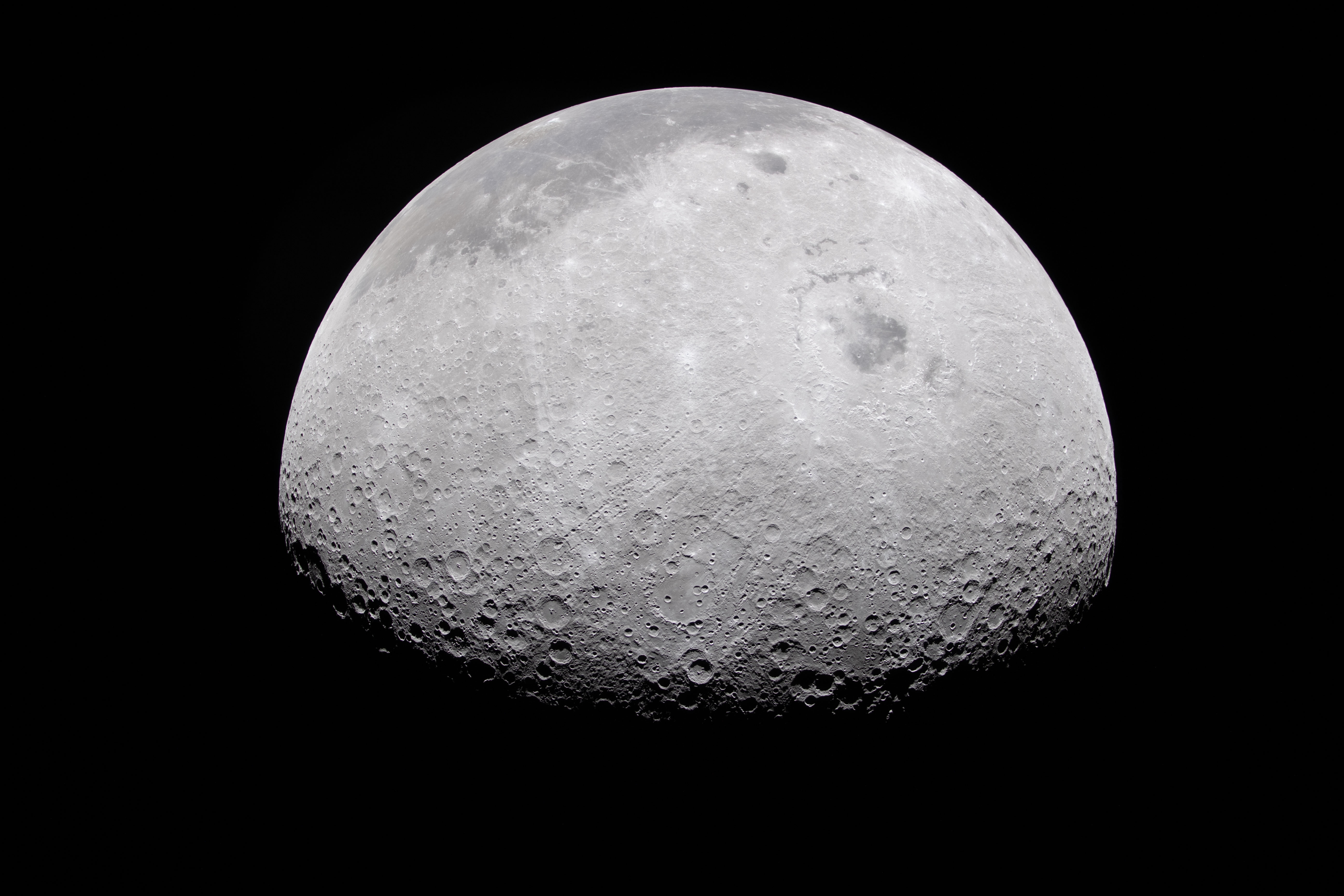
NASA and KARI are currently reviewing data from their respective lunar satellites. While the initial images from Danuri provide a sense of scale against the 2,160-mile diameter of the moon, experts anticipate that higher-resolution imagery may be released following comprehensive data checks. However, even with advanced optics, the relatively small size of the crater—comparable to several vehicles—remains difficult to resolve in granular detail against the vast lunar terrain.
Source: WIRED
Related stories
NASA Tracks Imminent Falcon 9 Rocket Stage Collision with Lunar Surface
Danuri Spacecraft Documents Impact Site of SpaceX Falcon 9 Lunar Collision
