
Centre plans standard design for bullet train network across 7 new corridors
3 min readUpdated: Jul 24, 2026 07:59 PM IST
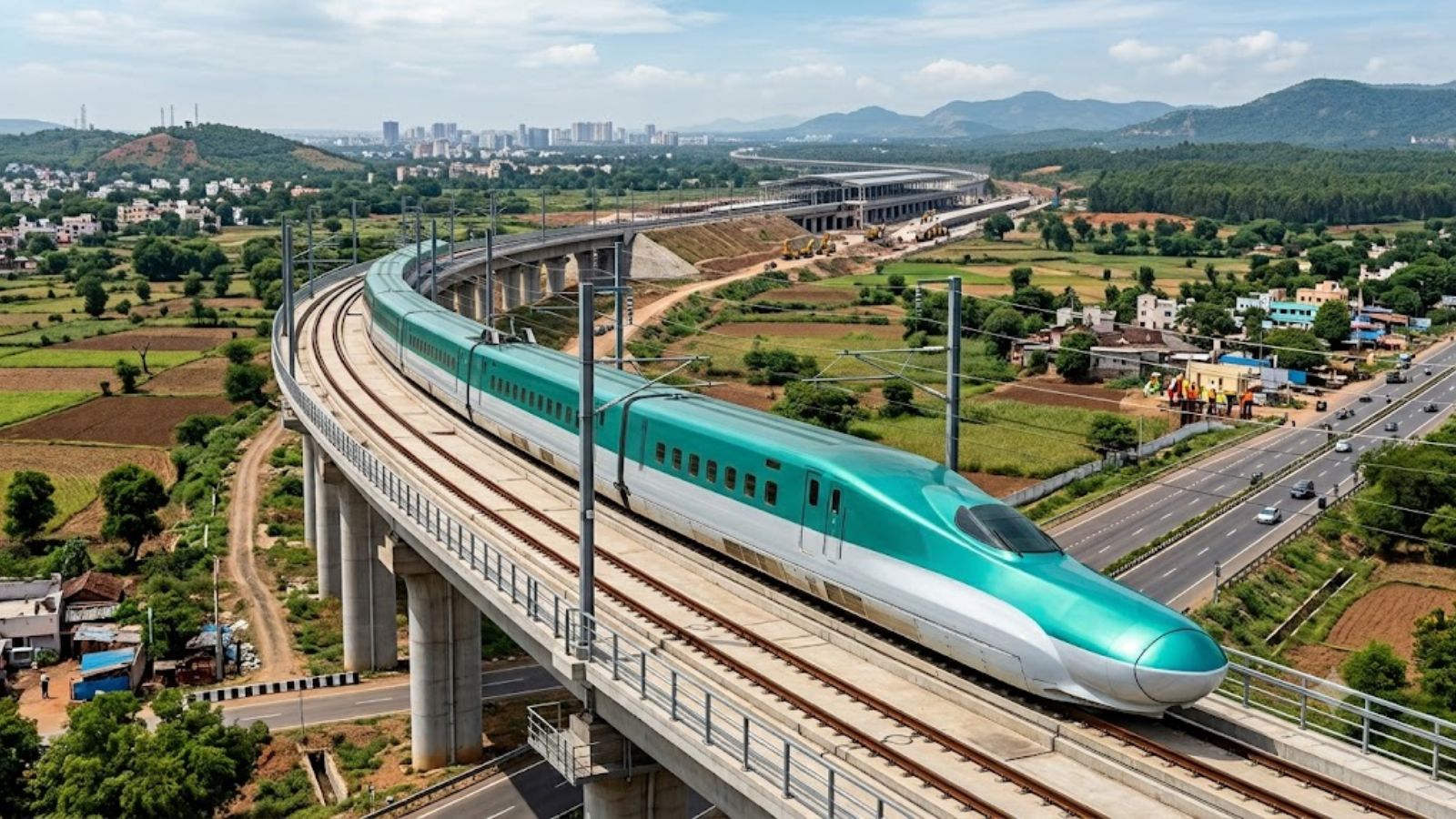
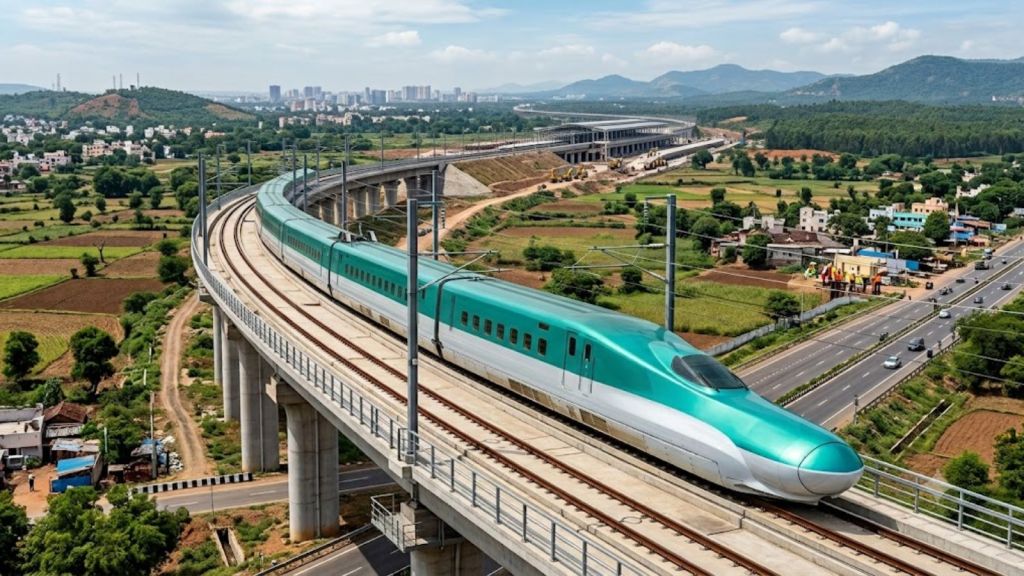 India's bullet train network will use one standard design across 4,000 km (Image generated using AI)
Bullet train in India: The Ministry of Railways plans to adopt a standard design for India’s bullet train network across seven new corridors. These corridors were announced by Finance Minister Nirmala Sitharaman in the Union Budget 2026-27. These are:
- Mumbai-Pune
- Pune-Hyderabad
- Hyderabad-Bengaluru
- Hyderabad-Chennai
- Chennai-Bengaluru
- Delhi-Varanasi
- Varanasi-Siliguri
Currently, the construction work on the 508-km-long Mumbai-Ahmedabad bullet train corridor is underway. The government has targeted to operationalise the priority section by August 2027. The train on the country’s first high-speed rail corridor will operate at a speed of 320 kmph, with a design speed of 350 kmph.
In a written statement in the Rajya Sabha on Friday, Railway Minister Ashwini Vaishnaw said that, based on the experience gained from the Mumbai-Ahmedabad bullet train project, the National High Speed Rail Corporation Limited (NHSRCL) has started developing a standardised set of designs and technical specifications for future high-speed rail corridors, covering infrastructure such as viaducts, bridges, tunnels and stations.
He added that NHSRCL is developing design library under the Bharat High Speed Rail Programme and involved leading technical institute like IITs.
“NHSRCL is simultaneously under process of developing specification for Train control system for speed upto 350 kmph with focus on Make in India (MII) suiting Indian environmental and social condition,” the Union Minister said.
Technical Features & Systems of MAHSR Corridor
Being developed using Japanese Shinkansen technology and operational practices, with advanced systems for traction, electrification, track infrastructure and operations.
20,000+
OHE masts planned across the corridor
30
Substations (12 traction + 2 depot + 16 distribution)
3
Rolling stock depots (Sabarmati, Surat, Thane)
Key Technical Components
⚡
Overhead Electrification (OHE)
More than 20,000 OHE masts planned across the corridor; 2×25 kV overhead traction system based on Shinkansen-style OHE cantilever designs.
🔌
Traction & Power Supply
12 traction substations, 2 depot traction substations, and 16 distribution substations.
🛤️
Track System
J-Slab ballastless track technology introduced in India for the first time.
🏗️
Track Construction Bases
Dedicated bases being developed for storage and handling of rails, track slabs, machinery and other equipment.
🚄
Rolling Stock Depots
Three depots being constructed at Sabarmati and Surat in Gujarat, and at Thane in Maharashtra.
Source: PIB
Why India plans one standard design for future bullet train network
According to Vaishnaw, design standardisation is essential for safety, quality, cost efficiency and faster project execution. He said proven, modular designs eliminate the need to redesign infrastructure for each new corridor, enabling faster execution and ensuring consistent construction and maintenance standards across the high-speed rail network.
“It also provides the foundation for developing indigenous HSR standards, reducing costs while strengthening India’s domestic engineering capability. This approach will help deliver world class high-speed rail infrastructure across the seven new corridors of about 4,000 km announced in the Union Budget 2026-27,” he added.
Story continues below this ad
India's 7 Proposed High-Speed Rail Corridors: Travel Time
3h 50m
Longest: Delhi-Varanasi
48 min
Shortest: Mumbai-Pune
Proposed Travel Time, by Corridor
Delhi-Varanasi 3h 50m
Varanasi-Patna-Siliguri 2h 55m
Chennai-Hyderabad 2h 55m
Bengaluru-Hyderabad 2h 0m
Pune-Hyderabad 1h 55m
Chennai-Bengaluru 1h 13m
Mumbai-Pune 48 min
Bar lengths scaled to travel time in minutes; Delhi-Varanasi is the longest corridor at 230 minutes, Mumbai-Pune the shortest at 48 minutes.
Source: PIB
The Railway Minister said that post-budget announcement, work on updating project costs, finalising alignments and preparing Detailed Project Reports (DPRs) for the new bullet train corridors has begun.
“Being highly capital intensive, the decision to sanction any HSR Corridor/Project depends on many factors such as outcome of DPR, techno economic feasibility studies and availability of resources such as financing options etc,” he added.

Anish Mondal is a journalist with over nine years of experience covering the railways and roadways. Currently a member of the Indianexpress.com editorial team, Anish specializes in high-impact sectors. Professional Journey Anish began his career at the public broadcaster Rajya Sabha Television (now Sansad TV), where he developed a foundational understanding of legislative processes and national governance. In 2018, he transitioned to digital financial journalism at FinancialExpress.com, spending nearly six years refining his expertise in market trends and corporate reporting. Before joining The Indian Express in 2025, he served as a key contributor at ETNowNews.com. Education & Expertise Anish’s reporting is backed by a rigorous academic background in communication and the humanities: Master of Journalism and Mass Communication (MJMC) – Apeejay Stya University Post Graduate Diploma in Journalism and Production (PGTVRJP) – Apeejay Institute of Mass Communication Bachelor of Arts (English Honours) – University of Calcutta Areas of Coverage Connectivity: Detailed reporting on the expansion of Indian Railways and National Highway networks. ... Read More
- Tags:
- Ahmedabad-Mumbai bullet train
- Ashwini Vaishnaw
- Bullet train
- bullet train India
- Bullet Train project
- Bullet trains
- Indian Railways
- Indian Railways news
- Ministry of Railways
Source: Indian Express