E. coli found in water at eight Indian Railways stations, CAG flags norm breaches
The CAG flagged violations of drinking-water norms after E. coli was detected in water coolers at eight non-suburban railway stations. The audit also found widespread gaps in bacteriological testing and MEA compliance across hundreds of stations.
Key takeaways
- E. coli detected in water coolers at eight railway stations across multiple zones.
- Total coliforms, including E. coli, found in platform taps at 49 stations (2022-23) and 56 stations (2023-24).
- Over 89% of audited stations were deficient in Minimum Essential Amenities.
- Chemical testing by Health Inspectors was not conducted at 179 stations; 77 stations lacked required testing frequency.
- Railways serve a vast NSG network with hundreds of trains and tens of crores of passengers, underscoring the potential public health impact.
What Happened
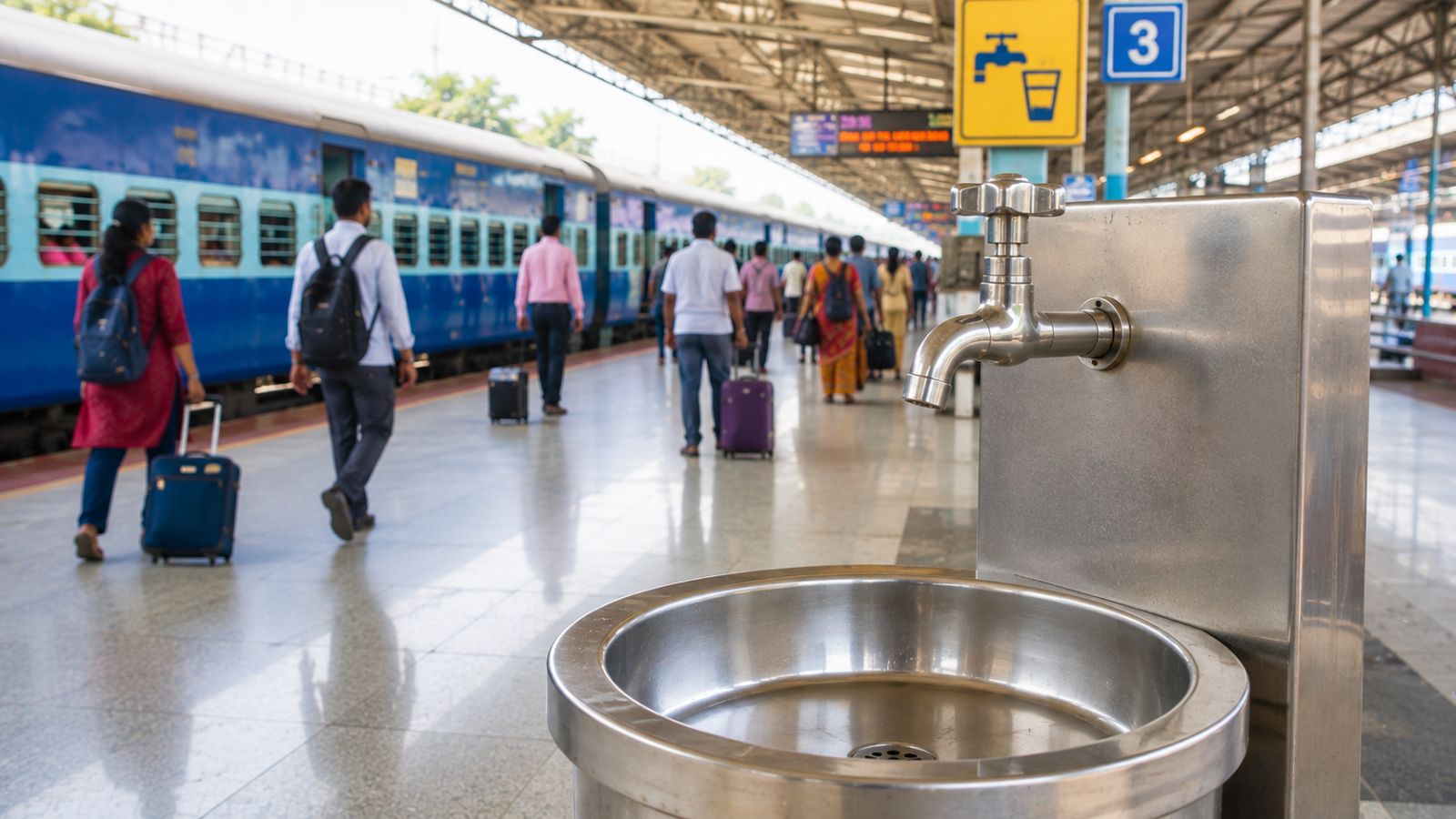
The Comptroller and Auditor General of India (CAG) reported that drinking water samples from water coolers tested positive for E. coli at eight non-suburban railway stations across multiple zones. Specific stations cited include Coimbatore and Palakkad Junction in Southern Railway, Hyderabad in South Central Railway, Chhatrapati Shivaji Maharaj Terminus, Bhiwandi Road, Kalyan and Lonavala in Central Railway, and Madhupur in Eastern Railway. In addition, tests showed the presence of total coliform bacteria (including E. coli) in water samples collected from platform taps at 49 stations in eight zones during 2022-23 and 56 stations in nine zones during 2023-24. The audit also found bacteriological tests beyond total coliforms were unsatisfactory at eight stations in 2022-23 and 11 stations in 2023-24.
Beyond the microbiological issues, the CAG found broader deficiencies in the provision of passenger amenities and sanitation at a sample of 512 non-suburban stations. More than 89% (458 stations) were deficient in meeting Minimum Essential Amenities, with MEAs either not provided or below prescribed norms. The report covers test-audit findings from 2019-20 to 2023-24, including earlier cases and some post-2023-24 instances.
Why It Matters
The findings point to gaps in water quality management at stations, potentially compromising passenger safety and trust in basic amenities. The scale of deficiencies in MEAs and irregularities in testing corridors suggests systemic weaknesses in monitoring and enforcement mechanisms across Indian Railways’ non-suburban network.
Background
The CAG’s assessment, titled Passenger Amenities and Sanitation at Non-Suburban Railway Stations in Indian Railways, examined 512 non-suburban stations and cross-referenced water-quality testing against the Uniform Drinking Water Quality protocol. The report notes that the Railway Board had issued April 2018 instructions detailing Minimum Essential Amenities (MEAs), Recommended Amenities (RAs) and Desirable Amenities (DAs) for NSG stations, with a deadline of August 31, 2018 for MEAs implementation.
Key Facts
- E. coli detected in water cooler samples at eight stations: Coimbatore and Palakkad Junction (Southern Railway); Hyderabad (South Central Railway); CSMT, Bhiwandi Road, Kalyan, Lonavala (Central Railway); Madhupur (Eastern Railway).
- Total coliform bacteria (including E. coli) found in drinking-water taps at 49 stations (2022-23) and 56 stations (2023-24) across eight and nine zones respectively.
- Bacteriological tests other than total coliforms were unsatisfactory at eight stations (2022-23) and 11 stations (2023-24).
- 179 stations lacked chemical testing by Health Inspectors; at 77 stations tests were not conducted as frequently as required.
- 512 stations were audited; 458 stations (over 89%) were deficient in MEAs, meaning essential amenities were missing or below norms.
- Railways status: 5,908 NSG (Non-Suburban Group) stations; over 7,424 daily non-suburban passenger trains; 292.4 crore non-suburban passengers carried in 2023-24.
- Railway Board had previously issued comprehensive MEA/RA/DA guidelines in April 2018, with MEAs mandated to be provided at all stations by August 31, 2018.
What Happens Next
The CAG’s findings include a call for stricter checks on drinking water across stations and notes that the Railway Board had initiated action in response to earlier audit findings (as of September 2025). The report implies a need for tighter adherence to testing frequencies and quality parameters, alongside broader improvements in MEA delivery across the network.
Sources reviewed
Project Chintan independently synthesized and analyzed information cross-checked across the sources listed above.
Related stories

Mumbai model-arrest over razor attack on RPF on train to Surat
Parliament panel urges task force to fill 38 DIPAM vacancies
Train passengers plan stand-up protest in Kozhikode on Aug 16
